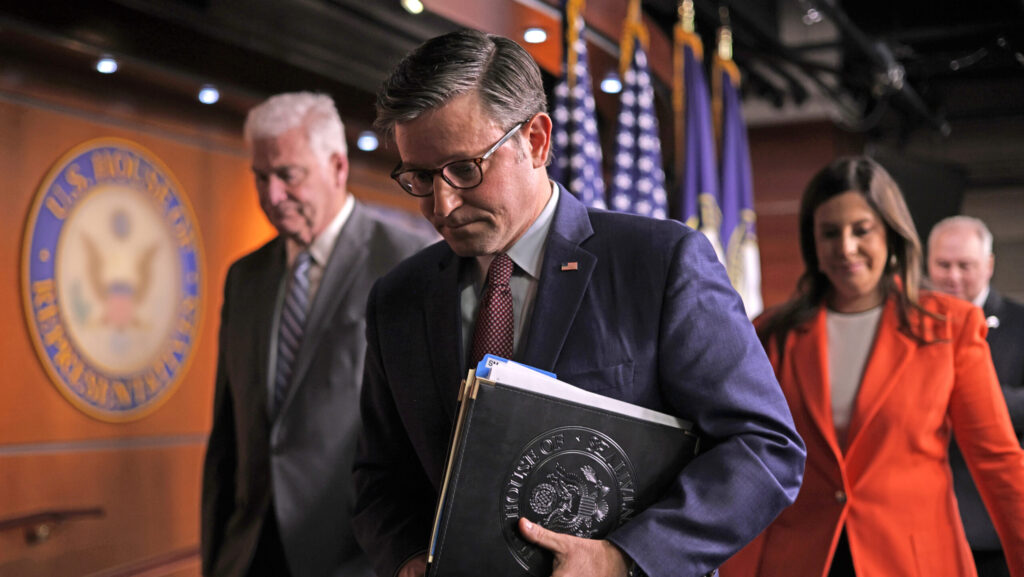
A bold political maneuver by House GOP leaders to link the annual National Defense Authorization Act (NDAA) to a controversial voter restriction bill collapsed into a quagmire this afternoon. In a striking turn of events, 14 Republicans broke ranks to vote with Democrats, effectively blocking the most critical military legislation of the year from reaching the floor.
A High-Stakes Maneuver Becomes a Political Trap
Lawmakers voted 198-224 against a procedural „rule” that would have enabled debate on the fiscal year 2027 NDAA. The leadership’s strategy aimed to tether the defense bill to the SAVE America Act, a signature election bill championed by Donald Trump that requires documentary proof of U.S. citizenship for voter registration.
The failed vote essentially paralyzes the House version of the FY27 NDAA, which authorizes a staggering $1.15 trillion in base funding for the Pentagon. Notably, the bill also contains a provocative provision to formally rename the Pentagon as the „War Department.”
Rebellion Within the Ranks: The Anna Paulina Luna Paradox
While Speaker Mike Johnson initially suggested that House members would remain in Washington to iron out a deal, GOP leadership ultimately retreated, allowing members to depart for the Independence Day holiday with the legislative timeline in tatters.
The rebellion was not limited to moderates. Rep. Anna Paulina Luna, who originally advocated for merging the two bills, ultimately voted „no,” arguing that the current strategy made the SAVE Act vulnerable. She contended that presenting the measure as a standalone amendment would have required 60 votes in the Senate to remove it, thereby offering it stronger protection against being stripped out during conference negotiations.
A „Shell Game” Destined for Failure
Democrats were quick to denounce the strategy. Rep. Jim McGovern, the top Democrat on the Rules Committee, characterized the Republican plan as a „shell game” doomed to fail. He noted that the Senate has already expressed its refusal to pass an NDAA that includes the SAVE Act, with Senate Majority Leader John Thune already filing a clean version of the defense bill.
While it is rare for the NDAA—typically a bipartisan pillar of governance—to be stalled by a failed procedural rule, this incident echoes the internal GOP fractures that led to the historic ousting of former Speaker Kevin McCarthy. For now, the path forward for the defense budget remains unclear, as national security funding becomes entangled in high-stakes partisan maneuvering.