Startup Qunnect has been awarded a contract from the Air Force Research Laboratory (AFRL) to refine its quantum networking technology, marking a significant vote of confidence in quantum communications by a US military lab, according to a company announcement today.
AFRL’s $2.1 Million to Build Local Quantum Network
The 18-month contract, awarded in May for an undisclosed amount, underscores the growing interest in quantum communications, despite past skepticism from the National Security Agency (NSA). AFRL has invested into quantum space with a $2.1 million award to IonQ to build a local quantum network at its Rome, NY facility.
Unique Approach: Leveraging Existing Fiber Optics
Qunnect argues that its approach is unique, with successful test runs over existing fiber optic cables, unlike earlier versions of the technology that required dedicated infrastructure, a limitation previously highlighted by the NSA.
Overcoming Previous Limitations
Qunnect CEO Noel Goddard told Breaking Defense that the company’s “second-generation” quantum networking overcomes many of the flaws identified by the NSA in earlier technologies. She highlighted the impact of the NSA’s 2020 assessment, which led to a decline in research funding even as China accelerated its quantum networking efforts.
Enhancing Security with Quantum Communications
Quantum communication offers the potential to improve security by leveraging the observer effect. Because quantum particles are highly sensitive to interference, any attempt to intercept them will cause them to decohere, making the message unreadable and alerting the intended target.
Addressing Practical Challenges
One practical challenge has been the sensitivity of quantum particles to network glitches and natural phenomena. Qunnect claims to have successfully tested quantum networks on commercial fiber in New York, Berlin, and Montana, with technology that works at room temperature without refrigeration.
Carina: The Core of Qunnect’s Quantum Network
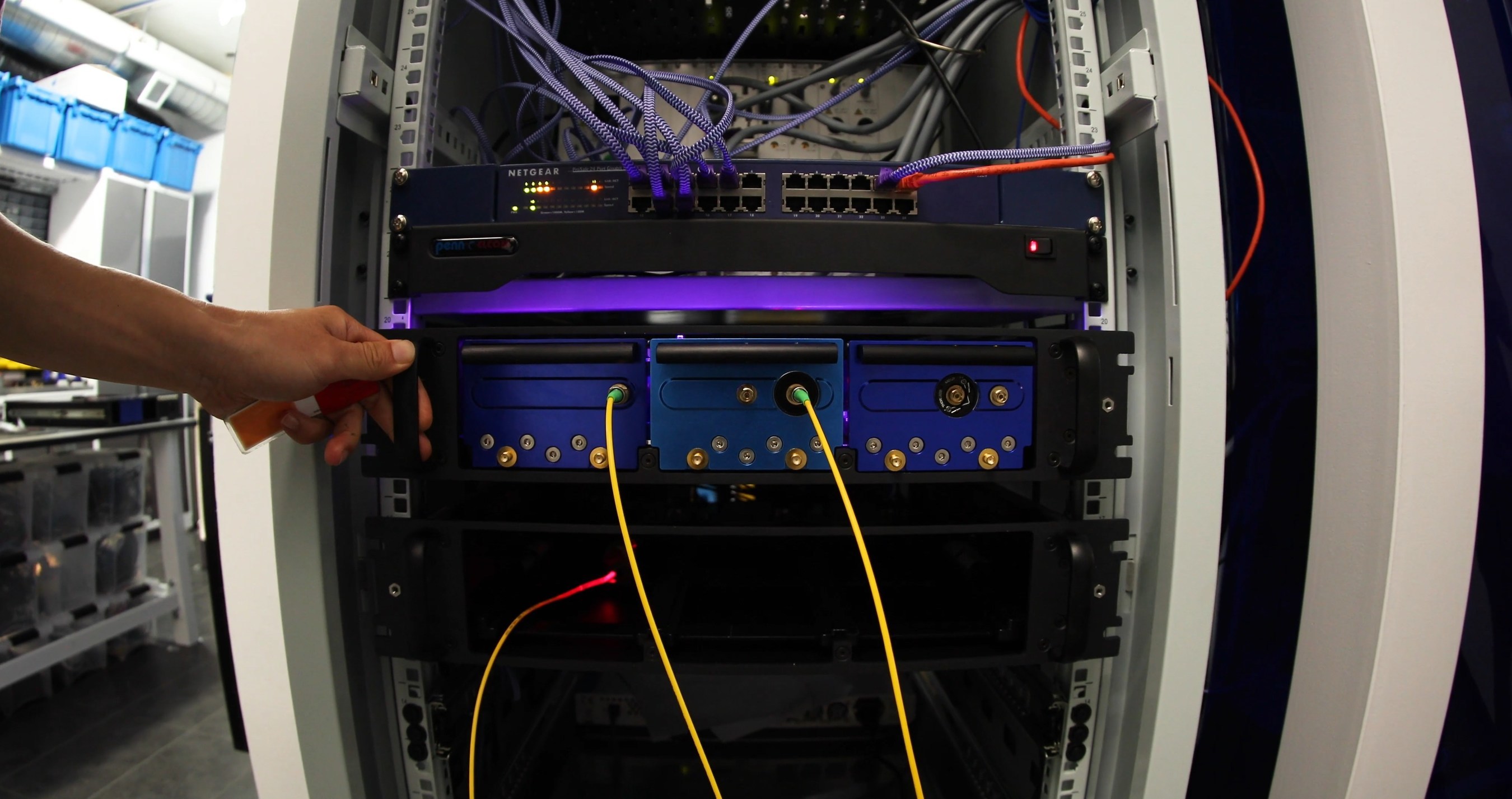
Qunnect has raised $10 million from investors like Cisco and Airbus Ventures, largely based on its Carina product suite. Carina uses tiny lasers to create pairs of entangled photons, sending one photon down a fiber optic cable alongside an error-correction system that detects and corrects disruptions to the quantum signal.
Near-Term Focus on Secure Communications
Goddard said the immediate focus is on secure communications, with quantum tech used to authenticate messages and detect attempted interference. In the longer term, as the technology advances, it could become essential for connecting quantum processors into super-computing clusters, which will require quantum networks to share quantum information effectively.
Extending Range with Entanglement Swapping
Qunnect has tested a repeater that extends the range of its quantum signals through conventional fiber using entanglement swapping and plans a real-world demonstration soon.
Empowering Future Quantum Technology
Goddard emphasized that while AFRL is initially interested in security applications, the long-term vision is to empower other quantum technologies by addressing the scaling problem involved in linking multiple quantum processors.