The two leading senators overseeing the Pentagon are calling on Navy leadership to reconsider its plans for the Large Unmanned Surface Vessel (LUSV), citing worries that its size and complexity may approach that of a manned frigate, as revealed in a letter obtained by Breaking Defense.
Concerns Over Size and Complexity of LUSV
They also recommend that the Navy collaborate with lawmakers to „repurpose LUSV funds” to support initiatives related to the Medium Unmanned Surface Vessel (MUSV) program.
The LUSV is part of the Navy’s unmanned surface vehicle initiatives aimed at anti-surface warfare and strike operations. Its specifications necessitate the capacity to use up to 32 Mk-41 Vertical Launch Cells, which is generating considerable concern in Congress.
“This requirement escalates the LUSV’s size and complexity, potentially rivaling a frigate’s displacement at 4,000 tons,” said a letter dated November 14, signed by Senators Jack Reed, D-R.I., and Roger Wicker, R-Miss., who also chair the Senate Armed Services Committee. “If the current trajectory continues, the LUSV will arrive late to operational needs and incur significant concurrency challenges, while the Navy faces a shortage of Mk-41 compatible missiles to equip all LUSVs.”
Call for Repurposing Funds to Support MUSV Program
In contrast, the MUSV is designed to support various unique payloads, with a weight under 500 tons and a maximum length of 200 feet.
Since its introduction in 2019, the LUSV has been a significant focus of research and development for the Navy, aligning with new initiatives in unmanned maritime technologies. However, due to congressional doubts and competing budget priorities, the original timetable for the LUSV to become a recognized program has shifted from 2025 to 2027. The senators’ letter suggests that even the 2027 deadline may be at risk due to ongoing challenges related to the project. The correspondence was directed to Chief of Naval Operations Adm. Lisa Franchetti and Navy Secretary Carlos Del Toro.
LUSV’s Role in Navy’s Unmanned Surface Vehicle Strategy
“We continue to advocate for a diverse mix of vessels in the Navy’s fleet design and acknowledge Admiral Franchetti’s emphasis on robotic vessels in NAVPLAN 2024,” the letter states. “A crucial part of this mix includes autonomous and attritable capabilities being expedited to meet INDOPACOM requirements. However, these capabilities alone do not address the broader needs articulated by combatant commanders.”
Reed and Wicker appeal to the Navy to “redirect” LUSV funding towards initiatives for the MUSV, specifically to acquire additional vessels in FY 2025 and FY 2026 that could support already procured payloads, and to ensure a clear path toward establishing it as a program of record in FY 2027.
Congressional Skepticism Over Unmanned Vessel Integration
This letter represents the latest challenge to the U.S. Navy’s pursuit of what it refers to as a future hybrid fleet that includes both manned and unmanned warships. Historically, lawmakers have expressed skepticism regarding the LUSV since its inception, demanding clarity on how unmanned vessels integrate within the Navy’s overall operational concepts.
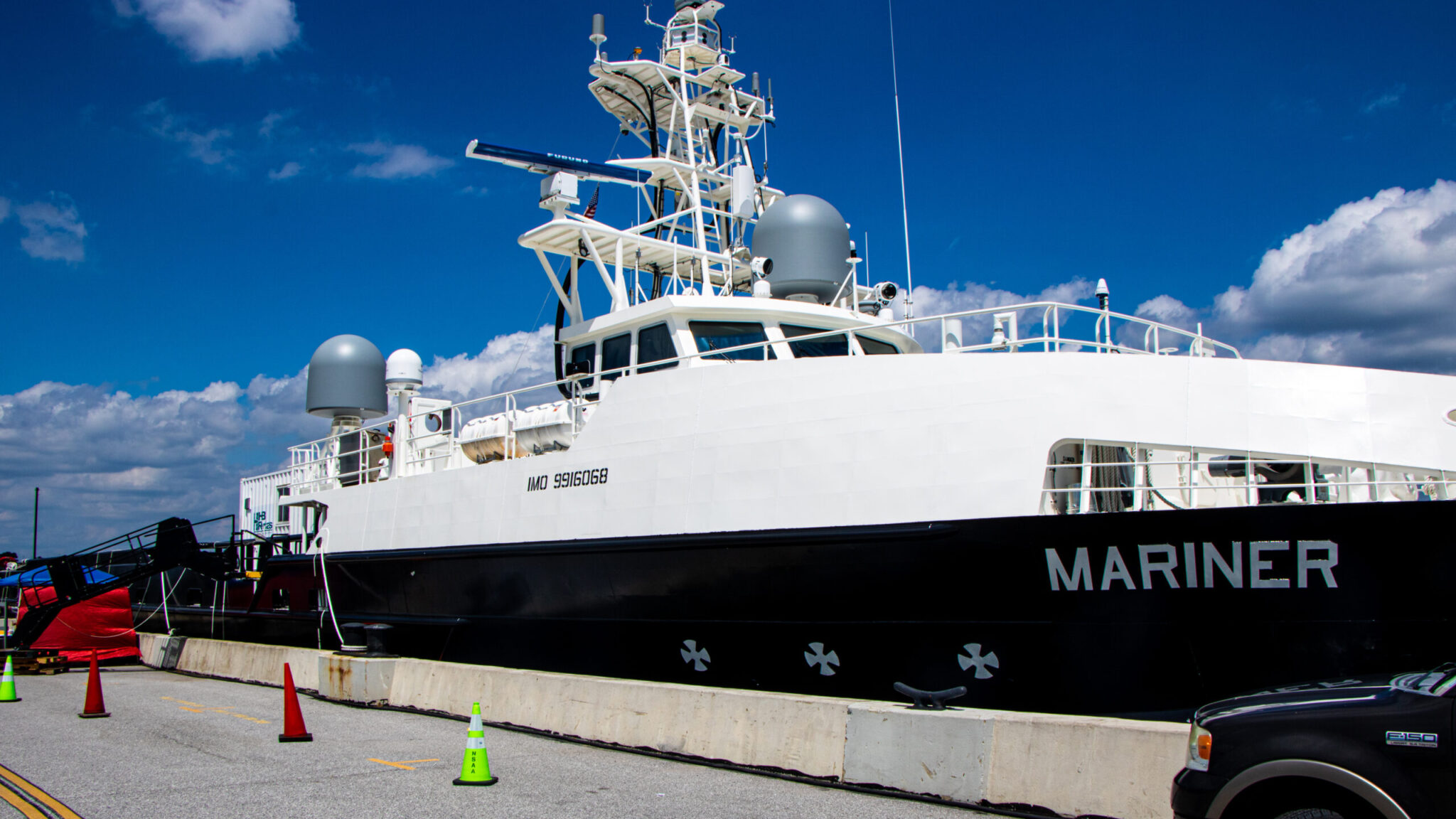
The MUSV, as highlighted by Reed and Wicker’s letter, has garnered a more favorable reception on Capitol Hill following successful missions conducted in the Indo-Pacific with vessels commonly described as the “Ghost Fleet.”
Promising Developments for the Medium Unmanned Surface Vessel
“The Medium Unmanned Surface Vessel should address crucial gaps with mature technologies, validated operational needs, and practical production timelines,” the senators stated. “Overall, more than 267,000 miles have been traveled, with 70 percent in autonomous mode, demonstrating the reliability of the hull, mechanical and electrical systems, as well as the capability to carry multiple mission payloads.”
Conclusion
Public announcements regarding any long-term changes in either program from the Navy are anticipated next year when the FY26 budget request is expected to be released.