Recent conflicts in the Middle East have exposed a costly vulnerability for the U.S. military: the destruction of 24 MQ-9 Reaper drones and one MQ-4C Triton unit, with losses estimated at nearly one billion dollars. In this context, experts are proposing a radical strategy shift, betting on smaller but equally capable systems to protect both budgets and military lives.
The failure of expensive assets in the face of modern threats
Large uncrewed aerial systems (UAS), while optimized for complex missions, have become relatively easy targets for traditional anti-aircraft systems, which are increasingly common globally. Allen Gardner, an expert with 25 years of experience in the drone industry, warns that strategies based exclusively on these massive platforms must change. Their vulnerability to kinetic and electronic attacks has led to significant financial and operational losses.
However, the solution does not lie in a total shift toward tiny FPV-type drones used extensively in the trenches of Ukraine. While effective at short ranges, they cannot provide the „unfair advantage” the U.S. military seeks: the ability to attack an enemy from hundreds of kilometers away while remaining outside their reach. The current challenge is finding a middle ground between the brute force of large systems and the agility of small ones.
Fuel cell technology: The secret behind the new generation of silent drones
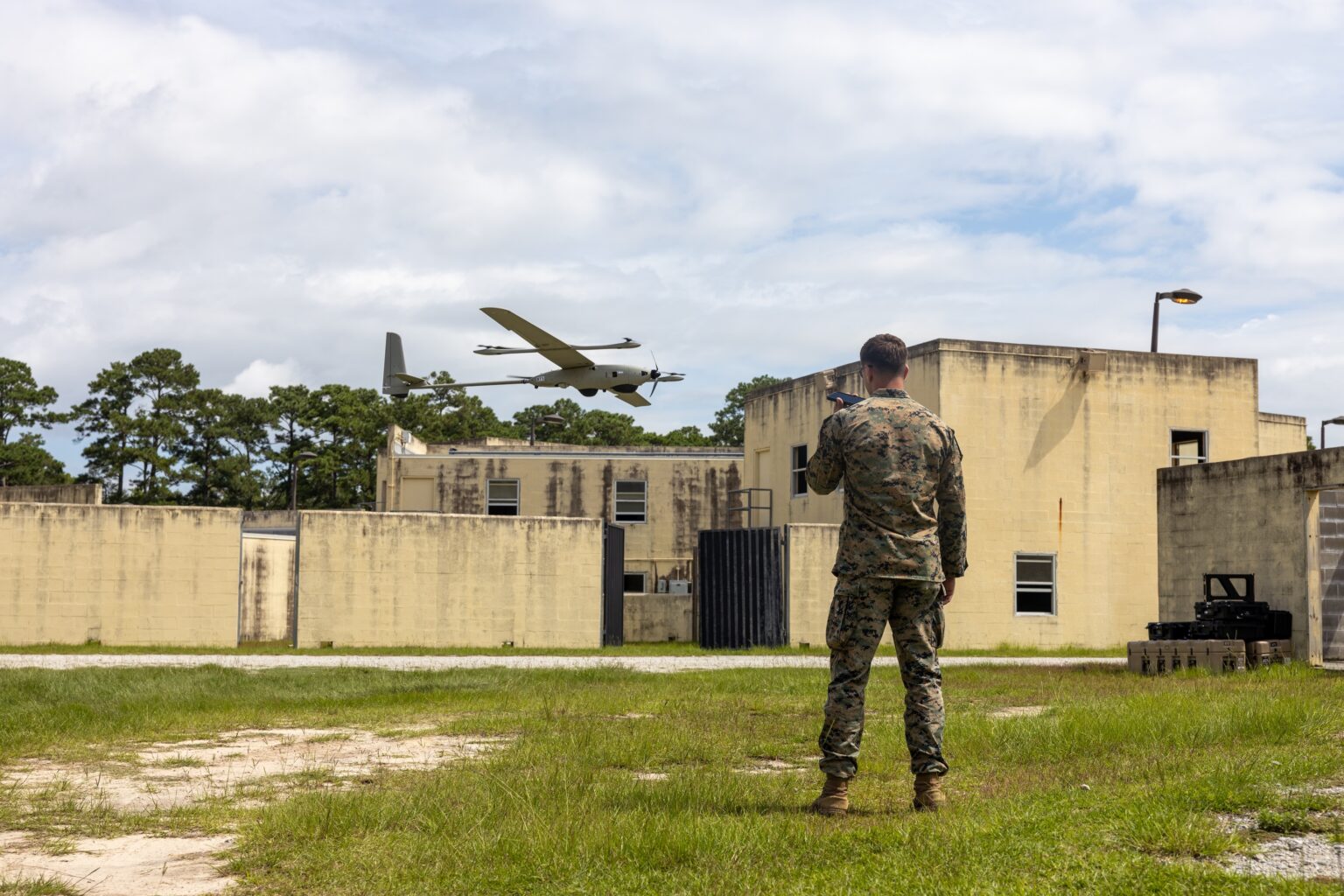
Redwire Defense Tech offers a concrete answer through the Stalker Block 40, a Group 2 drone that redefines autonomy limits. The major innovation lies in the use of solid oxide fuel cells, a technology that provides the aircraft with a range three to four times greater than today’s highest-end batteries.
Furthermore, this system is fully electric and, therefore, completely silent. This combination of long-range flight and sonic invisibility transforms the drone into a surveillance and attack tool that is nearly impossible to detect. Recent tests conducted in the extreme conditions of Alaska demonstrated that, unlike traditional batteries that fail in the cold, fuel cells perform flawlessly even in arctic environments, ensuring mission success regardless of the climate.
Global versatility: From the Marine Corps to presidential protection
The efficiency of these smaller but high-performing drones is already recognized by various agencies and armed forces. The U.S. Marine Corps has already procured nearly 300 Stalker units, while the United Kingdom Ministry of Defence operates over 150 of these aircraft. Their versatility makes them ideal not only for the battlefield but also for internal security missions.
The system has been deployed by the Secret Service for the protection of the U.S. President and senior officials, as well as by Customs and Border Protection for border monitoring. This widespread adoption demonstrates that the future of joint operations belongs to hybrid platforms: drones small enough to be mobile and affordable, yet advanced enough to strike with precision from strategic distances.