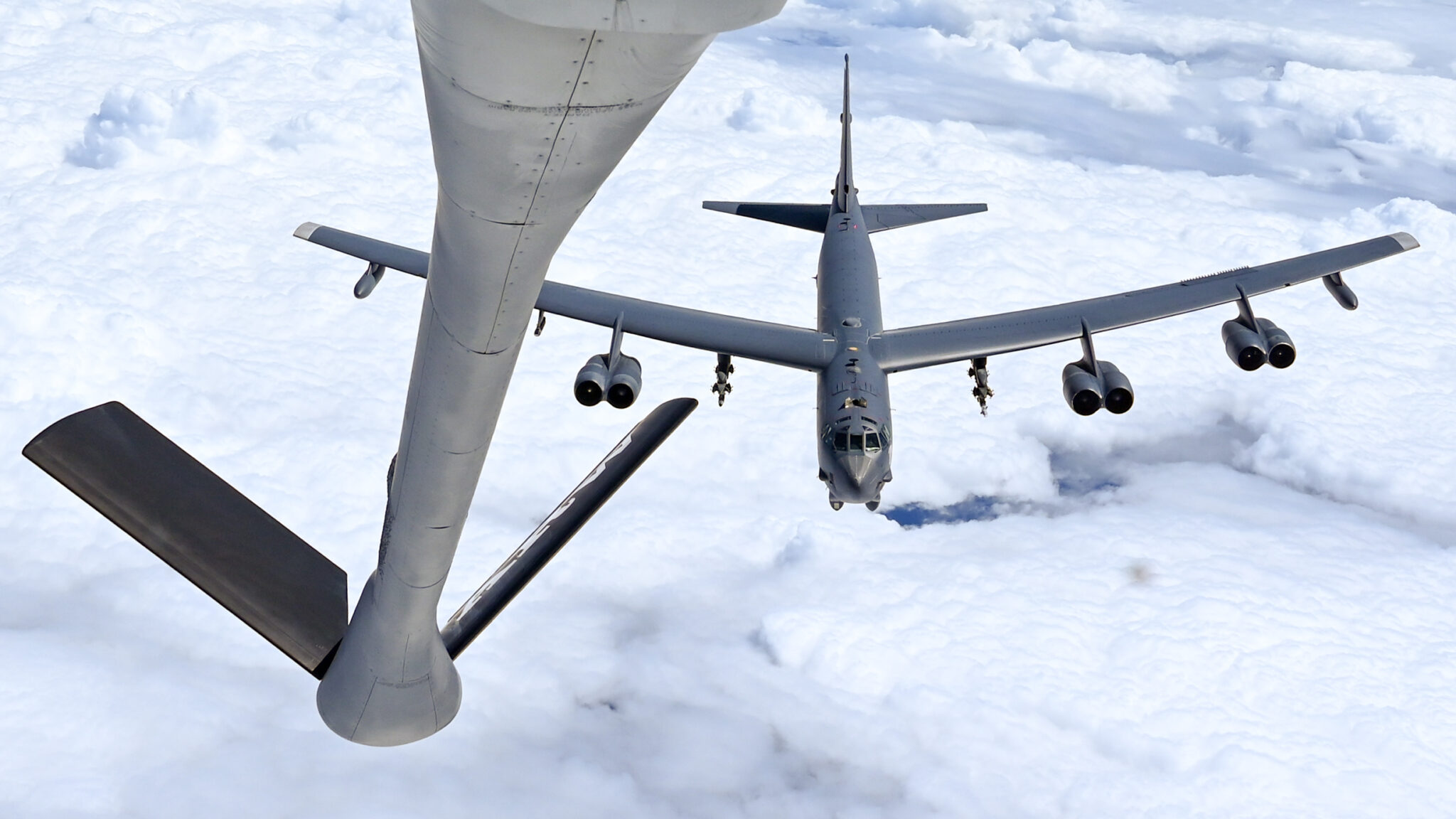
The Rolls-Royce F130 engine is a significant step closer to enhancing the US Air Force’s B-52 Stratofortress fleet following a successful critical design review (CDR), as confirmed by the company to Breaking Defense.
Although the CDR occurred in October, it was kept under wraps until now. This milestone represents a critical phase in the engineering process, confirming the maturity of the design.
While Rolls-Royce still has some additional steps to complete before finalizing the CDR—steps expected to be addressed in the coming months—a spokesperson indicated that the company can now shift its focus to further testing and preparation for production. Ultimately, Rolls-Royce plans to install the F130 engines across the Stratofortress fleet, replacing the aging Pratt & Whitney TF33, in accordance with the $2.6 billion contract awarded to the company in 2021, which is a central component of the broader B-52 Commercial Engine Replacement Program (CERP).
The CDR was anticipated as far back as January, but the spokesperson assured that the October review aligned with the Air Force’s timeline.
“A combination of integration improvements and the desire to fully analyze results from twin pod tests conducted at NASA’s Stennis Space Center drove the timing of the review,” the spokesperson explained.
Boeing, the manufacturer of the B-52, is the prime integrator overseeing the overall CERP effort, which includes other enhancements to the long-serving bomber, such as upgraded avionics.
The CERP aims to deliver improved fuel efficiency and maintainability, transforming the B-52H into the B-52J upon project completion. This represents a substantial overhaul for the Air Force’s fleet of 76 Eisenhower-era bombers, each of which is equipped with four twin pods totaling eight engines that will utilize the new F130s into the 2050s or beyond.
In parallel, the B-52 Radar Modernization Program will integrate a new radar system manufactured by RTX.
Boeing will also manage a separate CDR for the entire CERP effort, which the Government Accountability Office reported earlier this year is scheduled for August 2025, roughly two years behind schedule. Additionally, the same report indicated that the program’s initial operational capability (IOC) may be pushed back as much as three years to 2033.
Air Force officials have indicated they are exploring strategies to control costs and recover lost time for the two B-52 upgrade initiatives. This includes bringing on Shay Assad, the Pentagon’s former director of defense pricing known for his tough negotiations with industry.
“We are working very closely with our partners at Boeing and the Air Force to support the program, address any issues, and assist in any way we can,” stated the Rolls-Royce spokesperson. Boeing referred comments back to the Air Force, where a spokesperson confirmed that the CERP’s system-level CDR is slated for “late summer 2025” and IOC is projected for fiscal year 2033. A formal cost baseline for CERP is anticipated to be established at the program’s Milestone B decision set for “summer 2025,” the spokesperson added.
Rolls-Royce officials are currently conducting new engine trials at their facility in Indianapolis, Indiana, after completing crosswind testing, as a production decision nears.
“The F130 First Engine to Test (FETT) began sea-level testing in Indianapolis this fall, which included the engine’s initial software release,” the spokesperson revealed. “The FETT establishes the performance baseline for the F130, building on over 30 million engine flying hours from the commercial family of engines that the F130 is derived from.”
Looking ahead, the engine will undergo altitude testing at the Air Force’s Arnold Engineering Development Complex in Tullahoma, Tennessee. Additionally, the company will conduct “durability testing” in Indianapolis in preparation for the initial flight release.
The CERP contract awarded to Rolls-Royce includes a total of 608 engines and spares. By the early 2030s, the company “expects to increase production of our combat portfolio to over 100 engines per year,” according to the spokesperson.
“To date, our testing program has confirmed our predictions and is allowing us to remain on track to deliver this fixed-price contract for the Air Force,” concluded the spokesperson.