A „Class A” aviation disaster has sidelined one of the Pentagon’s most advanced maritime spy platforms, raising urgent questions about operational safety in a geopolitically volatile region.
Class A Disaster: A Multi-Million Dollar Blow to Maritime ISR
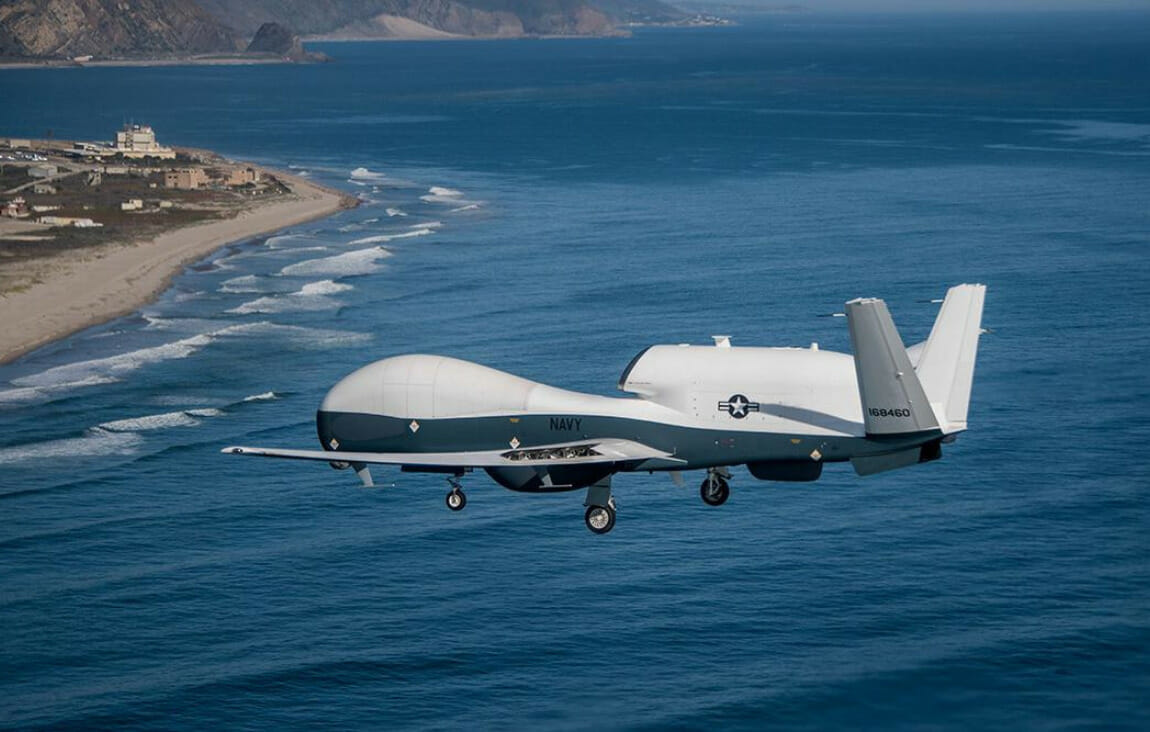
The United States Navy is reeling from a significant loss after an MQ-4C Triton unmanned aircraft was destroyed in a severe aviation mishap earlier this month. Classified as a „Class A” incident—a designation reserved for events involving the loss of life, total destruction of the aircraft, or damages exceeding $2.5 million—the crash has triggered an internal investigation, though no personnel were injured in the event.
While the exact location of the crash remains guarded under operational security protocols, flight tracking data suggests a Triton disappeared while transiting over the strategic waters of the Persian Gulf. The refusal of Navy and CENTCOM officials to provide specific details regarding the incident has only fueled speculation about the circumstances surrounding the loss of this high-value asset.
The Fog of War: Mechanical Failure or Hostile Action?
The precise cause behind the aircraft’s loss remains shrouded in mystery. Analysts are weighing two primary scenarios: a catastrophic mechanical failure or potential hostile interference. The MQ-4C Triton is a high-altitude, long-endurance (HALE) platform, designed to remain airborne for over 24 hours to provide persistent maritime intelligence, surveillance, and reconnaissance (ISR). Any disruption to these capabilities creates a significant intelligence vacuum in heavily monitored theaters of operation.
This marks the second major incident for the Triton fleet this fiscal year, following a Class A mishap in December caused by damage sustained during maintenance. Total figures for the year show seven major aviation mishaps within the Navy, two of which involved unmanned systems, placing the reliability and operational tempo of these complex platforms under intense scrutiny.
A Rare Asset in Jeopardy: The Shrinking Triton Fleet
The loss is particularly acute given that the MQ-4C Triton is a limited resource within the naval arsenal. With only 20 operational units reported as of last year and a final target fleet of just 27, every lost aircraft directly impacts global intelligence-gathering capacity.
The situation is further complicated by the latest budget proposals for fiscal year 2027, which notably omit requests for additional Triton procurement. At a time when the demand for persistent surveillance is at an all-time high, the Navy must now manage a shrinking and increasingly stressed fleet, while investigators work to determine whether this high-altitude „Titan” fell victim to technical failure or an invisible adversary.