Establishing a Common Vocabulary for Space Operations
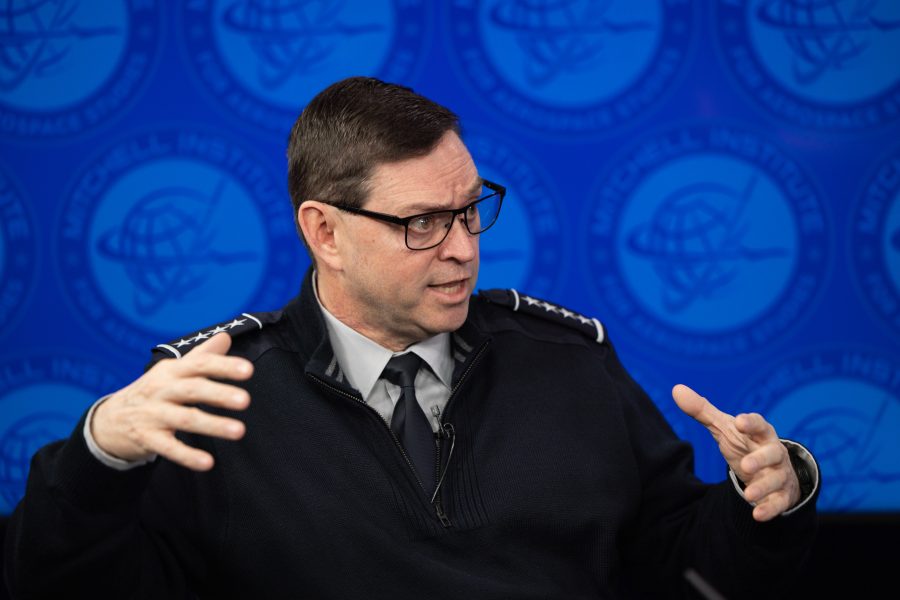
The Space Force is actively developing a new “Space Warfighting” framework aimed at clarifying essential service concepts and terminology, such as “space superiority” and “orbital warfare.” This initiative, led by Chief of Space Operations Gen. Chance Saltzman, seeks to facilitate better communication among its operational planners and within Joint Force planning efforts. “What it allows us to do is lay down a common vocabulary, common terms of reference,” Saltzman explained during an online interview with the Mitchell Institute. “This is what really has to happen in order for us to achieve space superiority.”
A Reconciliation Following Controversial Engagements
The interview reflected a renewed understanding between Saltzman and the Mitchell Institute. This followed a recent restriction he imposed on Space Force personnel, limiting engagement with the Institute after its February report urged the Defense Department to clearly articulate the Space Force’s role in military operations. Saltzman clarified his previous concerns were more about the report’s tone and timing than its substance, emphasizing that dialogue has since improved. “The Mitchell Institute listened to my concerns and quickly addressed them,” he noted, indicating that past issues have been resolved.
Clarifying Space Terminology for Enhanced Operations
While a timeline for the publication of the new Space Warfighting framework remains unspecified, Saltzman detailed its objective: to provide clear definitions for key Space Force terms. This includes elucidating concepts such as electronic warfare and cyber warfare in the pursuit of space superiority, as well as identifying categories of adversarial targets, including ground facilities and networks.
The framework aims to ensure that Space Force capabilities are integrated into all operational planning processes. “We felt like we owed the Joint Force that set of definitions, so that we could have the right kinds of discussions,” Saltzman stated, underlining the importance of a well-defined organizational lexicon.
Building Upon Previous Initiatives
The forthcoming framework follows an internal memo issued by Saltzman that established a foundational “lexicon” for the Space Force, outlining core functions, mission areas, and support functions within military space operations. This effort is part of a broader move to reshape the narrative surrounding the Space Force, emphasizing the necessity of establishing “space superiority” and conducting warfare in outer space.
In his recent Commander’s Note, titled C-Note 34, published on March 7, Saltzman provided a detailed definition of space superiority, focusing on the capability to operate freely without significant interference. “Space Control encapsulates all the activities required to contest and control the domain,” he explained, encompassing a range of operations that can produce reversible to irreversible effects.
The Upcoming Space Force Doctrine Document
In line with these developments, the Space Force plans to release a new comprehensive doctrine—Space Force Doctrine Document—1 (SFDD-1). This doctrine will guide military strategy, defining operational principles essential for achieving national security goals. SFDD-1 is expected to replace the Space Capstone Publication published in 2020, as well as update the operational doctrine established in July 2023.
Additionally, there are indications that the Joint Force’s key doctrine on military space activities, „Joint Publication 3-14 Space Operations (JP 3-14),” is set for revision, although the timeline for its completion remains unclear.
As the Space Force continues to carve out its operational identity, the establishment of a unified framework for space warfare represents a significant step toward enhanced collaboration and coherence in military space operations.