






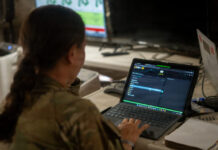
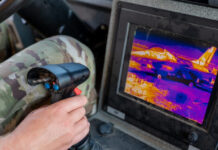


The U.S. Space Force has launched a cutting-edge Space Intelligence Production Center (SIPC), designed to enhance the flow of critical threat information to both operational warfighters and strategic policymakers, according to service officials.
Streamlining Intelligence for Real-Time Operations and Long-Term Strategy
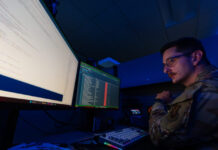
The new center, inaugurated at the Springfield-Beckley Air National Guard Base on Friday, merges the expertise of the 76th Intelligence, Surveillance and Reconnaissance Squadron (ISRS) from Space Force Delta 7, and the 4th Intelligence Analysis Squadron (IAS) from the National Space Intelligence Center (NSIC). A Space Force spokesperson stated that this integration will „allow for more streamlining in integrating foundational and technical intelligence into current Military Space operations.”
Bridging the Gap Between Immediate Needs and Future Planning
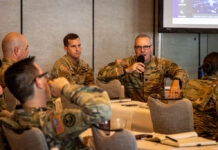
Lt. Col. Stefan Katz, commander of the 76th ISRS, highlighted the symbiotic relationship that the merger will foster. He told reporters that the 76th’s crews are focused on the immediate demands of „today’s tasking, today’s situation, today’s mission and objectives,” while the 4th IAS concentrates on longer-term implications.
Seasoned Professionals and Fresh Perspectives Unite
Katz noted that his squadron comprises primarily junior personnel on their first Space Force assignment. In contrast, Lt. Col. Aaron Echols, head of the 4th IAS, explained that his unit consists of seasoned intelligence professionals specializing in data exploitation from diverse sources. Echols emphasized that the new unit will leverage intelligence „disciplines” such as geospatial intelligence (GEOINT) and signals intelligence (SIGINT) to gain a comprehensive understanding of the space domain.
Echols added that the information gathered by the SIPC is not limited to the space domain and can be utilized by other services and combat commands.
Shaping Future Force Design and Acquisition
Katz emphasized that the SIPC will play a crucial role in shaping future force design by leveraging data from various sensors across GEOINT, SIGINT, MASINT (measurement and signature intelligence), and even OSINT (open-source intelligence). This expertise will enable the center to provide informed recommendations to the acquisition community, ensuring that current and future systems are optimized for both immediate operations and broader strategic analysis.
Expansion on the Horizon
Currently staffed with approximately 140 personnel, the SIPC is poised for growth. Echols indicated that the „endgame is 150 or more person ops floor that probably is going to involve about a half dozen different organizations,” signaling a continued investment in space intelligence capabilities.