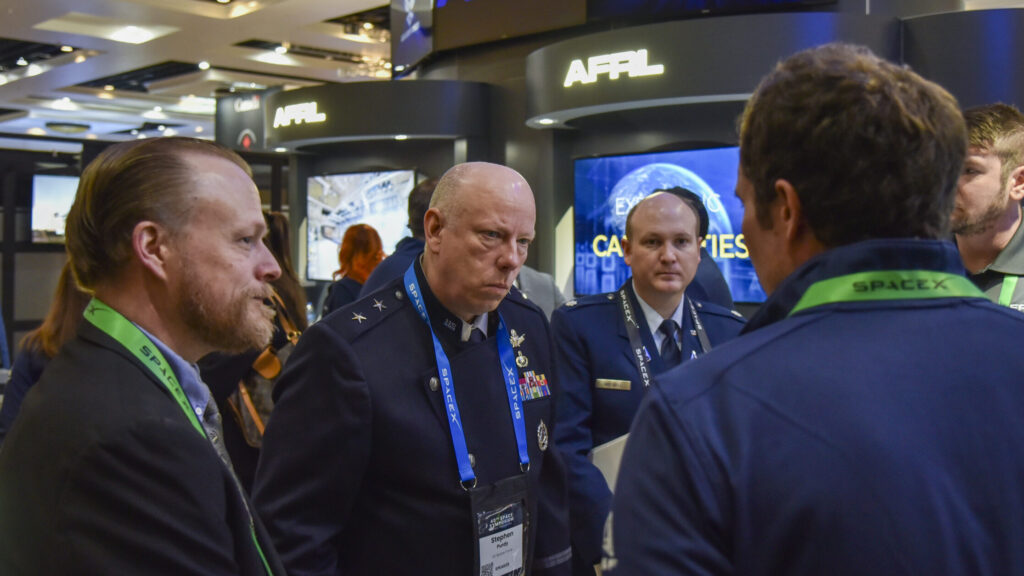
The Space Force is approaching the culmination of its acquisition reform plans, with a sharp focus on a meticulous „cleanup” of how missions integrate into the new Pentagon-mandated „portfolio” management structure. Major General Stephen Purdy, acting space acquisition executive for the Department of the Air Force, recently stated that while the Space Force „is kind of already in portfolios,” a „clear cleanup within these portfolios” is imperative.
The Challenge of Fragmented Missions
General Purdy highlighted that, currently, the same mission is often „scattered across multiple PEOs [program executive officers],” illustrating a systemic inefficiency. The central aim of this „cleanup” is consolidation, ensuring that a true portfolio manager exists for each mission area, possessing complete ownership over all related elements. This approach seeks to optimize operational efficiency and coherence.
A Complex Structure in Consolidation
Currently, Space Systems Command oversees six PEOs: Space Combat Power; Battle Management, Command, Control and Communication; Assured Access to Space; Military Communications and Positioning, Navigation and Timing; Space Sensing; and Operational Test and Training Infrastructure. Additionally, two acquisition shops, the Space Development Agency (SDA) and the Space Rapid Capabilities Office, report directly to General Purdy in his acting assistant secretary role. Purdy anticipates the final structure won’t be „too dramatically different,” avoiding the creation of new bureaucratic layers, though final specifics are still being worked out.
Fervent Debates and the Search for Balance
The reform process has not been without its challenges. General Purdy revealed that over „multiple weeks of detailed discussions,” program executive officers provided „strong input,” leading to „hot and heavy debate” about where programs should „fit” under the new portfolio acquisition executives (PAEs). He acknowledged that proposed PAE structures „wildly varied” over the past month before some stability settled in. Even so, he conceded there will inevitably be „a bunch of seams” in the organization, necessitating rigorous interface management.
The Defense Secretary’s Vision and an Accelerated Pace
Early, though not yet formal, discussions with Defense Secretary Pete Hegseth’s office have focused on Space Force’s progress, including „requirements trade-offs [and] budgetary flexibility trade-offs.” Purdy expressed confidence that the Space Force can meet the Secretary’s rapid timelines, partly due to the major reforms the service has already undertaken on its own over the past year, and partly due to the Space Force’s relatively smaller size compared to the other military branches.
The Ultimate Challenge: Funding Flexibility
While numerous aspects of the reform exist, Purdy identified „funding flexibility” as both the greatest opportunity for „benefit” and the biggest challenge. He recognized that there are „a lot of strong, vested interests” in funding allocation and movement, and achieving greater flexibility will require „very long and difficult discussions” with influential communities such as financial management, the comptroller, the Office of Cost Assessment and Program Evaluation (CAPE), the White House Office of Management and Budget (OMB), and even congressional appropriations committees. For Purdy, funding flexibility is „number one” on his Christmas wishlist, an acknowledgment of the difficulty in persuading entities that „control the purse strings at different levels” to relinquish some control.