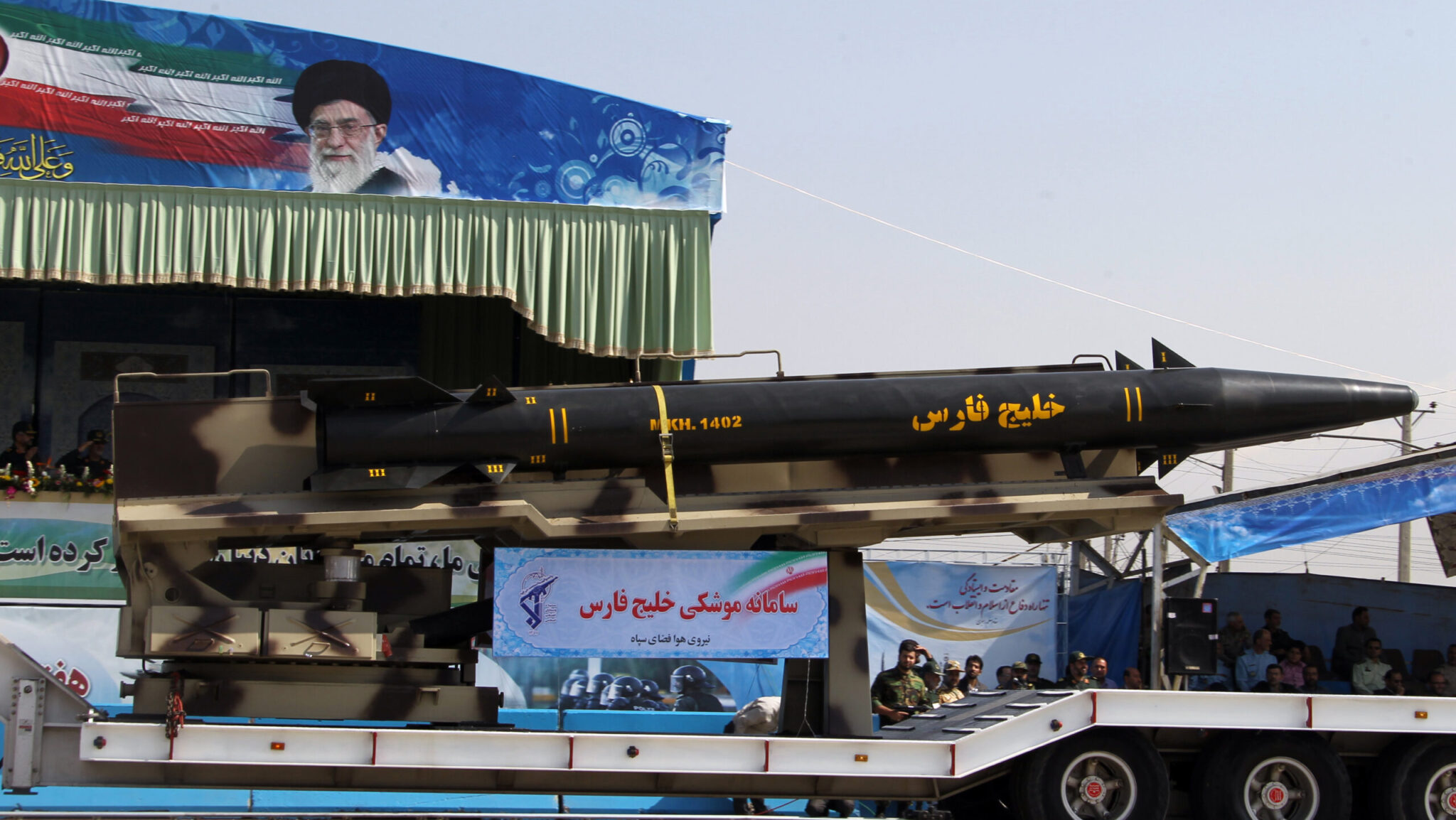
Despite the current ceasefire between Iran and Israel, and the US refraining from retaliation after Iran’s missile attack on Al Udeid Air Base, tensions remain high in the region. A potential flashpoint is emerging in the Strait of Hormuz, a critical waterway for global oil transport, where Iran is allegedly considering implementing a blockade.
Iran’s Arsenal: Anti-Ship Ballistic Missiles
Iran’s parliament has reportedly backed a blockade of the Strait, and there are indications that Iran is preparing to mine the waterway. Beyond small boats and attack drones, a significant threat lies in Iran’s arsenal of anti-ship ballistic missiles (ASBMs).
Challenges of Targeting Mobile Ships
According to experts, a typical unguided ballistic missile has a 50 percent chance of hitting within hundreds of meters of its target. Attacking ships at sea presents additional challenges due to their mobility. ASBMs also cannot search for targets during their ballistic flight phase.
To address these accuracy challenges, Iran has equipped some missiles with satellite navigation, aerodynamic control fins, and, most importantly, seekers that can locate ships during the missile’s descent.
Iran’s Four ASBM Systems
Over the years, Iran has unveiled four distinct types of ASBMs:
- Khalij Fars (Persian Gulf): Unveiled in 2010, this missile has a claimed range of 300 km, covering the entire Persian Gulf. It utilizes either an optical seeker or an infrared seeker.
- Hormuz 1 and 2: These missiles reportedly use either a passive radio-frequency seeker or active radar. They have a similar range to the Khalij Fars.
- Zulfiqar Basir: Introduced in 2020, this missile boasts a claimed range of 700 km. Its velocity is too high for an infrared seeker, implying daytime use only.
All these missiles are solid-propellant and launched from truck-mounted inclined launch rails.
Lessons from the Houthis
Insights into Iran’s potential strategy for closing the Strait of Hormuz can be gleaned from the Houthi’s actions in the Bab al-Mandab Strait, Red Sea, and Gulf of Aden. The Houthis have employed various tactics, including ASBMs closely related to Iranian missiles.
US Central Command data reveals that the Houthis attacked ships with ASBMs over 100 times between November 2023 and September 2024, hitting at least 12 ships. The attack on the Marlin Luanda is indicative of the ASBM’s capabilities.
While the ASBMs have not caused extensive physical damage, their impact is significant. The attacks have led to increased shipping insurance premiums and a substantial decrease in merchant ship traffic through the Red Sea. The recent sinking of the Eternity C following a Houthi attack may further deter traffic.
Countering Iran’s ASBMs: A Costly Defense
Multiple navies are operating in the Red Sea and Gulf of Aden to protect merchant shipping. Experience has demonstrated that defending ships against ASBMs is possible but costly.
The USS Carney, during a seven-month deployment, engaged in 51 engagements, including several against ASBMs. The US Navy expended a significant number of SM-2 and SM-6 missiles during these engagements. European ships, such as HMS Diamond and the French frigate Alsace, have also intercepted ballistic missiles using Aster missiles.
Despite air strikes against Houthi missile infrastructure, attacks have continued.
Limited Military Options
If Iran were to block the Strait of Hormuz, military options to defend ships from ASBMs are limited. A defensive fight would require a large number of expensive surface-to-air missiles, depleting stocks available for other potential conflicts.
Even with military protection, merchant ships would remain vulnerable, especially within the Strait itself. Longer-range ASBMs could even threaten shipping in the Indian Ocean.
While targeting missiles and infrastructure on the ground is an option, its effectiveness against Iran is uncertain.
Global Economic Implications
Like the Houthis, Iran does not need to inflict extensive damage to cause significant disruption. If Tehran moves forward with its plan to hold ships at risk in the region, the US and its partners will face limited options with major global economic consequences.