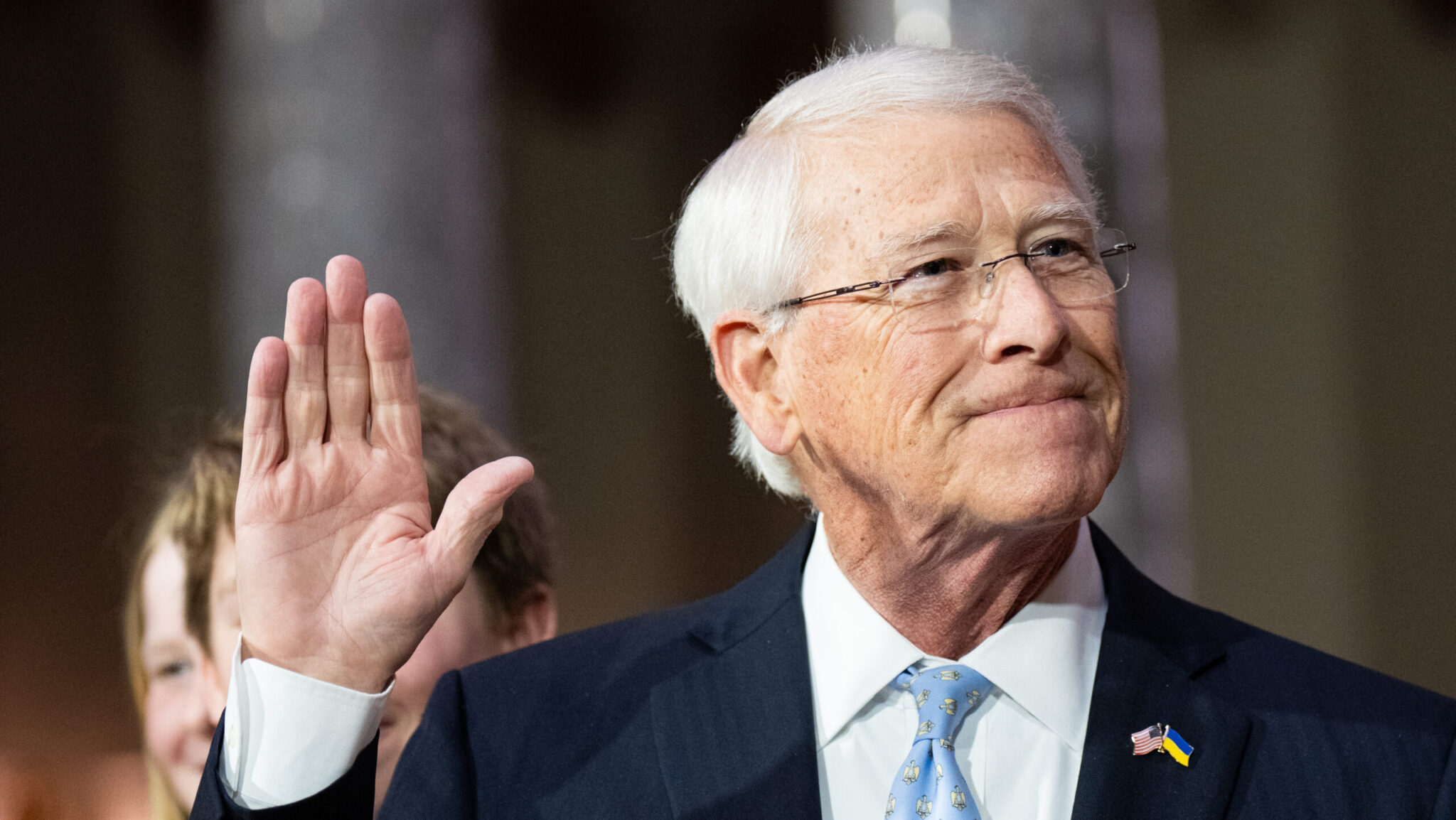
As he assumes the leadership of the Senate Armed Services Committee in 2025, the newly appointed chairman has laid out two primary objectives: to increase defense spending by approximately $200 billion within the Republican’s reconciliation package, and to implement comprehensive acquisition reforms through the forthcoming defense policy bill, as detailed in an exclusive interview with Breaking Defense.
Funding Priorities for National Security
Senator Roger Wicker (R-Miss.) envisions that an increase in defense funding could facilitate the creation of an Iron Dome-like missile defense system for the United States, a key priority highlighted by former President Donald Trump. Moreover, he emphasizes the importance of investing in critical areas such as shipbuilding, submarines, and the next-generation fighter jets for the Air Force.
Wicker expressed his optimism about fulfilling Trump’s commitment to enhancing national security through adequate funding. In a January 23 interview, he stated, “I hope and believe that President Trump’s pledge to restore peace through strength so that we can avoid conflict is going to be followed through with adequate funding.” He views this as a significant opportunity to modernize and streamline the operations of the Defense Department.
Strategic Moves Ahead
Affirming his commitment, Wicker’s office confirmed to Breaking Defense that the chairman is pursuing a dual approach to achieve these goals. The initial step involves securing support from Trump and GOP leaders for a substantial funding boost for defense within the ongoing reconciliation bill discussions. The secondary aim utilizes the fiscal 2026 National Defense Authorization Act to advance Wicker’s acquisition reform plan, presented in December as the Fostering Reform and Government Efficiency in Defense (FORGED) Act.
The reconciliation bill, which facilitates a simpler legislative process to bypass filibuster, could encompass funding for Trump’s priorities, including tax cuts and border security, and is anticipated to reach the president’s desk by April. House Republicans are set to discuss this bill during their annual meeting in Miami early this week.
Making the Case for Defense Spending
Senator Wicker, advocating for U.S. defense expenditure to reach 5 percent of GDP, alongside House Armed Services Committee Chairman Mike Rogers (R-Ala.), aims to persuade GOP leadership that additional defense funding is essential for the legislation. “It would not be outside the realm of possibility to make it $100 billion a year [for defense] for the next two years,” Wicker remarked, emphasizing the necessity of such funding to progress toward their objectives.
The proposed funding increase—over a 10 percent rise compared to the FY25 NDAA projections—could expedite the construction of warships and submarines, and initiate the development of a U.S. missile defense shield akin to Israel’s Iron Dome. Acknowledging the technological and financial challenges involved, Wicker noted the urgency felt by the president in moving this initiative forward.
Advancing Air Force Capabilities
Further funding could enable the Air Force to continue progressing on its Next Generation Air Dominance (NGAD) fighter program. Despite budgetary constraints, which may affect other modernization efforts like the Sentinel intercontinental ballistic missile system and the B-21 Raider bomber, Wicker reported that an internal study had reaffirmed the need for a manned sixth-generation fighter.
Reflecting on the past year, he noted, “In 2024, we agreed reluctantly to do a bit of a pause to let the experts take another look at whether NGAD should be manned. And the answer came back after the election with the vengeance, absolutely yes.”
Revolutionizing Defense Acquisition
Wicker’s acquisition reform strategy, introduced late last December, aims to revamp the Pentagon’s contracting framework by fostering heightened competition and responsiveness within the acquisition process. An integral facet of the FORGED Act would shift the standard contracting model for the Pentagon to commercial procurement processes, making it easier for consumer product manufacturers and nontraditional defense firms to collaborate with defense initiatives.
Highlighting the necessity for innovation, Wicker remarked, “I haven’t gotten a lot of pushback from the big guys. The folks that would like to innovate and participate as startups are wild about it.”
One of the proposed legislative shifts would mandate that nontraditional defense firms follow commercial procurement regulations, allowing them greater freedom to develop and invest in their innovations.
Future Collaboration and Bipartisanship
While the details of Wicker’s plan await industry feedback, representatives from organizations like the Aerospace Industries Association have expressed support for his focus on enhancing the defense industrial base. As Wicker’s office navigates the legislative process for these reforms, there is an intent to incorporate elements from the FORGED Act into the chairman’s agenda for the FY26 NDAA, with potential contentious modifications discussed among committee members.
“This is not a Wicker-only effort,” noted a GOP aide, indicating a collaborative commitment from both parties toward acquisition reform. “So ideally, we are going to have a full team effort on the committee here.”