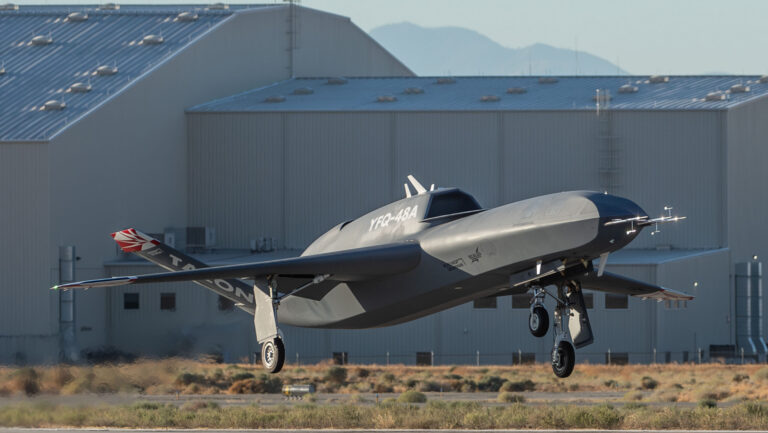
In a recent test flight conducted over the Mojave Desert in California, the autonomous Talon Blue platform successfully completed its maiden voyage. This technical milestone encompassed full sequences of taxiing, takeoff, in-flight maneuvers, and landing, validating significant strides in automated flight technology and strengthening the company’s position in developing next-generation combat systems.
A Bold Technological Bet
Developed through internal funding, the Talon Blue project represents a strategic move to maintain relevance in a highly competitive field, following the awarding of previous contracts for aerial wingmen in government programs. This proprietary investment highlights a determination to continue innovation independently of traditional procurement cycles, having already received the official designation YFQ-48A from the Air Force, which signals continued interest from authorities.
Modularity and Tactical Flexibility
Talon Blue is distinguished by a modular design conceived for battlefield versatility. Its weapons bay is engineered to support a wide range of missions, allowing for rapid adaptation based on operational requirements. This flexibility is essential for future iterations of combat drone programs, where the capacity to adapt to diverse tactical needs is critical.
Integrating Next-Generation Software
Beyond the physical structure of the drone, a central pillar of this technological advancement is the autonomy software suite, dubbed Prism. Testing for this software ecosystem has been extended to other platforms, such as the Model 437 drone, demonstrating a concerted effort to align advanced software capabilities with new hardware platforms. This integrated approach is intended to accelerate development and create a solid foundation for future generations of autonomous aerial systems.