The Historical Foundations of Aerial Intelligence
The quest for effective situational awareness has been a cornerstone of security throughout history, facilitating both peacekeeping and successful military operations. This pursuit took to the skies in 1794 when the hot air balloon was first employed for intelligence gathering during the conflict between France and Austria, marking the inception of aerial reconnaissance.
The introduction of airborne observation drove efforts to achieve continuous surveillance through hurdles such as clouds and smoke, but significant advancements remained elusive until the advent of Synthetic Aperture Radar (SAR) developed by the Goodyear Aircraft Company in Arizona.
Harnessing Doppler Technology for Enhanced Imaging
SAR capitalizes on the Doppler shift caused by the relative speed of objects within the radar beam against a moving antenna. This technique facilitates a frequency analysis that creates a large synthetic antenna aperture without necessitating massive physical structures. The resultant Doppler images provide interpretations that, while not identical to optical systems, deliver comparable insights.
Aerial reconnaissance experts quickly recognized SAR’s potential to enable 24-hour, all-weather imaging, prompting vigorous development efforts. However, it was not until the emergence of smaller and more powerful CPUs in the 1980s that SAR truly began to flourish.
The Present-Day Impact of SAR
Today, SAR technology produces remarkably detailed aerial images, identifying features that conventional electro-optical systems often overlook. As a result, SAR has become an essential component of modern Intelligence, Surveillance, and Reconnaissance (ISR) capabilities, both at strategic and tactical levels.
IAI: Leading the Charge in SAR Innovations
Recognizing the transformative potential of SAR, Israel Aerospace Industries (IAI) sparked an ongoing research and development initiative in the early 1980s. The company has since evolved its hardware and software capabilities, presenting an extensive range of high-performance SAR systems that leverage proprietary processing techniques.
IAI’s SAR solutions span diverse operational requirements, ranging from space-based strategic satellite reconnaissance to stand-off reconnaissance via both manned and unmanned aircraft. Their latest innovations include lightweight tactical systems designed for deployment from small UAVs and drones.
Introducing the ELM-2058 Tactical SAR
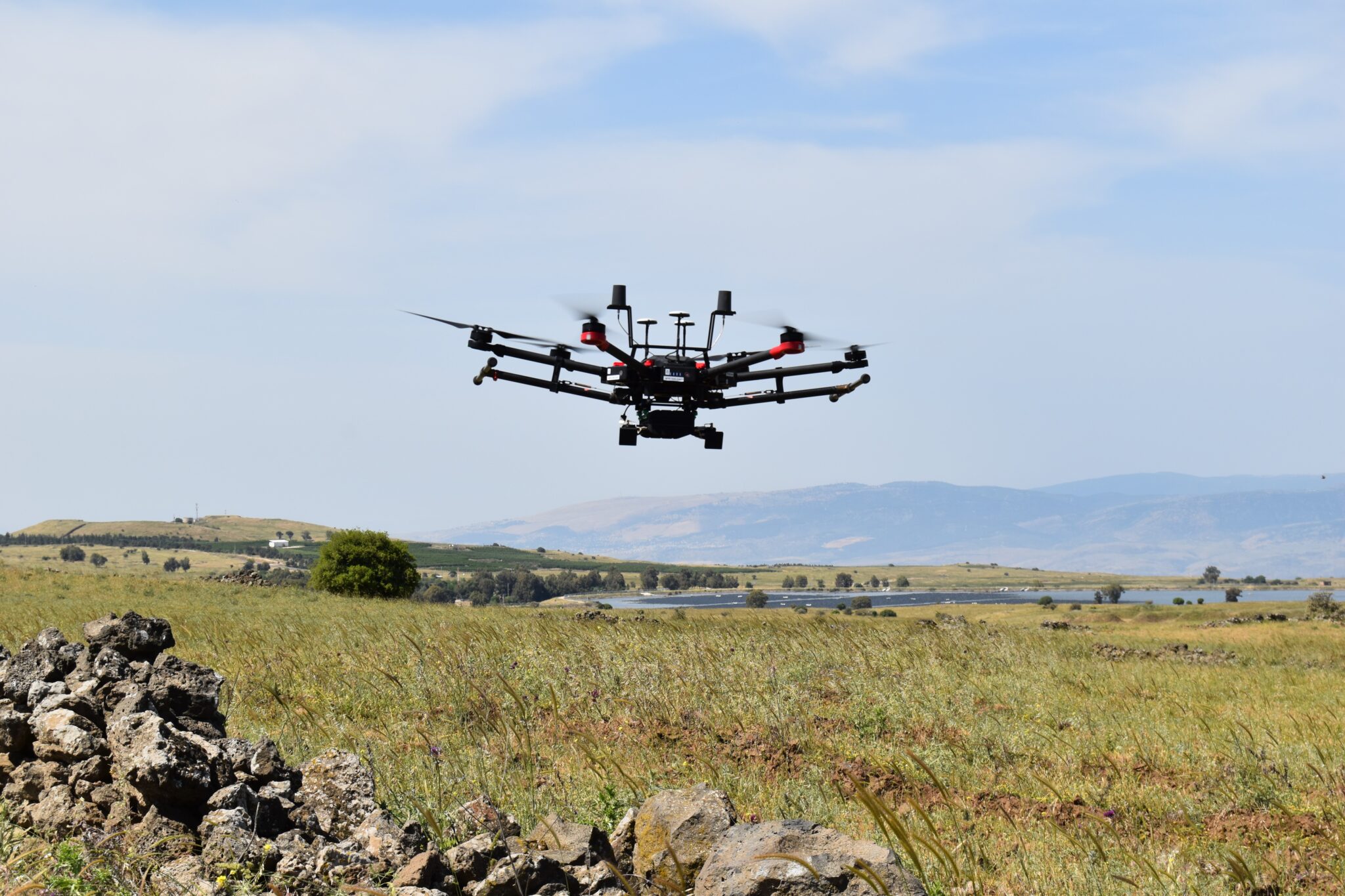
The role of drones in contemporary warfare is undeniable. These systems enhance situational awareness and targeting, yet their capacities are often limited by modern air defense systems, where size can dictate survivability. Smaller, stealthier platforms exhibit increased evasion capabilities, but their smaller payloads pose significant challenges.
IAI’s ELM-2058 radar exemplifies the company’s commitment to addressing these challenges. Weighing just 2.5 kg and consuming only forty watts of power, this ultra-lightweight radar utilizes the latest electronic technologies to deliver exceptional performance while minimizing size and energy requirements. Compact enough to fit in the palm of a hand, the ELM-2058 generates high-resolution SAR images in all weather conditions, making it suitable for deployment from drones or small vertical take-off and landing (VTOL) aircraft.
Equipped with advanced onboard capabilities for mission planning, monitoring, image processing, and data analysis, the ELM-2058 provides real-time imagery to special forces and various military, paramilitary, and civilian operators. Its applications include target acquisition, monitoring of borders and strategic assets, counter-terrorism, counter-narcotics, smuggling prevention, and infrastructure surveillance following natural disasters.
Offering both X and L Band configurations, the ELM-2058 maximizes imaging resolution while providing flexibility for various operational environments.
A New Era of Tactical Intelligence
With its lightweight design and robust SAR capabilities, the ELM-2058 empowers operators to swiftly gather vital tactical intelligence in all conditions. Its straightforward operation ensures quick training for personnel, facilitating maximum exploitation of the system. The radar’s compact size allows for easy transport and deployment in remote and challenging terrains, heralding a new era in tactical aerial intelligence gathering capabilities.