As the global geopolitical landscape fragments, naval and air forces are undergoing an unprecedented transformation. From cruise missiles for F-35 jets and unmanned ground vehicles to next-generation undersea sensors, the arms race is a sprint against time, currently hampered by technical complexity and the depletion of stocks in ongoing conflicts.
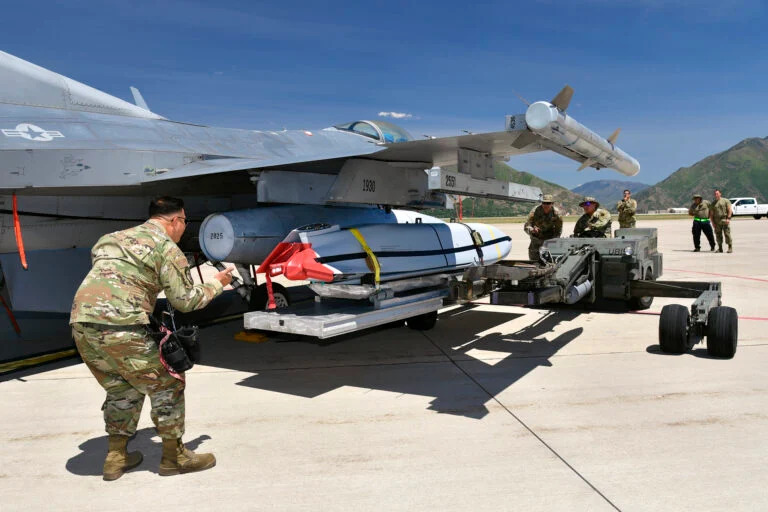
European Firepower: The Netherlands Bets on JASSM-ER and Autonomous Armor In an effort to fill critical NATO capability gaps, the Netherlands has launched formal negotiations to acquire AGM-158B JASSM-ER missiles. These extended-range precision weapons are destined for the F-35 fleet, strengthening The Hague’s strategic role, including its commitment to the Alliance’s nuclear missions. However, European ambitions face a harsh logistical reality: the high expenditure rate of these missiles by US forces in recent operations—with over 1,100 units consumed in months—has pushed delivery timelines to as long as four years.
Simultaneously, on land, ground forces are integrating Combat Unmanned Ground Vehicles (CUGS) for the first time to support Leopard 2 A8 tanks, signing multi-million euro contracts to automate reconnaissance and anti-armor operations.
The Undersea Crisis: Between „Smart Buoys” and Delayed Frigates
Beneath the waves, the battle is focused on detecting increasingly silent Russian and Chinese submarines. The technological answer is „Open Buoy”—a modular, Lego-style sonobuoy that allows for the rapid integration of new sensors in just months. This digital innovation is vital at a time when heavy hardware production is stalling.
A critical example is the Anti-Submarine Warfare (ASW) frigate program. Due to technical complexity and stability issues in the original design, the delivery of the first Dutch vessels has been delayed by three years, slipping to 2033. This discrepancy between the speed of digital sensor innovation and the slow pace of shipbuilding places significant pressure on the maritime defense capabilities of the allies.
The Limits of Naval Power: The Dilemma in the Strait of Hormuz
While technology promises future dominance, the present is marked by severe capacity limitations. Naval leadership recently cautioned that the fleet lacks the resources to escort commercial vessels through the Strait of Hormuz, despite political pressure. In a mined and contested environment, escort duties are considered „extremely challenging missions,” exceeding current capacity for effective execution.
Although the blockade of strategic adversary ports has proven to be an effective diplomatic tool, forcing negotiations under pressure, the reality remains unchanged: fleet resources are stretched to their limit. The future of maritime security will depend not only on the number of ships but on the successful integration of autonomous systems and the ability to maintain high-tech ammunition stocks in an era of accelerated military consumption.