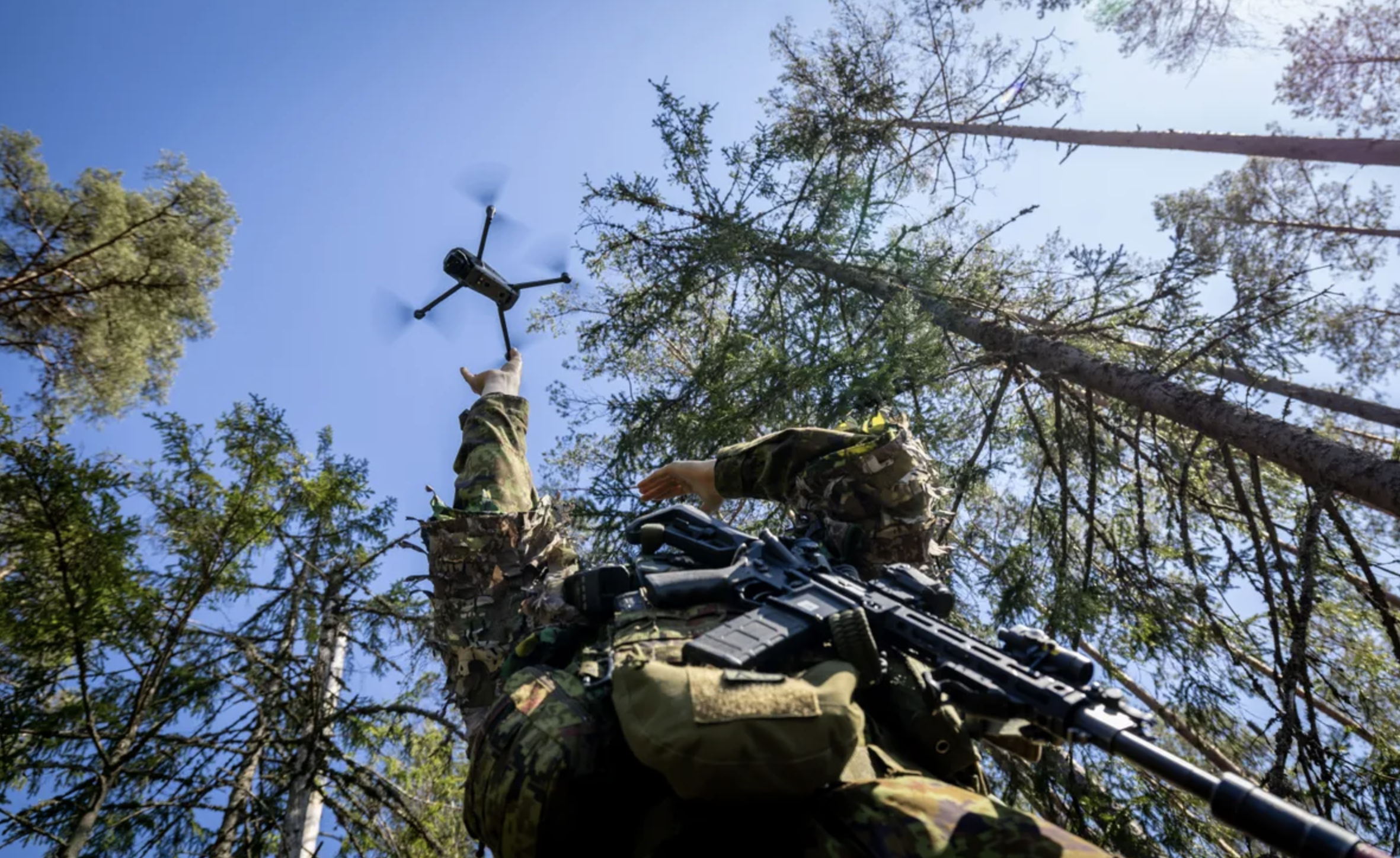
In a paradigm shift that is reshaping traditional armament strategies, the Estonian government has announced the suspension of a massive €500 million combat vehicle procurement program. Driven by the brutal lessons of the war in Ukraine, this decision marks a pivot from heavy armored force toward the technological supremacy of unmanned systems and advanced air defense shields.
Pragmatism Under Fire: Why „Steel” Lost to the „Pixel”
Defense Minister Hanno Pevkur was unequivocal: in the current strategic climate, replacing the CV90 infantry fighting vehicle fleet is no longer a „reasonable” priority. As the price tags for armored platforms skyrocket globally, their battlefield utility in a drone-saturated environment is faceing a sharp decline. Estonia has instead opted for a pragmatic economic solution—extending the service life of its current fleet by 10 years—to free up vital funds for asymmetric technologies.
“We had to make this decision today—we will now inform market participants that we will not proceed with this program,” Pevkur stated, emphasizing that Estonia’s focus has shifted to countering drones and deploying unmanned systems.
Border Incidents: The Wake-Up Call That Accelerated the Pivot
Tallinn’s decision is not merely theoretical; it follows recent high-stakes security incidents. On March 25, during a large-scale Ukrainian strike on the Russian port of Ust-Luga, several drones inadvertently entered Estonian airspace, with one striking a power plant chimney. These unintended incursions demonstrated the vulnerability of national territory and the urgent need to bolster air domain protection.
The capital freed up from the armored vehicle program will now be funneled into building a defense ecosystem capable of intercepting threats long before they touch Estonian soil.
The „Active Defense” Doctrine: Deep Strikes Over Attrition Warfare
This budgetary reorientation aligns perfectly with Tallinn’s „Active Defense” doctrine. The strategic concept seeks to utilize deep strikes and unmanned systems to prevent war-fighting operations from ever reaching Estonian soil.
By reducing reliance on traditional land systems, Estonia is betting on an agile, digitized military that is lethal at a distance. While high-end options like the CV90 Mk IV or the South Korean Redback were previously under consideration, Estonia has chosen to invest in the „long eyes and long arms” of modern technology, turning economic necessity into a visionary tactical advantage.