






The first “manufacturing rodeo” will test whether industry can rapidly build attack drones while withstanding pressure on domestic supply chains. Systems that perform well could qualify for contracts covering as many as 10,000 aircraft.
The U.S. Army is preparing an industrial competition to determine whether suppliers can quickly manufacture and scale production of one-way attack drones at a cost of no more than $3,000 per unit.
“To achieve strategic overmatch in prolonged combat operations, the Department of the Army requires a paradigm shift toward ‘Affordable Mass’,” the solicitation published Monday states. It describes the effort not as a theoretical study, but as a hands-on prototype exercise and a stress test of industry and the supply chain.
Tight deadlines, with 400 drones required from each vendor
The initiative was first announced in October by acting Army Secretary Adam Telle. Its purpose is to put pressure on supply chains and identify where they fail.
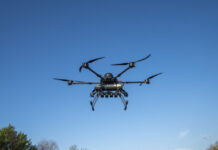
Under the solicitation, the Army will select companies to build 400 Group 1 drones—defined as aircraft weighing 20 pounds or less—and 20 ground control stations each by March 1.
The government will provide battery packs, brushless motors, MK118 lethality kits and frame kits for assembly. Ten percent of the drones and ground stations must be delivered by February 15 for testing and operator training.
Inspections will check where components come from
The Army and the Defense Contract Management Agency will conduct audits and teardown inspections at participating companies’ factories. The inspections are intended to verify that all components come from within the continental United States and that the systems contain no parts sourced from outside it.
The checks will assess not only drone performance but also suppliers’ ability to sustain production using domestic components under compressed timelines.
From precision strikes to operation under jamming
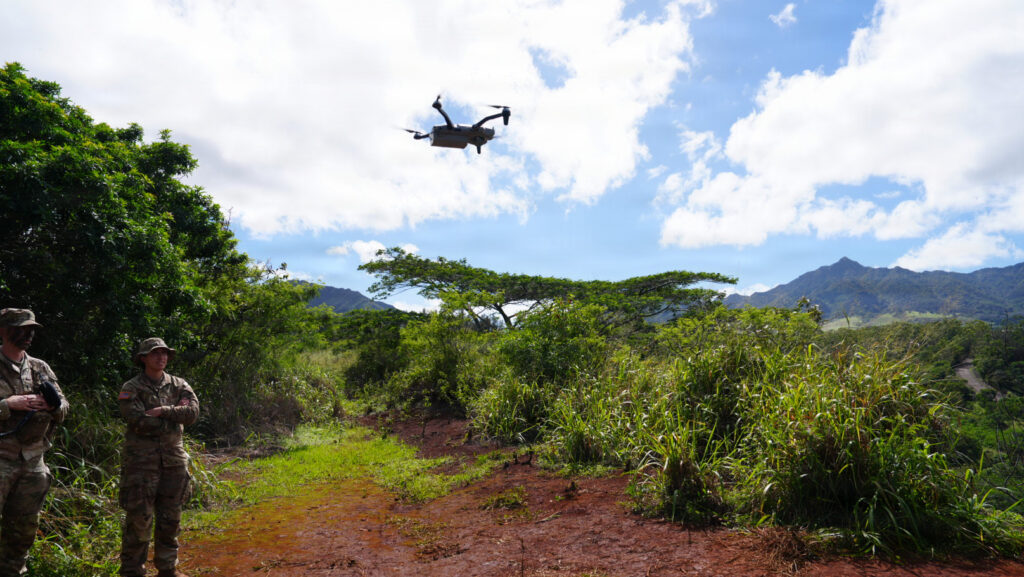
The Army is seeking a range of Group 1 one-way attack drones, including systems capable of precision strikes, operating in contested environments and carrying various commercial kinetic or non-kinetic payloads. All systems must have an open systems architecture.
In March, the completed drones will compete in the Army’s third Drone Dominance Gauntlet. The systems will face complex obstacle courses, heavy electronic jamming and live target arrays.
Successful systems could lead to production of 10,000 drones
Systems judged successful could unlock priced contractual options for scaled production of up to 10,000 drones. During that phase, assembly would shift to shared coproduction lines run by vendors and the government.