Fierce Defense Secretary Denies Downplaying Success of Attacks
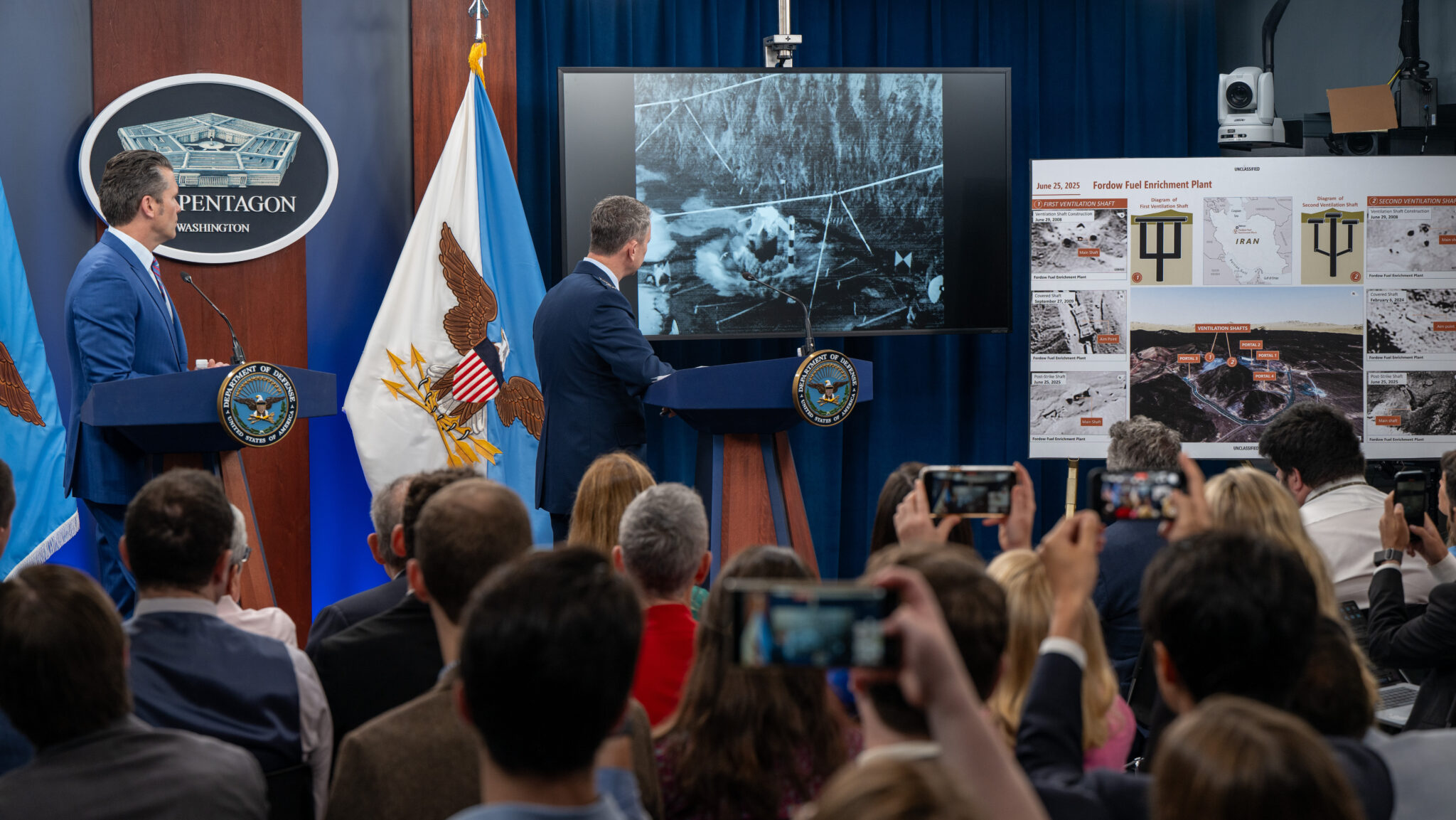
In a heated press conference this morning, Defense Secretary Pete Hegseth staunchly rebutted a leaked intelligence assessment suggesting the recent Iran strikes had minimal impact, emphasizing that „no one” possesses definitive knowledge of the true extent of damage inflicted on the Fordo nuclear site. He highlighted the uncertainties and reliance on visual reflections rather than concrete evidence, underscoring the complexity of assessing underground bunkers.
Uncertainty Surrounds the Damage at Fordo
Hegseth referenced a previous statement urging journalists to „get a big shovel” if they wanted an accurate picture of the damage at Fordo, noting that access to the site remains restricted due to safety and security constraints. Despite this, he pointed to positive public reports from the International Atomic Energy Agency (IAEA), the U.N., Israel, and Iranian officials as signs that the strike was potentially more effective than some intelligence estimates suggest.
Leaked Intelligence Contrasts with Public Celebrations of Success
A preliminary “low confidence” assessment from the Defense Intelligence Agency, first reported by CNN, indicated that the strikes did not destroy key components of Iran’s nuclear program, only setting it back by a few months—a far cry from the sweeping destruction claimed by President Donald Trump, who repeatedly stated Iran’s nuclear infrastructure was “obliterated.”
Pentagon Officials Detail Planning and Technological Capabilities
Chairman of the Joint Chiefs Gen. Dan Caine elaborated on decades of planning, tracing back 15 years to efforts by the Defense Threat Reduction Agency (DTRA) to develop bunker-busting munitions capable of penetrating Iran’s heavily fortified underground facilities. During the briefing, a video was shown of a 30,000-pound GBU-57 bomb striking a simulated target, with Hegseth asserting that the weapon’s capacity and the skill of U.S. forces rendered the mission “highly successful.”
Caine assured that each of the precision-guided bombs hit its intended target, though he deferred a detailed damage assessment to the U.S. Intelligence Community. Meanwhile, CIA Director John Ratcliffe publicly claimed the strikes “severely damaged” Iran’s nuclear program, citing credible intelligence indicating that several key facilities were destroyed and would require years to rebuild.
Mixed International and Official Assessments Heighten Uncertainty
This statement aligns more closely with the IAEA’s assessment from Monday, which acknowledged that the damage within Fordo’s underground facilities could not be fully confirmed. The IAEA noted, “Given the explosive payload used and the vibration-sensitive nature of centrifuges, very significant damage is expected,” but completeness of destruction remains unverified.
Questions Remain Over Iran’s Nuclear Stockpile and Future Moves
When queried about reports that Iran may have moved some highly enriched uranium prior to the strikes, Hegseth deflected, emphasizing ongoing intelligence collection: “Of course, we’re watching every single aspect,” he said, before criticizing the journalist asking the question, suggesting a need for better understanding of the situation rather than speculation.
In sum, despite official claims of mission success and credible intelligence highlighting serious damage, the precise extent and long-term impact of the strikes on Iran’s nuclear capabilities remain hotly contested amid incomplete assessments and ongoing uncertainties.