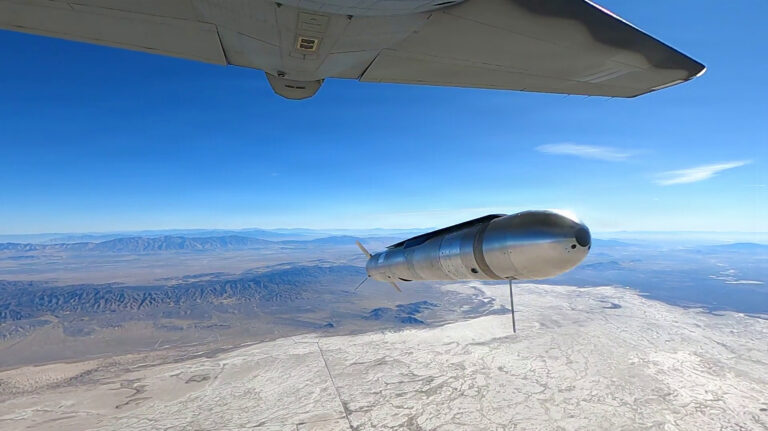
U.S. Air Force special operations forces are seeking to integrate the new AGM-190A Havoc Spear cruise missile onto as many platforms as possible, including both specialized and conventional aircraft. The decision follows the weapon’s use in a live combat operation, where it reportedly demonstrated its effectiveness.
Two missiles launched from an AC-130J struck separate targets
The combat evaluation involved the launch of two AGM-190A missiles from an AC-130J aircraft. The missiles were used against separate targets in an area of responsibility assigned to U.S. Africa Command.
Colonel Robert Johnston, director of strategic plans, programs and requirements at Air Force Special Operations Command, said the objective is to expand the missile’s use across every special operations platform that can support it, as well as across conventional aircraft.
The broader plan also includes deploying the missile in multiple configurations and through different launch modes.
Missile offers a range of more than 400 nautical miles
The Havoc Spear belongs to the approximately 200-pound class of missiles and has a range of more than 400 nautical miles, or roughly 460 miles.
During the low-rate initial production phase, the estimated unit cost is approximately $600,000. Development of the weapon began in 2022 under a cooperative research and development agreement with Leidos.
Weapon could become part of the FAMM program
The Havoc Spear was initially developed to meet a requirement established by U.S. Special Operations Command. American officials believe, however, that the missile could also fit into the Air Force’s Family of Affordable Mass Missiles program, known as FAMM.
The initiative is designed to produce thousands of lower-cost munitions, allowing the United States to expand its missile inventory more rapidly. The need to replenish stocks has grown as a result of high ammunition consumption during recent conflicts.
Including the Havoc Spear in the FAMM portfolio could enable larger procurement orders and allow the program’s resources to be used to accelerate production.
$27.2 million production contract awarded
U.S. Special Operations Command awarded Leidos a $27.2 million contract for the production of the Havoc Spear missile. The first missiles ordered under the agreement are expected to be delivered next fall.
Air Force special operations units intend to begin employing the missiles once they become available and the necessary conditions for operational use have been met.
High operational tempo complicates testing
Expanding the program presents significant challenges. The high operational tempo of Air Force special operations units limits the number of aircraft available for testing new systems.
To address the problem, the teams involved are exploring multiple integration and launch options. These include using the cargo ramps of C-130 aircraft of different variants, as well as mounting the missiles on the pylons of compatible aircraft.
Crews will receive training on missile employment
In the near term, aircrews will be trained to deploy the AGM-190A, while Leidos works to increase production capacity.
Over the longer term, the missile’s modular design could support the development of new configurations, the integration of different payloads and adaptation for additional missions. These possibilities remain at an early stage of development.
Leidos can produce up to 15,000 missiles annually
Leidos says its production facilities in Huntsville, Alabama, have the capacity to manufacture up to 15,000 Havoc Spear missiles per year.
The company is also developing non-kinetic variants intended for missions based on effects other than direct physical destruction, as well as palletized versions that could be transported and launched from aircraft without major structural modifications.