Europe stands at a pivotal moment for its regional security, where the Alliance’s ability to respond to emerging threats depends directly on seamless coordination among its 32 member states. While NATO has made significant strides in joint doctrine and communications, the simulation and experimentation layer remains fragmented, with nations still relying on legacy tools and siloed test environments.
Overcoming fragmentation and legacy constraints
In the current landscape of hybrid warfare and rapid technological change, simulation has become the pillar that allows multinational forces to rehearse complex operations and test force structures in realistic, data-driven settings. It strengthens interoperability by aligning tactics and command structures before actual deployment, turning insight into rapid action.
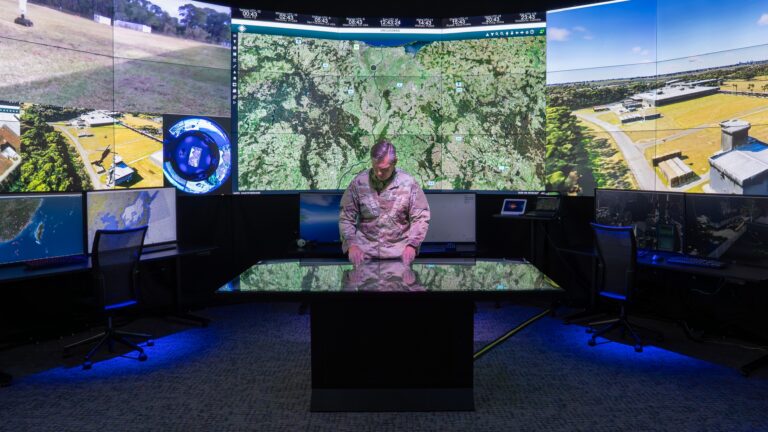
To meet this need, the Advanced Center for Experimentation and Simulation (ACES) offers an integrated modeling platform that unifies assets and scenarios. This system allows NATO allies to plan and assess multinational operations with unprecedented speed and fidelity. The system’s open architecture allows any platform—land, air, sea, cyber, or space—to be integrated into a common virtual arena.
An open architecture for integrated multinational operations
One of the major advantages of this ecosystem is the capacity for „dynamic federation,” meaning that each nation can contribute synthetic models in real time, creating a shared virtual battlespace. Exercise planning is streamlined through scenario-authoring tools that allow multinational staff to collaborate in a common workspace.
Furthermore, the rapid rerun capability allows minor adjustments to force composition or rules of engagement to be evaluated within minutes. This dramatically shortens the planning-to-execution cycle, providing commanders with crucial decisional agility.
The power of „what-if” analysis and the future of virtual combat
The platform excels in predictive analysis, allowing the insertion of emerging technologies, such as hypersonic weapons or autonomous drone swarms, alongside legacy platforms. Commanders benefit from a real-time „digital twin” of the battlespace, overlaying live sensor data with simulated adversary actions.
By delivering this shared sandbox, ACES shortens the loop between concept, prototype, and fielding, ensuring that NATO stays ahead of its adversaries. This approach protects the sovereign data of each state while providing coalition-wide insights, an essential element for maintaining a strategic edge against the challenges of tomorrow.