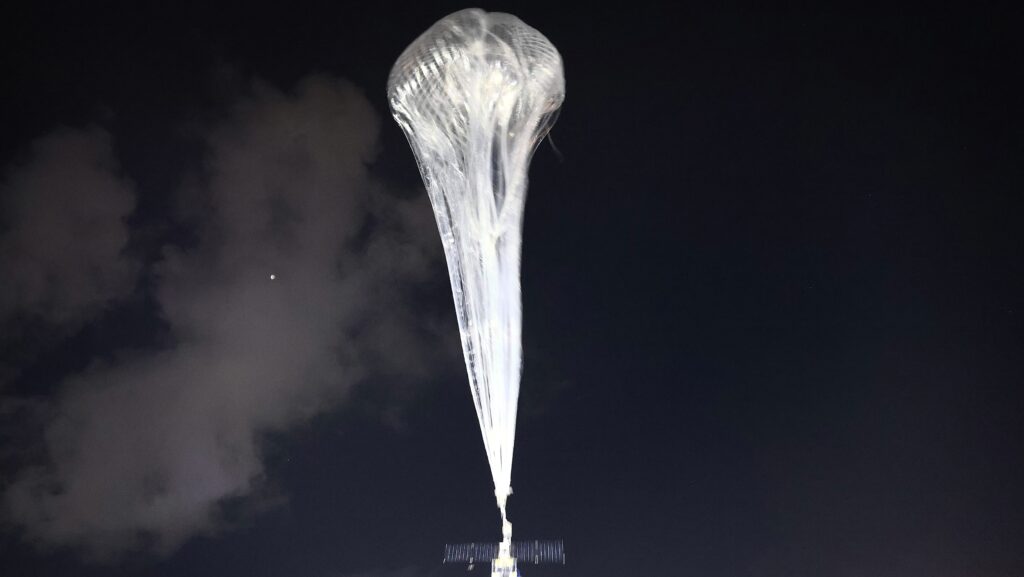
Hundreds of High-Altitude Balloons to be Deployed in Swarming Exercise
The US Army is preparing to launch a swarm of over 100 high-altitude balloons over the Indo-Pacific region in 2026 as part of an experiment to explore the potential for mass effects in intelligence, surveillance, and reconnaissance (ISR). The exercise aims to determine the advantages of deploying a large number of balloons simultaneously.
Swarming for Intelligence Advantage
Andrew Evans, director of the Strategy & Transformation Office within the Army’s G-2 intelligence shop, explained the rationale behind the exercise. „As intel professionals, we are very interested to see what type of advantage we could create when we don’t just launch a balloon or two balloons at a time, but we launch 100 of them or more,” he said.
Indo-Pacific Deployment
The exercise will be conducted in partnership with the 3rd Multi-Domain Task Force and will involve launching the balloons over waters in the Indo-Pacific region. The area was chosen because of the broad, open space available, minimizing risks in case environmental conditions cause balloons to crash.
Varied Payloads and Capabilities
The plan is to include balloons of various sizes and with different payloads. Some will act as decoys, while others will gather information. Certain balloons may deploy uncrewed systems equipped with additional sensing capabilities. Different vendors will participate, each showcasing its command and control capabilities and unique methods for managing the balloons.
Persistent, Cost-Effective Presence
„Our primary goal is to demonstrate autonomous swarming capabilities that generate a persistent, cost-effective presence in the stratosphere,” Evans told Breaking Defense. The Army envisions that once operationalized, this capability will enable enhanced ISR, extended tactical communications, and rapid reconstitution of on-orbit capabilities when space is denied or degraded.
Past Efforts and Renewed Interest
The Army has a history with balloon and aerostat projects, including the ill-fated Joint Land Attack Cruise Missile Defense Elevated Netted Sensor System (JLENS). However, recent interest in aerial capabilities has been renewed. High-altitude balloons can provide a cost-effective means of projecting power and gathering information in contested environments.
Informing Future Strategy
„The data and insights from this experiment will directly inform our strategy for integrating stratospheric assets into our Army and joint force architecture, ensuring we maintain a technological and operational edge in a contested environment,” Evans stated. „This effort is poised to redefine how we project power and gather information in the future, and will serve to validate operational concepts that strengthen our competitive position across the continuum of conflict.”