In a strategic move set to redefine its approach to military technology, the United States Army has issued an unprecedented call to industry, broadly soliciting solutions for the electromagnetic spectrum (EMS domain). This request marks a fundamental shift from previous practices of outlining specific, detailed needs, paving the way for extensive collaborative innovation, vital for national security.
From Specific Requirements to Open Solutions: A New Acquisition Paradigm
Documents accompanying the Request for Information (RFI) highlight a critical current deficiency: the Army „lacks the ability to sense, locate, attack, and protect in and through the EMS across competition and geographic continuums in order to generate necessary effects against targets of interest at range.” Instead of seeking a single, predefined solution, the service aims to see a wide range of ideas, encouraging industrial creativity. Joseph Welch, Program Acquisition Executive for Command and Control (C2)/Counter C2, explained that this modern approach, based on „Characteristics of Need” (CoN) documents, will be critical in obtaining meaningful industry feedback to shape future procurement. This process enables collaboration with a diverse range of partners, from small businesses to large firms, ensuring the rapid delivery of best-of-breed capabilities to soldiers.
Four Pillars of Modern Electronic Warfare: An Integrated Vision
The CoN identifies four key areas for which the Army is seeking solutions:
- Attack: Systems for jamming and denying the use of the spectrum to the enemy for communications, sensing, and navigation, thereby disrupting adversary operations.
- Support: Essential systems for rapidly sensing, identifying, and locating enemy signals and emitters, providing vital battlefield intelligence.
- Protect: Advanced capabilities for blocking enemy jamming and ensuring rigorous emissions control, intelligent reprogramming, and obfuscation of friendly signals, maintaining an informational advantage.
- Common services: A standardized, interconnected baseline into which all electromagnetic spectrum operations (EMSO) systems, which are primarily software-based, can be seamlessly integrated and efficiently share data.
Race Against Time: The Harsh Lessons from Ukraine
Military officials have long lamented the sluggish pace of acquisitions in the dynamic environment of the electromagnetic spectrum. The conflict in Ukraine has demonstrated that the cat-and-mouse game of electronic warfare is waged not in weeks or months, like the Cold War of yesteryear, but in days and even hours. The speed of adaptation and rapid response to electronic threats thus becomes an absolute strategic imperative.
Current Challenges: Fragmentation, Slowness, and Technological Hurdles
The RFI also states that the current acquisition and fielding model presents challenges in meeting the needs of tactical commanders, with varied and disparate systems spread across different formations. Furthermore, the CoN acknowledges that „EMSO capabilities are spread across different warfighting functions and not fully designed as cohesive technologies that are modular, scalable, and adaptable enough to mitigate modern threats.” This fragmentation „prevents the Army from truly leveraging Artificial Intelligence and Machine Learning (AI/ML) for quick decision making.”
Artificial Intelligence: The Key to Supremacy in an Invisible War
Colonel Scott Shaffer, PM for EW&C, emphasized that the RFI itself is geared toward proposals that embrace artificial intelligence and edge computing, with speed as the absolute top priority. „Unlocking the potential for spectrum operations at machine speed will be key to winning the EMS fight,” he affirmed, highlighting the transformative role of AI.
Rebuilding a Critical Domain: From Neglect to Urgent Modernization
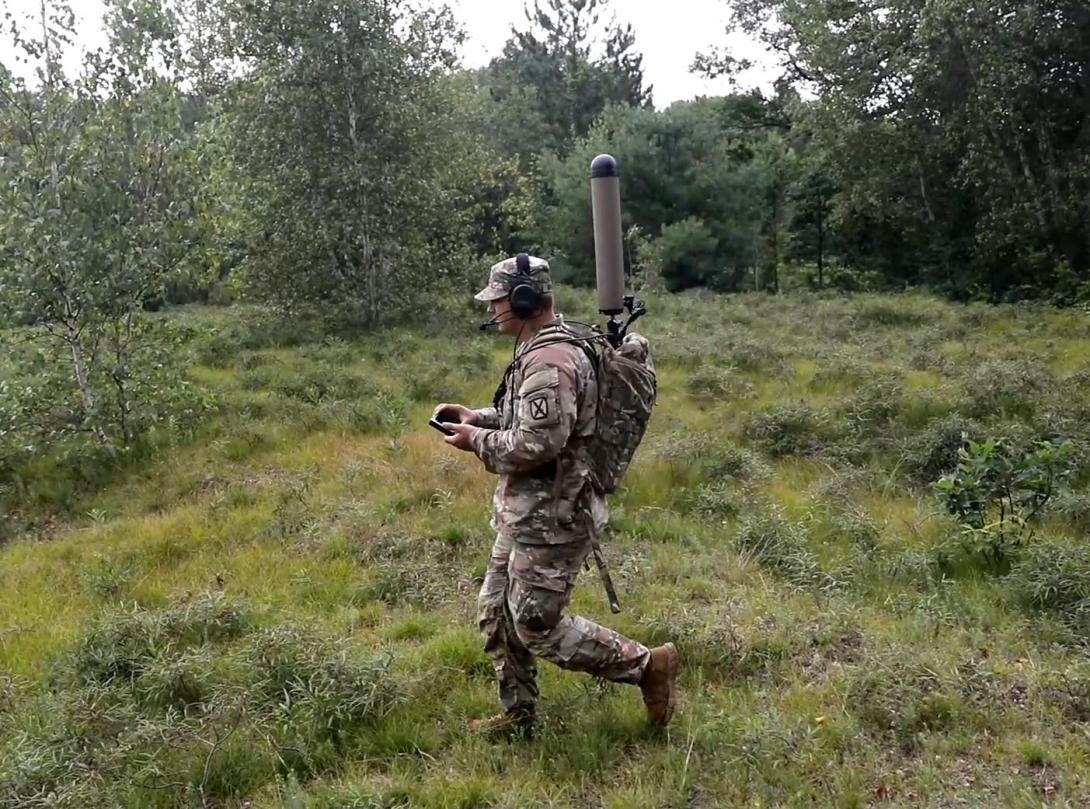
The Army has been on a multi-year journey to rebuild and modernize not only its capabilities but also its prowess in the electromagnetic spectrum. After the Cold War, the service divested much of the relevant systems and expertise. Now, adversaries have become more adept at operating within this invisible domain, understanding that blocking signals, navigation, munitions, and communication would be key to defeating US forces. To date, the Army has fielded only one program of record offensive jammer, a dismounted backpack, underscoring the necessity for rapid expansion.
A New Acquisition Mindset: Flexibility and Continuous Innovation
In a prior statement, Joseph Welch explained that the service aims to use CoNs more broadly to allow greater flexibility. Using what he called a „product-centric inventory,” he wants program managers to have the ability to assess available technologies for what they are, rather than through the lens of strict requirement documents. „Looking at what a vendor has that’s high maturity or able to go into a prototype and saying we’re not going to identify in advance, this is the only requirement this thing can solve, we’re going to see what it’s capable of and if we need to update requirements,” he detailed, indicating a more agile and adaptable approach.
Key Characteristics for Future Solutions: The Recipe for Success
The new EMSO CoN outlines a series of „key characteristics” that EMSO solutions should possess, such as resilience, adaptability, modularity, scalability, rapid deployability, and inherent security. The deadline for submitting responses is March 13, marking the beginning of a new era for American electronic warfare.