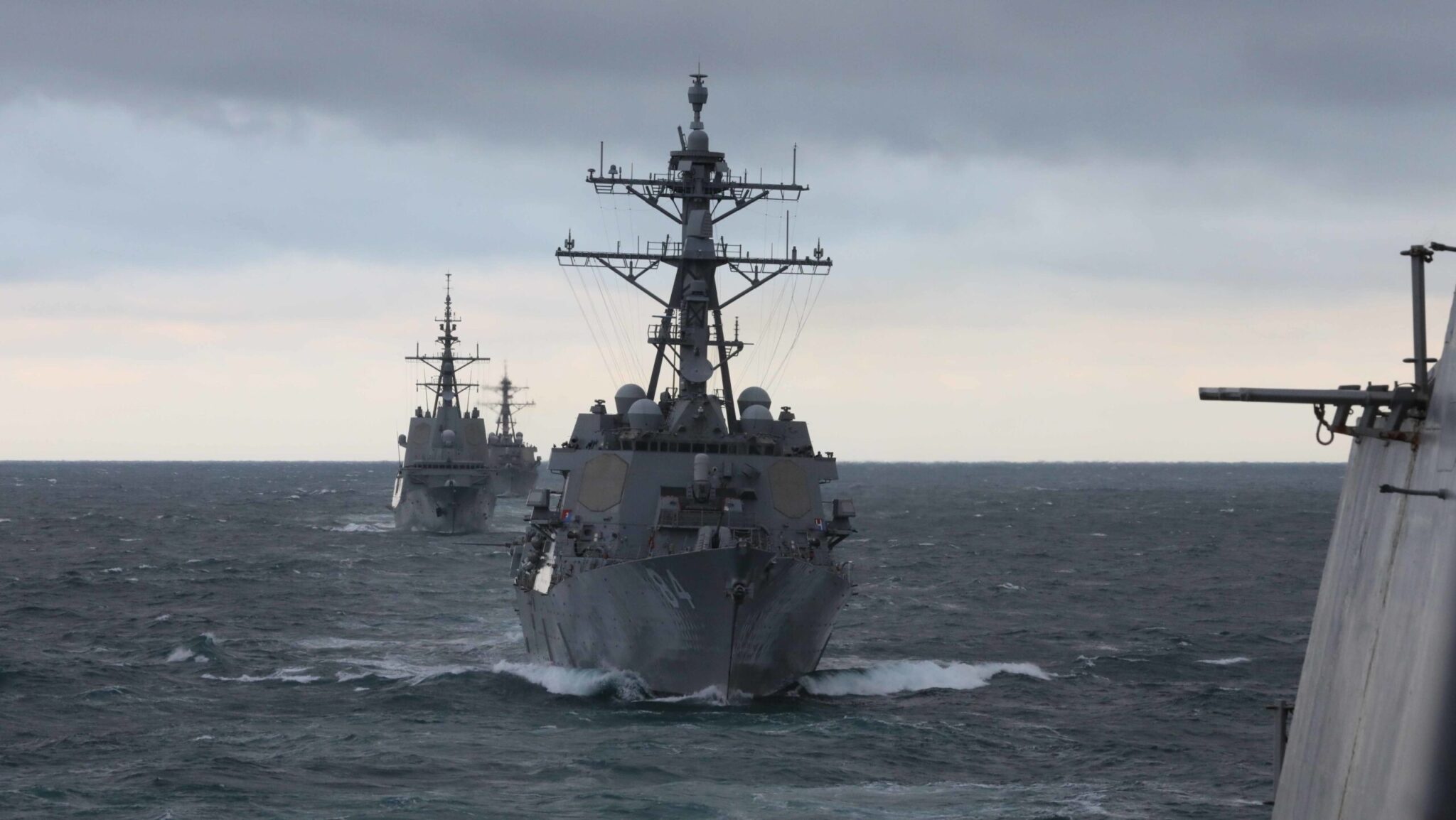
Need for Change in Operations
Vice Adm. Brendan McLane, the US Navy’s top surface warfare officer, emphasized the necessity for substantial changes in training, maintenance, and contract execution if the Navy aims to meet its latest readiness goals. „We can’t continue to do things the way we have been,” McLane told reporters ahead of the Surface Navy Association’s annual symposium. His statements reflect the challenges the surface fleet has faced over the past year, particularly in light of ongoing operational demands in the Middle East.
Operational Context and Readiness Goals
The surface fleet, particularly its carrier strike groups, has been actively engaged in countering Iranian-backed Houthi attacks to safeguard international shipping lanes and support US allies in the region. Amid these efforts, Chief of Naval Operations Adm. Lisa Franchetti has set an ambitious 80 percent surge-readiness goal for the Navy by 2027, articulated in her recent “Navigation Plan.”
McLane, often referred to as the “SWO Boss,” highlighted that achieving surge readiness requires crews to complete both surface warfare and advanced tactical training, in addition to participating in a composite training exercise (COMPTUEX) to ensure comprehensive preparation with their carrier strike group.
Updated Strategic Document and Focus Areas
To align with Franchetti’s readiness aspirations, the Navy plans to release an updated strategic document—the successor to the 2022 “The Competitive Edge” published by McLane’s predecessor. This new strategy will specifically address the readiness targets laid out by Franchetti.
“The key … the long pole in the tent, that’s maintenance. We know that we’re going to have to do things differently,” McLane stated, noting that he has received insights from a recent study focused on enhancing maintenance procedures, particularly for amphibious ships.
Innovative Contracting Strategies
McLane advocated for more agile contracting approaches, suggesting a „strategy of strategies” tailored to individual ships, home ports, and specific objectives. He explained that relying on a one-size-fits-all contracting vehicle is insufficient given the varied needs of different ships.
Another significant hurdle, according to McLane, involves ensuring ships complete prerequisite training cycles on schedule. He believes the goal of accomplishing this training within 10 weeks is feasible but acknowledged that equipment malfunctions often impede timely training.
Learning from Other Industries
To enhance maintenance practices, Vice Adm. James Downey, chief of Naval Sea Systems Command, indicated that the Navy is studying operational practices from industries such as merchant shipping, airlines, nuclear power, and offshore oil platforms. This initiative mirrors efforts undertaken in naval aviation during the previous Trump administration when Defense Secretary Jim Mattis prompted improvements in readiness metrics for strike fighter fleets.
Downey posed critical questions regarding best practices: „How do they perform on time, what is it they value, and how do they prepare to achieve what they value?” His collaboration with McLane underscores a concerted effort to optimize the Navy’s operational effectiveness moving forward.