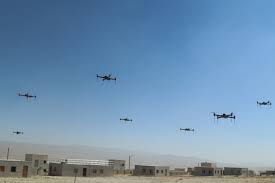
US special operations forces are demonstrating strong enthusiasm for the Pentagon’s Replicator drone project, particularly as the Department of Defense (DoD) prepares for potential conflicts in the Pacific region. Chris Maier, the assistant secretary of defense for Special Operations and Low-Intensity Conflict, shared insights this week on the advantages of the Replicator initiative during a Defense Writers Group meeting.
Maier emphasized that Replicator will enable the rapid fielding of systems compared to the conventional defense procurement process. He noted that special operations forces (SOF), due to their unique operational capabilities, can often conduct smaller projects more swiftly and test those in real-world scenarios, thereby serving as proof of concept for the broader Replicator program. If effective, these concepts can then be scaled up quickly, contrasting with traditional contracting methods.
Launched by Deputy Secretary of Defense Kathleen Hicks over a year ago, the Replicator initiative aims to produce hundreds of unmanned platforms at an unprecedented pace. Hicks previously described the project’s goal as providing “capabilities at greater speed and scale while simultaneously burning down risk and alleviating systemic barriers across the department.” The first Replicator systems were delivered to servicemembers in April, marking the beginning of this significant endeavor.
Maier pointed out that insights from the ongoing Ukraine conflict have highlighted the importance of mass in modern warfare, reinforcing the relevance of the Replicator’s strategic objectives. During a recent visit to US Indo-Pacific Command, military leaders expressed optimism about the potential of Replicator to expedite efforts that might otherwise face delays in traditional processes, while also promoting a culture of rapid experimentation and adaptability.
For special operations in the Indo-Pacific, Maier stressed that the Replicator initiative is vital for achieving placement and access in contested areas, enabling smaller units to reach critical locations without the need for large military formations. This capacity will allow SOF to operate effectively and bring forth necessary capabilities in a timely manner.
In addition to discussing the Replicator project, Maier also elaborated on the evolving role of SOF in potential Indo-Pacific conflicts. He explained that special operations units will support conventional forces by providing crucial intelligence about local conditions and fostering relationships with regional partners. This marks a significant shift from the last two decades, where counter-terrorism efforts primarily focused on special operations leading engagements with conventional forces in a supporting role.
Maier’s comments come on the heels of Deputy Secretary Hicks indicating that Replicator is progressing positively with legislative backing, although she has highlighted challenges related to congressional oversight. Hicks noted the significant number of briefings conducted on the initiative, pointing out that its small budget allocation represents only 0.059 percent of the DoD’s overall budget, making extensive engagement from Congress less sustainable.
The enthusiasm from special operations forces regarding the Replicator initiative underscores a critical adaptation in military strategy, geared toward enhancing operational capabilities in a rapidly changing global landscape marked by rising tensions in the Indo-Pacific theater.