Introduction to Victus Sol Mission
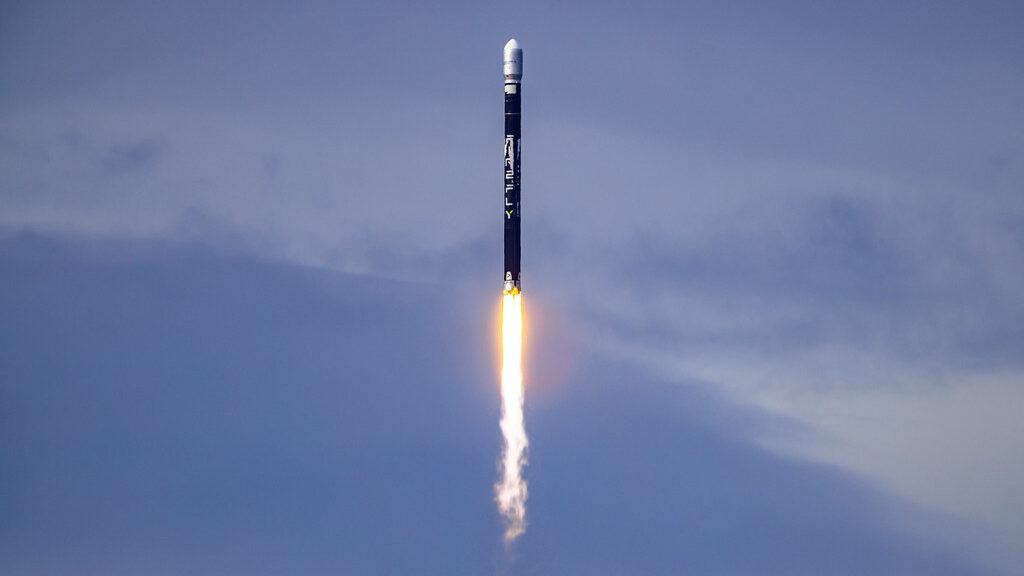
In a significant development within the Space Force’s Tactically Responsive Space (TacRS) program, details of the latest mission, titled Victus Sol, remain largely confidential. However, it has been announced that Firefly Aerospace will receive a $21.81 million contract to lead this initiative.
Building on Previous Demonstrations
Victus Sol marks the third mission in the TacRS series and aims to enhance rapid satellite launch capabilities. This mission will be the first to place an operational system into orbit, as noted by the Space Force, which highlights the transition from demonstrations to operational readiness.
Mission Specifications Confidential
According to a spokesperson for Space Safari, the organization responsible for managing the program within the Space Systems Command, information regarding the launch date, type of payload, capability requirements, and mission objectives will remain undisclosed for the time being due to mission security protocols. Furthermore, the selection timeline for space vehicle providers or payloads has not been revealed.
Funding and Budget Allocations
In its fiscal 2025 budget request, the Space Force has allocated $30 million for research and development of the TacRS program. The intention behind each VICTUS mission is to ensure satellite launches can occur within 24 hours of notice, aligning with unknown orbital planes and facilitating rendezvous and proximity operations for satellite inspection and characterization.
The budget documents also indicate that the Victus Sol mission aims to facilitate launches within the first half of fiscal year 2026.
Contract Details with Firefly Aerospace
The Space Safari spokesperson confirmed that the contract with Firefly Aerospace is sole-source and funded using fiscal year 2024 and 2025 resources. A press release further clarifies that this award falls under the Orbital Services Program (OSP)-4, designed to provide dedicated launch services to the Department of Defense and other government entities.
Firefly Aerospace’s Commitment
Jason Kim, CEO of Firefly Aerospace, emphasized the importance of this mission in a press release, stating that this will be their third TacRS initiative. He highlighted the increasing demand for responsive space solutions and noted that Firefly is actively enhancing its Alpha production line to meet these needs.
Objectives of the TacRS Program
The overarching goal of the TacRS missions is to enable satellite launches within a 24-hour timeframe. Crucially, these missions are designed for maneuverable satellites capable of close interactions with other satellites, allowing opportunities for inspection, repair, or even potential engagement during operational missions.
Previous and Future Missions
The inaugural TacRS mission, Victus Nox, launched in September 2023 and was heralded as a transformative step for the Space Force amidst growing great power rivalry. This mission featured the launch of a maneuverable space vehicle created by Boeing’s Millennium Space Systems. Following this, the Space Force awarded contracts in April 2024 for the follow-up Victus Haze mission, securing funding for two vendors to ensure operational readiness.
Future Missions and Strategic Goals
Looking ahead, the Space Systems Command plans to initiate two additional missions in fiscal year 2026, named Victus Surgo and Victus Salo. These missions will collaborate with the Defense Innovation Unit (DIU) to demonstrate on-orbit prepositioned capabilities to fulfill urgent command needs. Impulse Space has received a $34.5 million contract to develop two space vehicles that will showcase how agile on-orbit assets can be integrated into rapid launch responses.
The Demand for Space Mobility and Logistics
Senior officials at U.S. Space Command have underscored the critical need for advanced on-orbit capabilities, pertaining to space mobility and logistics. These capabilities may include refuelable and repairable satellites or even on-orbit ‘gas stations’ that allow for dynamic operations in space. Furthermore, the potential to deploy cargo on-orbit for direct transport to operational theaters has been emphasized.
Despite initial enthusiasm for these capabilities as recently as 2023, there appears to be a decreasing interest in funding such initiatives, as reflected in the Space Force’s recent budget requests for fiscal year 2026, which eliminated allocations for these activities after a previous request for $20 million in fiscal year 2025.