



















The U.S. State Department has authorized a series of potential arms sales to key Middle Eastern partners—Saudi Arabia, Oman, and Iraq—totaling approximately $6.1 billion in military equipment.
Saudi Arabia Secures Massive Precision Munitions Package
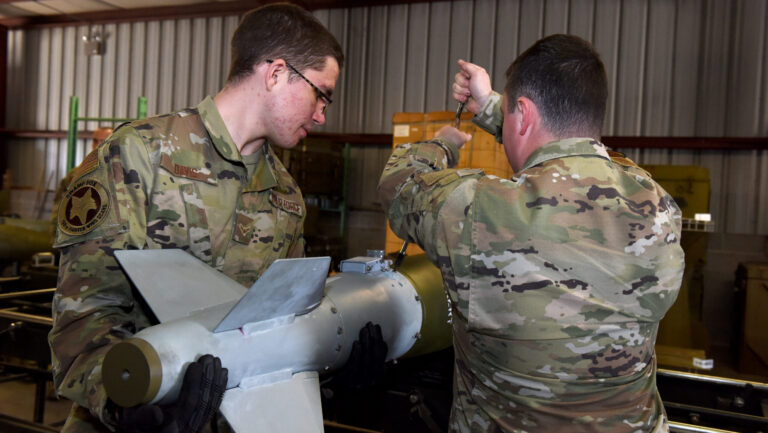
The largest approved sale is destined for Riyadh, involving over 10,000 extended-range Joint Direct Attack Munition (JDAM) kits and related equipment, valued at $5 billion. This transaction includes a roughly equal split of 500 lb. and 2,000 lb. conventional bombs, which can be converted into precision-guided weapons when equipped with JDAM kits. This replenishment effort follows reports of depleted precision munition stockpiles resulting from intense aerial operations in the ongoing conflict with Iran.
Furthermore, the State Department cleared a secondary deal for Saudi Arabia covering 60 AGT-1500 tank engines used to power M1 Abrams main battle tanks. This contract is valued at $750 million, with Honeywell identified as the prime contractor.
Strategic Sustainment and Fleet Upgrades for Oman and Iraq
Oman has been approved to procure $188 million in sustainment services for its F-16 fighter jet fleet. While Lockheed Martin serves as the manufacturer and primary maintainer of the aircraft, the official notice indicated that support for this potential sale would be provided by U.S. government entities or contracted vendors, depending on specific operational requirements.
Separately, the U.S. authorized the potential sale of Bell 412EPX helicopters to Iraq, an acquisition estimated at $150 million. This announcement follows closely on the heels of another State Department approval earlier in the week, clearing Baghdad to purchase $800 million worth of helicopters, including both the Bell 412EPX and the 407M models.
Congressional Review Period Initiated
Each of these proposed sales, issued as a formal congressional notification, is not yet final. Both the quantities of equipment and total monetary values are subject to change during subsequent negotiations. Additionally, the notifications trigger a mandatory 30-day window during which lawmakers have the opportunity to block the deals, although such legislative intervention is considered unlikely under current circumstances.


