Key executives from Lockheed Martin and RTX conveyed on Monday that, despite efforts from Aerojet Rocketdyne, a subsidiary of L3Harris, to improve the delivery rates of solid rocket motors, the company is still lagging behind the needs of weapons manufacturers.
“There’s a lot of work to do there,” said Tim Cahill, Lockheed’s vice president of missile and fire control, during an interview with Breaking Defense at the Farnborough Airshow. “I believe that L3 is earnest in addressing the issues and making necessary investments, but we are still struggling to get everything we need as a manufacturer.”
Separately, Tom Laliberty, president of Raytheon’s land and air defense systems business, characterized Aerojet’s overall output as a “mixed bag,” with some products experiencing significant delivery delays while others remain on track. “I don’t want to paint L3 with a broad brush,” he stated at a briefing with reporters. “However, even if they were performing excellently on all fronts, there still wouldn’t be enough capacity.”
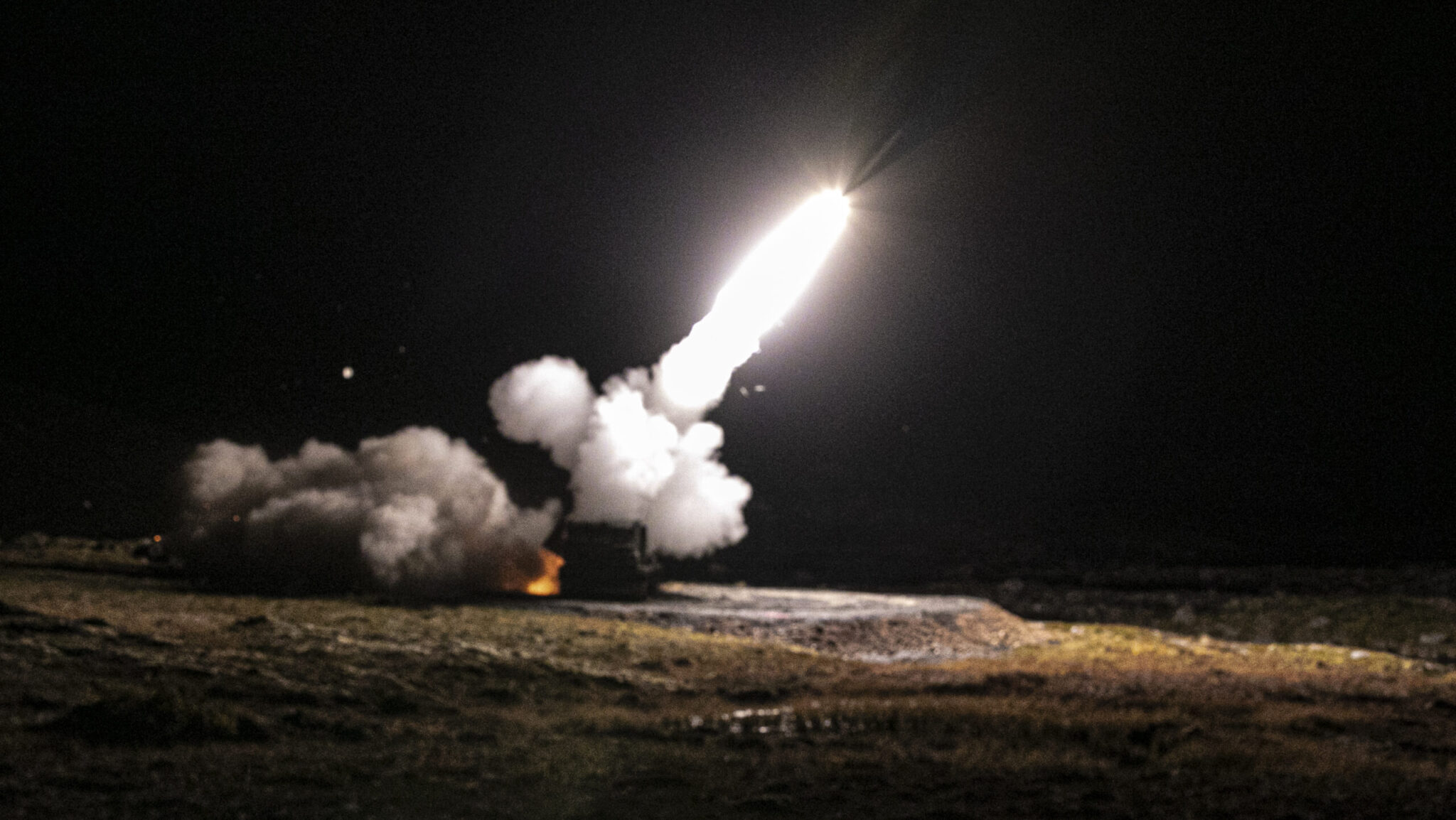
Solid rocket motors are essential for weapons systems such as Lockheed’s Guided Multiple Launch Rocket System (GMLRS) rounds, where production is significantly increasing to replenish stocks depleted during the ongoing war in Ukraine.
Aerojet was already facing challenges in meeting delivery commitments when an intense internal board conflict erupted in early 2022. Following the fallout, the company was prepared for sale to L3Harris, but the internal turmoil led to Lockheed’s expressed frustration regarding the pace of deliveries. Currently, Northrop Grumman, which acquired Orbital ATK in 2018, remains the only other major U.S. supplier of solid rocket motors, while several smaller firms are emerging in the sector.
A spokeswoman for L3Harris stated that the company has made “significant investments” to enhance solid rocket motor delivery and production capacity. These include modernizing facilities, automating manufacturing processes, and improving the supply chain.
“Almost a year later, solid rocket motor production has increased, on-time delivery has improved, and late deliveries have been cut by nearly half,” the spokeswoman noted. “While we have made great progress, there is still work ahead, and the company is fully focused on making further improvements to meet current and future customer needs.”
Both Aerojet and Northrop currently produce solid rocket motors for GMLRS, but additional capacity will be necessary to satisfy growing demand, according to Cahill.
“We are asking the companies not only to solve current issues but also to elevate production rates continuously. This places a strain on the system, which is difficult in any circumstance,” Cahill explained. In L3Harris’s case, it is “even more challenging when you’re acquiring a company and integrating changes.” He acknowledged the difficulties they are encountering.
Lockheed CEO Jim Taiclet previously mentioned that the company is on a “campaign-like” mission to expand the solid rocket motor industrial base. Cahill echoed this sentiment, emphasizing the need for more vendors to “distribute the load” on existing suppliers as munitions production rates continue to rise.
Lockheed is collaborating with several potential new entrants to the solid rocket motor industry on prototypes and small-scale demonstrations, with some of these companies even receiving direct investments from the defense giant, according to Cahill, who did not disclose specific names.
Last summer, Lockheed raised concerns with the Defense Department and the Federal Trade Commission about L3Harris’s ability to guarantee access and competitive pricing for solid rocket motors as a merchant supplier. However, those concerns did not gain significant traction, and the U.S. government allowed the L3Harris acquisition to proceed in July 2023.
Lockheed previously attempted to acquire Aerojet for $4.4 billion but abandoned the deal in 2022 after the FTC filed to block it, citing concerns that Lockheed, as a major customer, might use an acquisition to disadvantage its key competitors in the weapons and space sectors.
Meanwhile, RTX has also expressed its frustration with Aerojet’s recent production of solid rocket motors, highlighting inefficiencies related to supply chain and labor that need to be corrected.