The US Army is preparing for four competitions related to counter-drone technologies in the upcoming year, which includes selecting a next-generation missile, as noted by Brig. Gen. Frank Lozano, the Army’s program executive officer for missiles and space.
During a briefing at the Space and Missile Defense symposium in Huntsville, Alabama, on Tuesday, Lozano, who is anticipated to receive his second star today, outlined a series of forthcoming competitions that are contingent upon congressional approval of the service’s budget request and the continuation of current efforts. He forecasts that 2025 will present four opportunities in this domain.
Among the notable competitions is the search for a next-generation counter-unmanned aerial system (C-UAS) missile. The Army is currently collaborating with Raytheon’s Coyote and BlueHalo’s Freedom Eagle (FE-1) missiles but plans to widen the field for competitors.
“There are other companies out there working on interceptors for counter-UAS applications that may also have the potential to intercept larger caliber rockets as well as cruise missiles,” Lozano elaborated. “Therefore, we will be holding a competition next year to evaluate a next-generation counter-UAS missile.”
In addition to the missile competition, the Army intends to host a contest aimed at developing a handheld C-UAS system for soldiers in the field. Lozano mentioned that power limitations are a significant hurdle for systems of this kind since it is impractical for soldiers on the battlefield to carry a 500-kilowatt generator. However, after the 101st Airborne Division tested new handheld systems with positive feedback, the Army is moving forward with this competition.
Furthermore, Lozano and his team are set to compete a replacement for the Terminal High Altitude Area Defense System (THAAD) command and control, known as the Integrated Battle Command System (IBCS). The objective is to develop a mobile system that first integrates with C-UAS capabilities, followed by incorporating maneuver short-range air defense systems.
“The goal is to begin with a solution that is straightforward and easily achievable, enabling many industry participants to join the competition with hopes of securing an award,” Lozano stated.
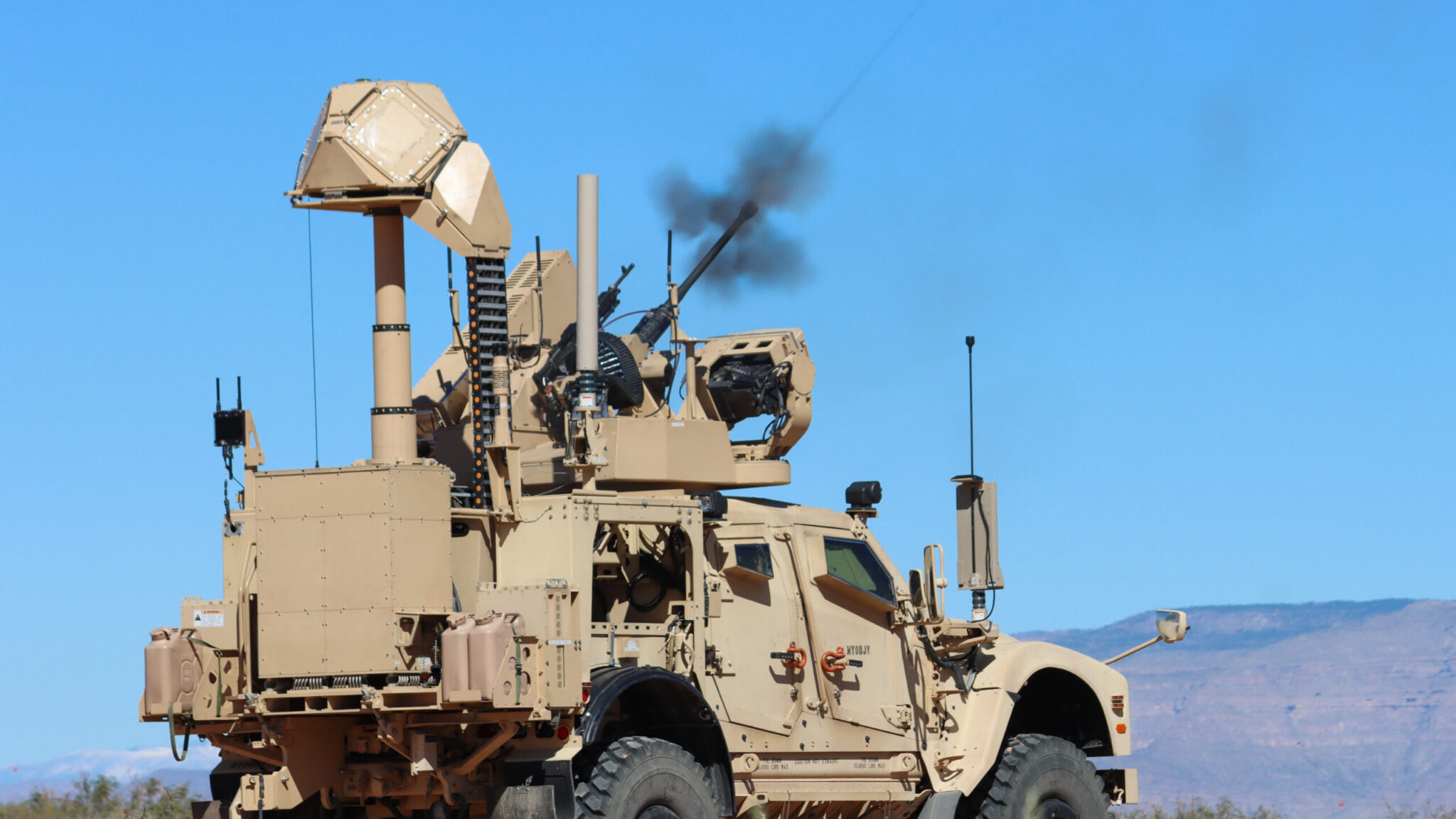
Lastly, the Army will initiate a fourth competition to identify a flat panel array radar for the new single vehicle Mobile-Low, Slow, Small-Unmanned Aircraft Integrated Defeat System (MLIDS). Previously, the Army utilized a configuration with two mine-resistant ambush-protected (MRAP) all-terrain vehicles (M-ATV) featuring a highly capable Raytheon radar. However, Lozano emphasized that the service is transitioning this setup to a single Stryker vehicle and is interested in exploring radar options from companies like Elbit and SRC.
“We’re establishing a competition to engage all vendors, ensuring we comprehend the current market landscape while offering everyone a chance to participate,” he added.