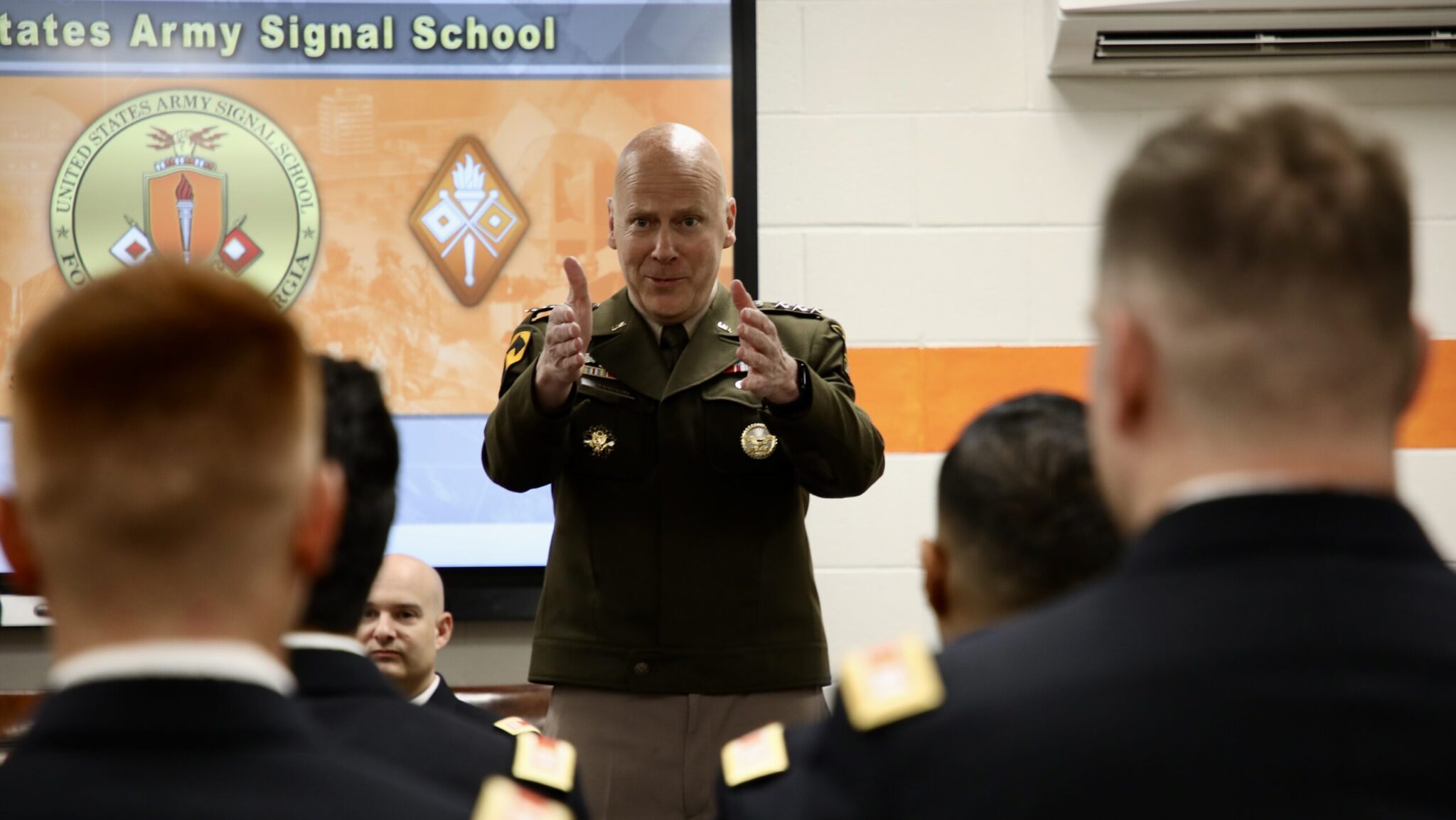
The Army’s G-6 office is undergoing a restructuring to align with the service’s ongoing effort to create a unified network, proposing significant reforms to its signals battalions for the new era of warfare, according to statements made by a senior official today.
“If we can do 90 percent of our patching from a single location across the broader Army enterprise, why do we need a ton of cyber defenders at the local level?” asked Gen. John Morrison, Deputy Chief of Staff for G-6. “Repurpose them. Have them do something innovative, like focus on units and improve the quality of support we owe to our Army at the division level.”
Morrison highlighted a critical issue where outer “tactical” networks were operating separately from the central “enterprise” networks, leading to unnecessary duplication when updates were required for both systems.
To address this and other challenges, along with swiftly transitioning to the new Army Unified Network, Morrison proposed reestablishing division-level signals battalions instead of maintaining a disjointed structure based on “brigade combat team architectures.”
Although Morrison did not provide specific details on how he envisions the evolution of the Army’s signals organization, he mentioned that the proposed changes will require approval from senior leadership. Some reforms will coincide with the broader Army’s force design update, aimed at modernizing and transforming the service to confront future threats. Morrison is collaborating with the Cyber Center of Excellence and the broader Army to implement his portion of the force design update, with plans to establish the redesign by the end of the year or within the next 60 to 90 days.
The Global Cyber Center will play a vital role in ensuring that the unified network initiative, known as the Unified Network Operations strategy, is operational across all theaters. Morrison indicated that as the unified network strategy unfolds, it will facilitate the reorganization of the G-6 and signals offices over time.
Regarding the specific reorganizations within G-6, Morrison stated that the cybersecurity division is likely to be first in line for restructuring.
“I think that is a near-term target. If we really maximize the capabilities that we have within the Army framework, we can accelerate that process,” he noted about the cybersecurity division within G-6. “Other changes may take a bit longer in the tactical domain.”
Sydney Freedberg contributed to this report from Washington, DC. This report was updated at 7:20 PM ET to clarify Morrison’s remarks regarding the restructuring.