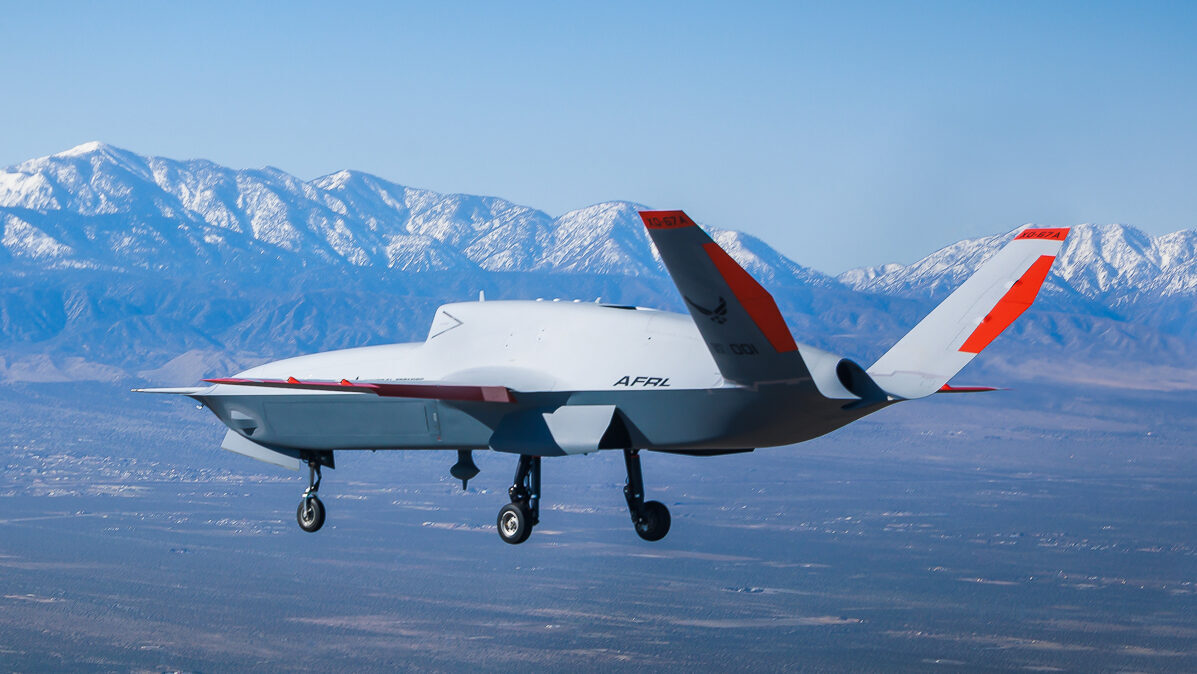
In June 2023, members of the House Armed Services Committee sought to establish some guidelines in the annual defense policy legislation to support the nascent efforts of the Air Force and Navy in developing fleets of drone wingmen. Specifically, lawmakers aimed to define three categories for the forthcoming Collaborative Combat Aircraft (CCA) programs, along with establishing functional definitions and price ceilings for each. However, following a strong rebuke from Air Force Secretary Frank Kendall, this proposal was not adopted. Instead, Congress opted to require detailed cost matrices and financial thresholds for the fiscal 2024 policy bill. Since then, Air Force officials have asked lawmakers for permission to allocate additional funds to refine their estimates based on a newly approved acquisition strategy.
Virginia Republican Rep. Rob Wittman, who leads the tactical air and land forces subcommittee that initially proposed the guidelines, told Breaking Defense he did not harbor significant concerns regarding CCA costs.
“I am not worried about the affordability of CCA, because by their very nature, they will be much less expensive,” Wittman remarked during the Defense News conference in Washington, likely alluding to the costs of manned fighter aircraft.
“What I want to ensure is that we do not take a CCA, considered a basic platform, and unnecessarily inflate its cost through requirements creep,” he added, echoing sentiments from top Air Force officials about the need to avoid adding endless requirements. “As long as they keep it simple and straightforward, it will likely remain affordable.”
Keeping costs in check will be critical for the program, officials say, because if the unit prices of the drones become too high, the Air Force may struggle to produce sufficient quantities. Yet, the service faces capability requirements that often lead to increased costs, creating a delicate balance for the emerging CCA program, which already includes two vendors—General Atomics and Anduril—along with a classified pool of software developers. A recent report from the Center for Strategic and International Studies highlighted that while trimming performance carries cost implications, the government must remain vigilant against industry attempts to circumvent pricing challenges.
“If [the Air Force] is going to spend $30 million on an aircraft that’s 10 times better than an F-35, it’s hard to argue they’re getting a bad deal,” stated Gregory Allen, director of the Wadhwani Center for AI and Advanced Technologies at CSIS and coauthor of the report.
“However, if they spend $30 million on an aircraft—approximately a third of the F-35’s cost—and it’s only a third as effective, then one must question the strategy.”
Cost and Capability
Instead of sacrificing capability, Allen and coauthor Isaac Goldston propose the program as an opportunity to discover innovative cost-saving methods.
“Most discussions surrounding cost reduction in CCA and similar programs have focused on compromising performance and lifespan, rather than enhancing operational efficiency within an often bloated defense industrial base,” they note. “While cutting performance does yield cost savings, this program provides an opportunity for the Air Force to challenge the industry to deliver better results through competitive pressure.”
They cited SpaceX as a prime example of successfully lowering costs without quality compromise in a market previously dominated by ULA. Such developments lead them to argue that the Pentagon should be skeptical of claims that cost reduction must come with performance sacrifices.
“SpaceX’s success stems from a dedicated focus on cost reduction and a willingness to vertically integrate technology to address existing challenges more affordably,” Allen said. He cited SpaceX’s use of commercially available semiconductors in place of expensive, radiation-hardened chips as an example of innovative thinking.
At this point, it remains uncertain what capabilities CCA will possess based on publicly available information, Allen noted, emphasizing the lack of details regarding features like stealth and range. Moreover, other financial considerations, such as research and development and sustainment, are not easily reflected in unit pricing—often accounting for a significant portion of overall program costs.
CCA, however, may be well-positioned to disrupt traditional cost paradigms.
Officials like Air Force Chief of Staff Gen. David Allvin have discussed the possibility of reducing lengthy logistical support chains for CCA—suggesting these drones may be replaced more swiftly than conventional aircraft. While this may increase procurement costs due to rapid replenishment, Allen argued that high production volumes should lead to decreased prices through economies of scale.
“Whether they’re getting value for money is still to be determined,” Allen stated. Still, he revealed that advanced war games conducted by CSIS indicate that most aircraft are likely to be destroyed on the ground, not in the air, during scenarios like a potential conflict with China, making F-35s just as vulnerable as CCA. In that context, he remarked, “We likely don’t need an aircraft that exceeds F-35 capabilities; we simply need more aircraft.”
Allen and Goldston’s report acknowledges the Air Force’s effective strategies regarding CCA, including separating hardware from software acquisitions, incorporating non-traditional firms, and committing to continuous competition. Nevertheless, if the Pentagon is to secure the capabilities needed for future confrontations, they assert that industries must be willing to take risks, particularly ones that could compromise profits.
Some of this risk-taking is already occurring, Allen noted, such as Anduril’s decision to establish a new factory using investor funds to produce platforms like CCA from competitions they have yet to win. Similarly, Northrop Grumman has independently initiated flight tests for the Model 437 aircraft produced by its subsidiary, Scaled Composites, although details about its plans remain scarce.
“This approach reflects the intelligent use of resources,” said Allen. “Kudos to Northrop for their self-belief and willingness to invest their investors’ money.” He concluded, “The DoD needs companies ready to put their capital at risk.”