In an unprecedented display of industrial might, three of the world’s leading defense players have simultaneously announced massive investments in the field of undersea technology. Lockheed Martin allocated 3.5 billion dollars for the acquisition of Ultra Maritime, France’s Thales took a strategic stake in Exail Technologies, and Italy’s Fincantieri invested 700 million dollars in maritime drone specialists. This financial surge underscores a harsh geopolitical reality: the ocean depths have become the critical new front where global security is decided.
The underwater Great Wall: Chinese and Russian challenges accelerate the oceanic arms race
The massive investments by major corporations are not just business opportunities, but direct responses to the increasingly aggressive actions of NATO’s adversaries. China has launched a large-scale project to map the ocean floor in the Indo-Pacific, using dozens of research vessels to create what experts call an “Underwater Great Wall” of sensors and autonomous systems. Meanwhile, Russia utilizes its specialized GUGI fleet to monitor and potentially sabotage internet cables and energy pipelines, operating at depths inaccessible to most Western nations.
Furthermore, the threat of undersea mines remains an extremely dangerous asymmetric weapon. The experience in the Strait of Hormuz has shown that mines can paralyze international trade and shift the balance of power in hybrid warfare, offering tactical advantages even to less sophisticated military actors.
Heavyweight acquisitions: Lockheed Martin and Thales absorb specialists in sensors and mine countermeasures
The strategy of major integrators is clear: accelerating capabilities by acquiring niche firms that dominate the submersible technology market. Lockheed Martin’s acquisition of Ultra Maritime, the company’s first major transaction since the takeover of Sikorsky in 2015, brings advanced sonar sensors, torpedoes, and electronic warfare technologies into the American giant’s portfolio.
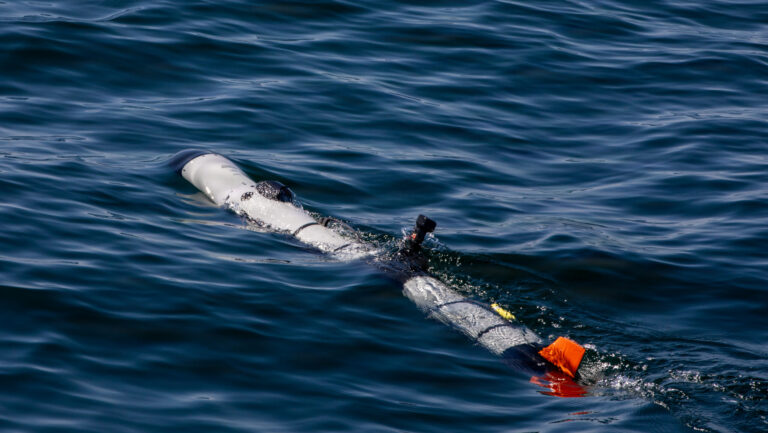
In Europe, Thales secured a dominant position by taking a stake in Exail Technologies, a company recognized for its mine countermeasure solutions and autonomous systems. These moves show that major contractors are no longer willing to wait for internal technology development, preferring instead to absorb validated expertise to meet the urgent needs of naval forces.
A frontier similar to space: Fincantieri bets on maritime drones to secure critical infrastructure
The Italian group Fincantieri goes even further, comparing the potential of the undersea market to that of the space sector. By acquiring firms such as Next Geosolutions or Graal Tech, the Italians are expanding their capabilities in maritime mapping and the construction of autonomous underwater vehicles (AUVs). These maritime drones will play a vital role in monitoring pipelines and data cables, protecting essential infrastructure against sabotage.
The strategic pivot toward the undersea domain confirms that dominance of the seas is no longer confined to the surface. In a world marked by conflicts in the Black Sea and tensions in the Middle East, controlling the depths through autonomous systems and intelligent sensors has become the new top priority for the defense industry.