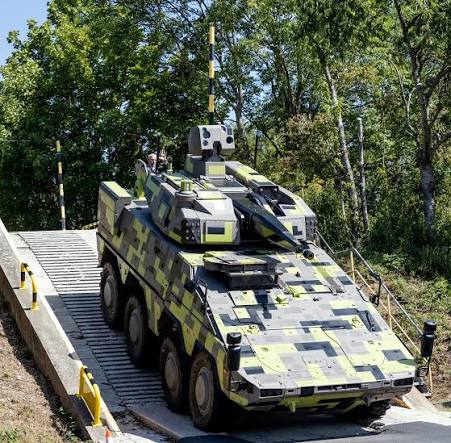
Germany and the Netherlands are strengthening their military cooperation through the acquisition of an additional batch of RCT30 wheeled infantry fighting vehicles, under a collaborative armament program managed by the KNDS Deutschland and Rheinmetall joint venture. This move highlights the desire of both nations to modernize their ground forces and ensure full interoperability within the European flank of NATO.
A multi-billion euro investment: OCCAR coordinates the expansion of the Boxer fleet
Berlin is set to receive an additional 35 vehicles, on top of the 150 already ordered, while The Hague has opted for 34 additional units. This top-up order is part of a massive contract signed in 2025, valued at 4.7 billion euros, aimed at delivering a total of 222 systems. The entire procurement process is managed by OCCAR, the European agency that coordinates collaborative weapons programs.
KNDS Deutschland leadership emphasized that joint procurement not only accelerates deliveries due to higher production volumes but also has a direct positive impact on logistics and troop training. This unified approach guarantees that the German and Dutch armed forces can operate without technical barriers on the battlefield.
The backbone of Medium Forces: The Schakal armored vehicle becomes the central pillar of the German army
The Boxer RCT30 was designed to become the core element of Germany’s new „Medium Forces,” a category of highly mobile units that bridge the gap between light infantry and heavy armored units. This modernization aligns with Chancellor Friedrich Merz’s vision of transforming the Bundeswehr into the strongest conventional army in Europe.
Technically, the vehicle combines the versatile Boxer chassis with the 30mm turret of the Puma infantry fighting vehicle. In German service, this armored vehicle has been dubbed „Schakal” (Jackal) and is equipped to counter drones and other aircraft. Furthermore, the system includes MELLS anti-tank missiles, making it capable of targeting even main battle tanks.
Efficiency through interoperability: Massive investments for the operational readiness of NATO forces
According to official data, total investments in the Boxer program have reached nearly 6.5 billion euros in the last 12 months alone. This financial flow highlights OCCAR’s crucial role in delivering defense programs that increase production efficiency and the operational readiness of participating nations. Beyond the delivery of the vehicles, subsequent contracts have already been awarded to equip them with state-of-the-art digital optronics systems, ensuring a decisive technological advantage in the field.