The ongoing war in Ukraine has clearly established the enduring presence of drones in modern combat. However, it has also highlighted the vulnerability of battlefield communications, which are easily disrupted—leading to situations where drones cannot receive commands from their operators. While the U.S. military is developing strategies to counteract widespread signal jamming, it must acknowledge that there will never be a foolproof solution, and there will be instances when jammers gain the upper hand.
To address this challenge, the military must invest in autonomous systems capable of making decisions similar to those of human soldiers, autonomously determining targets to attack in uncertain battlefield situations. For the Pentagon and the public to secure future battlefields, a shift in mindset is necessary to overcome fears associated with the idea of “Terminator”-like scenarios and accept the complexity of the reality.
The Pentagon is actively working to improve the jamming resistance of weapons systems supplied to the Ukrainian military, while Ukrainian forces are targeting electronic warfare systems that emit jamming signals. The emerging architecture of satellite constellations provides some protection against jamming, yet Russia has effectively degraded Starlink service and continues to disrupt various signals, including GPS. Military officials are exploring navigation alternatives that do not depend on traditional signals, such as image-assisted and laser-guided technologies.
This confrontation represents a relentless arms race between jammers and the jammed, as both sides race to develop superior technologies. What proves effective one week may become outdated the next. Consequently, relying solely on human control to distinguish between friend and foe in various battlefield conditions—day or night, and in differing weather—cannot be guaranteed.
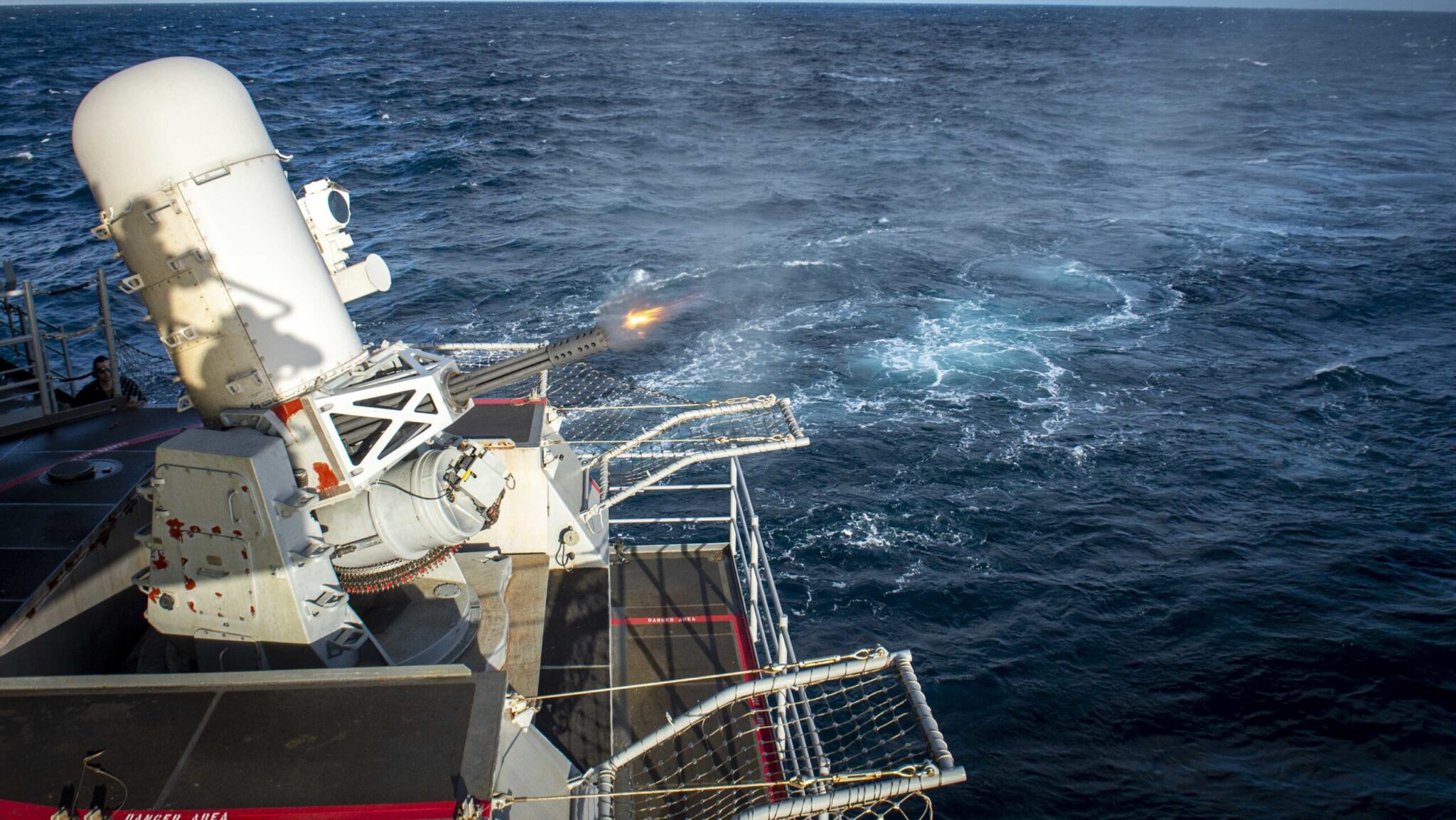
Thus, the need arises to limit direct human oversight. Automated decision-making in targeting is not a novel concept; existing systems, like heat-seeking missiles and the Phalanx radar-guided gun, already operate autonomously within strict parameters. However, true artificial intelligence in lethal decision-making has been largely sidelined by the U.S. military, which is hesistant to permit autonomous weapons to make life-and-death choices without human intervention. Enhanced electronic warfare tactics should instill urgency in U.S. policymakers to reconsider this hesitance.
In contrast, countries like Russia and China exhibit no reservations about deploying AI-enabled lethal autonomous weapons and are collaborating on advanced weapon systems. Russia has tested tank-like robots capable of autonomous operation on the battlefield, while China develops various autonomous systems designed for decision-making without human input. For instance, Ukraine is exploring swarms of automated drones that can independently identify and attack targets.
Despite the absence of legal prohibitions against AI-enabled lethal weapon systems, the U.S. military’s progress has been slow. One standout example is the Bullfrog counter-drone system, which represents the first known AI-enabled autonomous lethal weapon in the U.S. arsenal. Unlike previous systems, the Bullfrog uses multiple sensors to comprehensively analyze its surroundings, identify threats, and make decisions based on human-trained algorithms.
However, the Bullfrog remains an exception rather than the standard. The U.S. military should prioritize the development of AI-enabled autonomous weapons, particularly drone technology, ensuring these systems adhere to military requirements and ethical considerations. Future systems could incorporate two operational modes—allowing for human oversight or full autonomy in accordance with battlefield dynamics.
It’s important to recognize that autonomous weapons will err, much like human operators, who can misidentify targets or act out of emotion. Yet, a machine, trained through machine learning, is less likely to be influenced by emotional responses. Thus, they may exhibit more predictable and rational decision-making capabilities. Furthermore, if these systems are developed now, they can reflect compliance with the law of war, as opposed to ceding technological leadership to adversaries.
In future conflicts where U.S. forces may struggle to access segments of the radio spectrum, the ability to operate uncrewed drones effectively under complex conditions will be essential. AI-enabled lethal autonomous weapons might encourage adversaries to attempt to jam communications more aggressively, as they would not rely on a specific tactical channel for battlefield success.
When human soldiers lose communication with their commanders, they can adapt and continue combat operations. However, if drones become isolated from control, they become ineffective.
The United States must concentrate on creating AI-driven machines—especially aerial drones and counter-drone systems—that can operate, engage, and neutralize threats autonomously. There is no justification for delaying the innovation of algorithms and autonomous combat systems that align with military needs and uphold U.S. values. Failure to act decisively in this domain risks granting a significant advantage to adversaries in future warfare.
Clayton Swope, Deputy Director of the Aerospace Security Project and a Senior Fellow at the Center for Strategic and International Studies (CSIS), emphasizes the need for these advancements.