The head of the U.S. Air Force Special Operations Command (AFSOC) emphasized the importance of evolving current assets and adopting new technologies to meet the changing landscape of global threats. Lt. Gen. Michael Conley outlined how the command intends to leverage its existing fleet and experiment with emerging systems to stay ahead.
Adapting Strategies Amidst Rising Technological Threats
During a Wednesday roundtable, Lt. Gen. Conley highlighted that AFSOC is actively exploring innovative ways to utilize its current equipment rather than pursuing sweeping overhauls. “We’re challenging ourselves to find new uses for what we already have—things we haven’t done in the past—to remain relevant in theaters we may not have fought in before,” he stated.
He also pointed to the complexity and cost of aviation as a barrier to continuous fleet expansion. While onboarding new aircraft like the OA-1K Skyraider II, Conley stressed that adaptability is key: “The best years of the CV-22 are still ahead of us. In longer-range theaters, its advanced avionics and capabilities make it a vital asset.”
Learning from Existing Platforms: The V-22 Osprey Example
Conley cited the V-22 Osprey as a prime example of flexibility. Initially, operating in harsh environments like Afghanistan proved challenging due to dust and maintenance demands. However, he noted, “As we adapt to longer-distance missions, the CV-22’s capabilities—long-range flight, air refueling, and partnerships—will significantly enhance its role.”
Future Long-Range Options and Technology Insights
While the Army’s Future Long-Range Assault Aircraft (FLRAA) isn’t a priority for AFSOC, Conley indicated ongoing interest in the DARPA-led High Speed VTOL program, which could inform future aircraft development. “We’re more interested in what FLRAA’s technology can teach us about advanced VTOL systems than the platform itself,” he said.
Emerging Technologies: Small Cruise Missiles and Air-Launched Effects
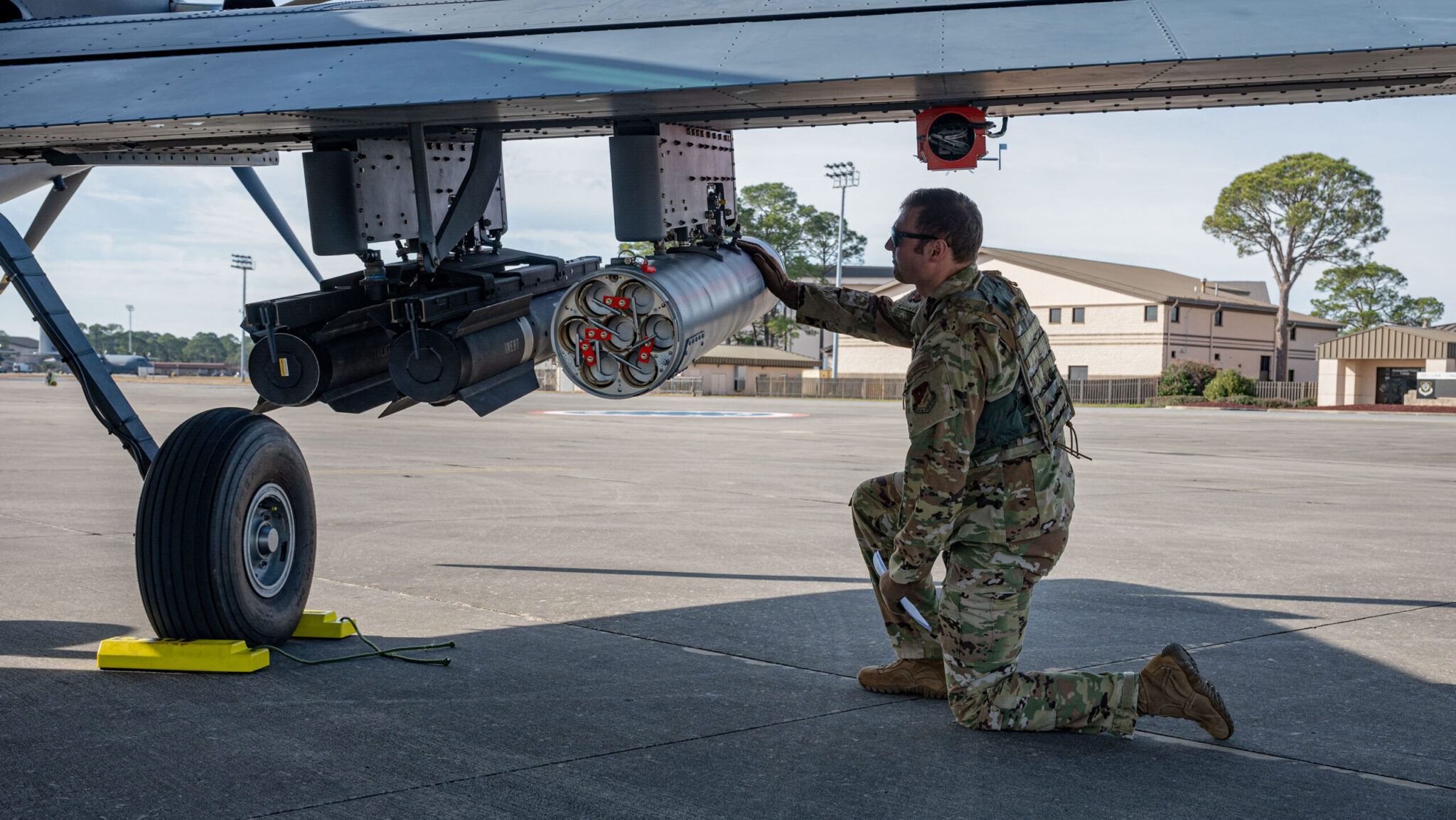
Conley confirmed that AFSOC is testing small cruise missiles, which could be launched from various platforms including gunships, MQ-9 drones, or Skyraider aircraft. “These won’t sink battleships, but they offer game-changing capabilities in specific theaters. We’ve demonstrated some prototypes and are refining the technology,” he explained.
Additionally, the command is investing in air-launched effects, such as small Unmanned Aerial Systems (UAS), to expand operational versatility. The potential to deploy swarms of UAS for target identification, electronic warfare, cyber, or jamming tasks offers new realms of tactical options.
Preparing for a Challenging Electronic Warfare Environment
Conley warned about increasingly contested airspaces worldwide, citing examples like Yemen where advanced surface-to-air threats have downed U.S. MQ-9 Reapers. “We must accelerate threat recognition and avoidance technologies,” he emphasized, highlighting the importance of agility in adversarial environments.
The Role of Collaborative Unmanned Systems
Finally, Conley discussed the potential for Collaborative Combat Aircraft (CCA) to support special operations. While the concept is still evolving, he believes that AFSOC’s expertise in unmanned systems and tactics could enable limitless applications in the future, provided the right operational concepts (CONOPS) are developed.
In summary, Lt. Gen. Conley underscores a strategic focus on innovation, adaptability, and rapid technology integration—traits essential for maintaining dominance amidst escalating threats and rapidly advancing adversaries.