Significant funding boosts highlight push to enhance tactical networks and enterprise management
The U.S. Army is rapidly investing in modernizing its IT and communications infrastructure, as recent Pentagon procurement budgets reveal substantial increases in key network portfolios. With an eye toward transforming operational command and connectivity, the service plans to allocate hundreds of millions more to these critical areas.
Major Budget Increases for Network Portfolios
The largest jump is seen in the “management initialization and service” portfolio, which soared from $49 million last year to $244 million in the current fiscal year. Another notable increase is in the “tactical network communications” portfolio, rising from $378 million in FY25 to $866 million this year—an over $488 million boost.
While these procurement documents—obtained by Breaking Defense—do not specify detailed program descriptions, the FY25 Army Justification Books provide insight into the management initialization and service portfolio. It encompasses four main components: logistics support for the Army’s networks enterprise management system, planning and monitoring for tactical radios, data products for network interoperability, and support for the Army’s Unified Network Operations (UNO).
Focus on Unified Network Operations (UNO)
Within UNO, the Army’s broadest network integration effort, lies the 2021-announced Unified Network Plan, which aims to consolidate the Army’s 69 and tactical networks into a single, shared infrastructure by 2027. Funding for UNO includes tools such as zero trust security systems, identity and access management (ICAM), and help desk and logistics support. The FY25 justification notes that „UNO software will reside on multiple existing hardware platforms managed by other programs and funding lines,” underscoring a layered approach to network integration.
Despite the large budget proposals by the Army, Democratic members of the House Appropriations Committee released a contrasting FY26 budget proposal, suggesting only $16.7 million—less than a seventh of the Army’s requested amount—indicating ongoing disagreements over funding priorities.
Unclear Scope for Tactical Network Communications
Details about the specific programs within the tactical network communications portfolio remain sparse. The FY25 Justification Books do not elaborate on this segment, and the FY26 Pentagon procurement request shows no funds allocated for it in FY24. The Democratic proposal for FY26 similarly omits funding for this portfolio, and the Army declined to comment.
Potential Benefits for Next Generation Command and Control (NGC2)
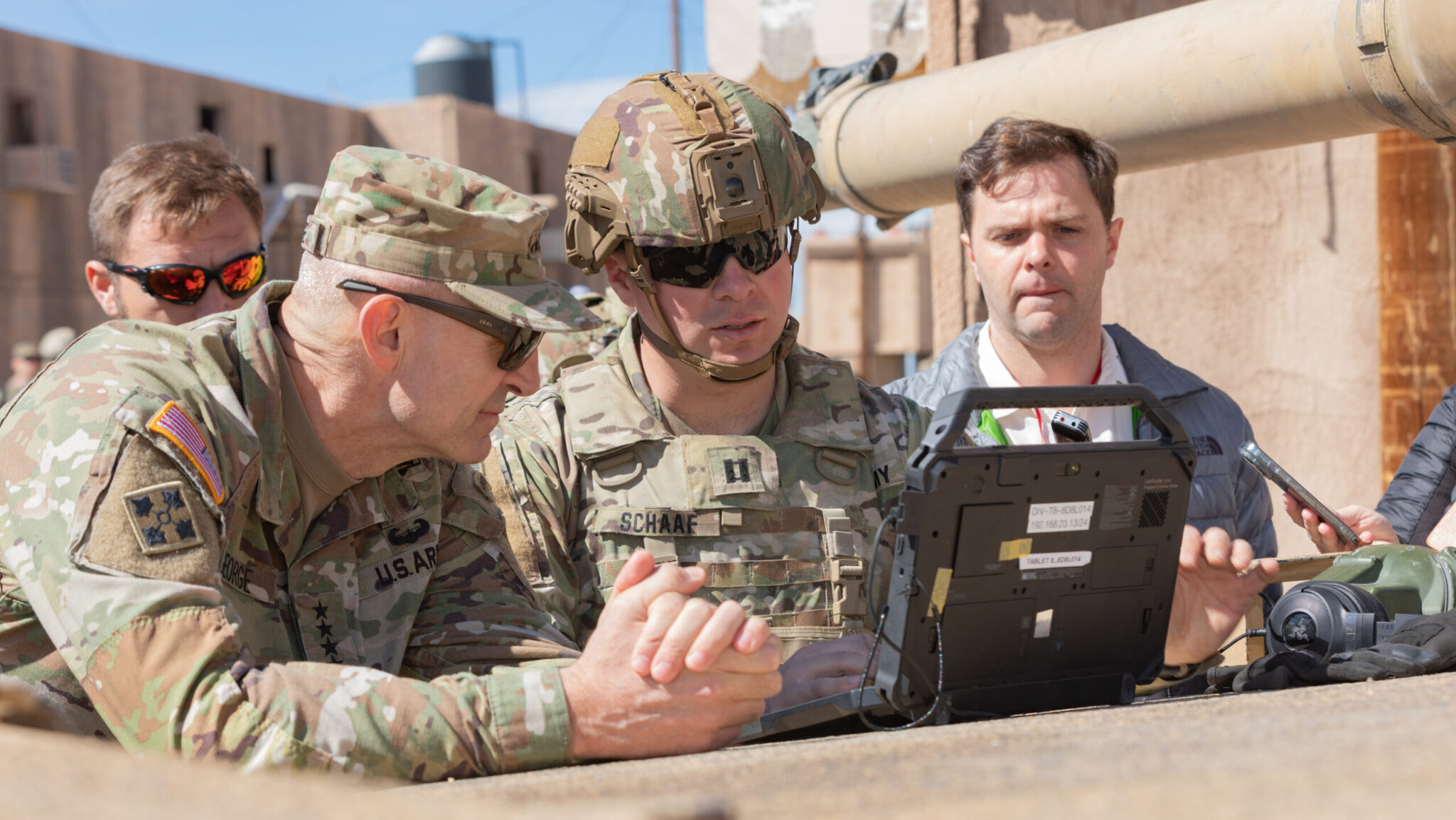
One high-profile initiative that stands to gain from increased funding is the Next Generation Command and Control (NGC2). Aimed at integrating intelligence, command, control, and fires into a single system, NGC2 is designed to provide commanders at the 3-star headquarters level and below with comprehensive, real-time data access.
The Army has demonstrated its ongoing commitment to NGC2, conducting multiple rounds of experimentation—including at the recent Project Convergence Capstone 5 event—before officially classifying it as a program of record in April. These efforts signal a strategic move toward more integrated and flexible tactical networks capable of supporting advanced combat operations.