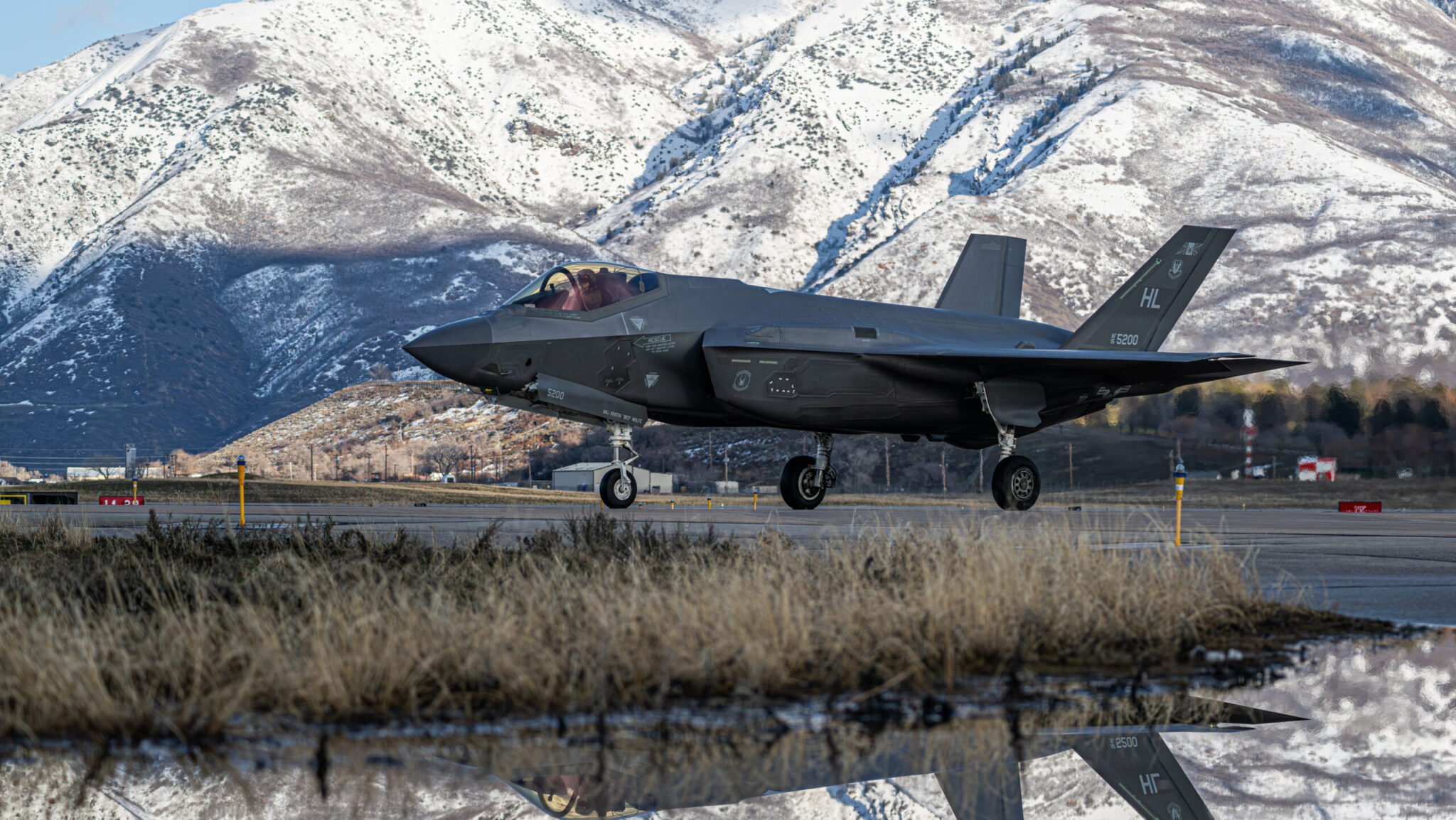
Company signals crucial milestone in jet’s evolution, awaiting government approval
Lockheed Martin announced today that it believes it has finalized the software updates required for the upgraded F-35 Joint Strike Fighters to be combat-ready, with the official certification process currently in the hands of the U.S. government. After extensive development efforts, the company asserts that the TR-3 software for the stealth fighter is now sufficiently stable to support new combat capabilities.
Progress on TR-3 Software Marks a Critical Milestone
J.R. McDonald, Lockheed’s vice president of business development for the F-35 program, stated during a briefing that the software has reached a point where the core upgrade function is ready. “We believe we’ve achieved that,” he said. However, he noted that one remaining combat capability still requires validation, leaving “final closure” pending with the U.S. authorities. McDonald could not specify when the certification might be completed but emphasized that the team is “very close” to final approval.
Since July of last year, jets equipped with the TR-3 upgrade have been delivered following a year-long pause caused by issues with the software. Currently, those aircraft have primarily been used in training roles due to unresolved issues, but the completion of TR-3 software now paves the way for these jets to transition into operational combat roles, integrating features like enhanced computing and display systems aligned with the upcoming Block 4 upgrade suite.
Transition from Training to Combat Operations
As of last week, 200 F-35s have been delivered in the TR-3 configuration, according to Greg Ulmer, head of Lockheed Martin Aeronautics. The company anticipates delivering between 170 and 190 additional aircraft this year. The software upgrade’s imminent completion signals a significant step toward expanding the aircraft’s operational capabilities.
Challenges Remain: Radar Delays and Potential Fuselage Redesign
Despite this progress, the F-35 program faces ongoing hurdles. A new radar system, initially scheduled for delivery this year, has encountered potential delays, prompting Lockheed to propose a redesign of the aircraft’s fuselage, as previously reported by Breaking Defense. Executives declined to comment further on the radar or any modifications, directing inquiries to the U.S. government.
Lockheed’s Vision for a “Fifth-Generation Plus” F-35
Following its loss to Boeing in the Air Force’s Next-Generation Fighter competition, Lockheed Martin is now advocating for enhancements to the F-35 that could produce a “fifth-generation plus” variant. This upgraded version might feature advanced stealth coatings and even pilotless capabilities—what Lockheed CEO Jim Taiclet calls a ‘Ferrari’ of fighter jets. He claims this version would deliver “80 percent of the capability of a sixth-generation fighter at half the price,” aiming to bridge the gap in advanced fighter technology affordably.
International and European Market Outlook
At the Paris Air Show, where Europe is seeking to bolster its defense industry despite trade barriers from the previous U.S. administration, Lockheed expressed confidence in the F-35’s international appeal. McDonald highlighted that more than 25 percent of the aircraft’s content by value now originates from European partners, a figure expected to increase as the program continues to expand its global footprint.
Conclusion: A Work in Progress with Strategic Implications
As Lockheed nears certification of the latest software upgrades, the F-35’s evolution into a more capable and versatile fighter aircraft continues. The program’s success in completing these enhancements will be pivotal not only for operational readiness but also for maintaining its competitiveness in the evolving landscape of fifth and sixth-generation air combat.