Innovative drone effects and airborne early warning enhance defense options
At the inaugural day of the Paris Air Show, General Atomics Aeronautical Systems announced two major innovations aimed at expanding the operational versatility of unmanned aerial systems. The company revealed a new air-launched effect named Pele and announced a strategic partnership with Swedish defense giant Saab to equip the MQ-9B Reaper with an Airborne Early Warning and Control (AEW&C) capability.
Saab Collaboration Brings Cost-Effective AEW to Reaper
The partnership involves integrating Saab’s suite of AEW sensors into a pod mounted on the MQ-9B Reaper drone. The goal is to have a fully operational system by 2026. Although detailed technical specifications were not disclosed, the sensor package is said to cover a broad spectrum of applications, including early threat detection, long-range detection and tracking, and simultaneous target engagement, all supported through line-of-sight and satellite communication (SATCOM).
The companies market this development as a solution for nations that cannot afford dedicated, full-scale early warning aircraft like the E-2 Hawkeye or Saab’s own GlobalEye. In an era marked by rising missile threats, this affordable AEW option could significantly enhance allied defense capabilities.
“High and low-tech air threats both pose major challenges to global air forces,” said GA-ASI President David Alexander. “This system will transform operations against sophisticated cruise missiles and drone swarms like never before. We’re also enabling AEW capabilities for maritime operations, such as on certain navy warships.”
Carl-Johan Bergholm, head of Saab’s surveillance division, emphasized that the unmanned AEW solution combines core competencies from both companies and could complement existing Saab products, offering a cutting-edge tool for modern-era threats.
Pele: A New Unmanned Launched Effect
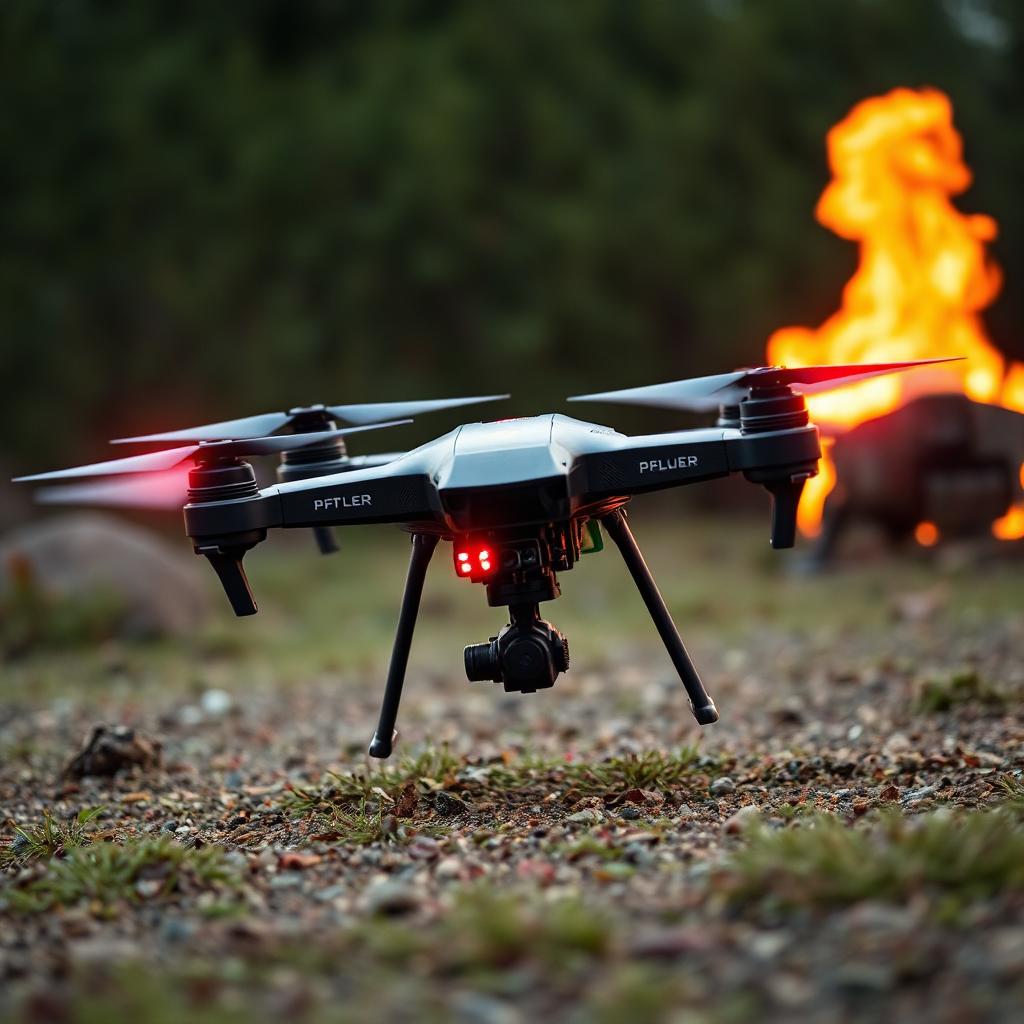
In addition, General Atomics announced Pele, a semi-autonomous, attritable small UAS designed for air launch. This propeller-driven drone, with an 11-foot wingspan and a 16-horsepower engine, can be launched from larger aircraft like the MQ-9 or from the ground. It is intended to serve as a versatile effect asset in complex operational scenarios.
Pele features onboard electro-optical and infrared sensors providing real-time full-motion video, with internal payload storage. Weighing around 250 pounds at maximum takeoff weight, it boasts endurance of up to seven hours and a range of approximately 500 nautical miles—making it suitable for a variety of tactical applications.
This development aligns with ongoing US military experiments, especially within the Army, exploring the concept of launchable effects—smaller systems deployed from larger platforms to enhance battlefield intelligence and precision strike options.
Showcasing the Future of Collaborative Unmanned Operations
The Paris Air Show also served as a platform for GA-ASI to display its Collaborative Combat Aircraft concept, the YFQ-42A, through a full-scale model. Although primarily aimed at the US Air Force, the technology signals a broader trend toward unmanned teaming that many European nations are interested in adopting.
These innovations reflect a strategic push to enhance drone capabilities, both in autonomous effects and integrated sensor systems, as militaries worldwide seek affordable, flexible solutions to modern threats.