Evaluating Fire Capabilities and Autonomous Launchers
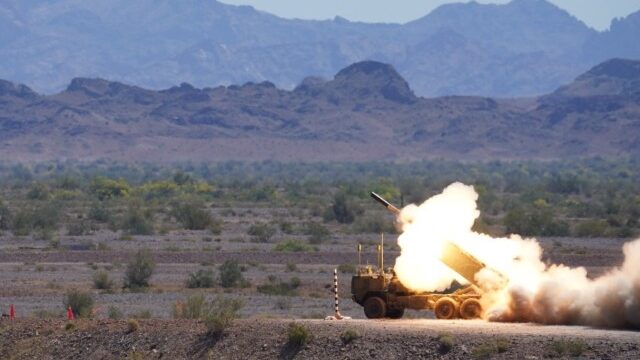
US Army leaders are actively investigating various autonomous launchers and considering a potential prototyping competition to determine the optimal mix of crewed and uncrewed systems for the future military force. Brig. Gen. Rory Crooks, leader of the Long-Range Precision Fires Cross Functional Team, emphasized the Army’s need to address deficits in range, capacity, and survivability through strategic advancements to achieve local fire superiority.
Three-Pronged Approach to Enhancement
To rectify these perceived deficits and enhance operational effectiveness, the Army has established a three-pronged strategy: focusing on ammunition innovation, scaling launched effects plans, and introducing existing platforms augmented by autonomous systems. All three initiatives are currently in progress, notably the formulation of new requirements for autonomous launchers, which may lead to a competitive prototyping phase.
Transitioning from Internal Development to Industry Collaboration
The Army’s Combat Capabilities Development Command (DEVCOM) has been working on its own Autonomous Multi-domain Launcher (AML) but lacks the capacity to produce sufficient units for extensive testing. Brig. Gen. Crooks indicated that while DEVCOM’s efforts are valuable, the Army will leverage industry partnerships to introduce a larger number of autonomous systems into operational formations.
Next Steps in Development
The next critical step involves finalizing an abbreviated capability development document (A-CDD) that would validate the need for the proposed capabilities, potentially paving the way for a rapid prototyping competition. The requirements development will incorporate insights from AML projects along with demonstrations of alternative autonomous launchers presented by the industry.
Integrating Autonomous Systems with Human Operators
As the Army advances its exploration of autonomous systems, leaders are grappling with how these systems will function within existing military formations. Brig. Gen. Crooks highlighted the cognitive load challenges posed by integrating crewed and uncrewed systems during operations, noting the ongoing investigation into the operational tasks that crewed systems can perform while managing autonomous counterparts.
Upcoming Demonstrations and Industry Partnerships
At the upcoming Project Convergence event, the AML and various industry-developed launchers from companies like Lockheed Martin and Raytheon are expected to be showcased. This event aims to enhance the integration of autonomous vehicles, ultimately leading to operations that are faster, safer, and more adaptable.
Collaboration with Marine Corps Initiatives
The Army is also monitoring the US Marine Corps’ progress with its Remotely Operated Ground Unit for Expeditionary Fires (ROGUE Fires) program, which demonstrates potential for collaboration. This program features a ground-based anti-ship missile launcher integrated onto a lighter vehicle chassis, showcasing a commitment to increasing autonomy levels in military operations.
Conclusion
Brig. Gen. Crooks underlined the importance of ensuring that the Army’s autonomous systems align with Marine Corps capabilities and requirements. By developing compatible autonomy solutions, the Army looks to enhance collective firepower and operational efficiency in future combat scenarios.