Strengthening Partnerships in the Face of Challenges
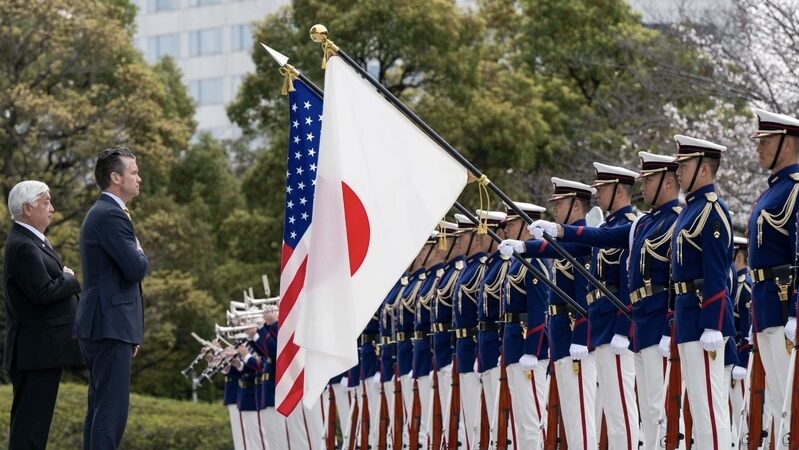
During a recent visit to Tokyo, U.S. Defense Secretary Pete Hegseth underscored the importance of Japan as “our indispensable partner” in addressing the challenges posed by Chinese military aggression. Emphasizing that “America first does not mean America alone,” Hegseth’s remarks solidified Japan’s role in U.S. strategic planning for the Indo-Pacific region.
In a Friday press conference held in Manila alongside Philippine Defense Secretary Gilberto Teodoro, Hegseth highlighted broader efforts within the framework of the long-anticipated “Pacific pivot.” This strategic realignment, he noted, seeks to enhance U.S. partnerships across the region with nations such as Australia and South Korea, reaffirming a commitment to prioritize the Indo-Pacific like never before. “Today, it’s the Philippines. Tomorrow, it’s Japan,” he stated, signaling a commitment to regional alliances.
A Shift in Operational Dynamics
Despite the tensions related to potential tariffs on Japan, Hegseth’s comments reflect a notable divergence in the Pentagon’s perspective on its NATO allies in Europe compared to its treaty allies in the Pacific. This was starkly illustrated in a recently disclosed Signal chat where Hegseth expressed disdain for perceived European dependency, calling it “PATHETIC.” In contrast, his current tour emphasized strengthening U.S.-Japanese military collaboration, including plans to transform U.S. Forces Japan into a more robust “war-fighting headquarters,” moving beyond its current administrative role.
Hegseth asserted that this transition is crucial for enhancing readiness and operational effectiveness in the region, ensuring that U.S. and Japanese forces can respond effectively to crises. This follow-up on the Biden administration’s earlier commitment clarifies that the elevation of U.S. Forces Japan’s operational command is indeed moving forward.
Commemorating Shared History and Future Collaboration
Attending a memorial service for the battle of Iwo Jima, Hegseth lauded the sacrifices of both Japanese and U.S. forces during one of the Pacific War’s most brutal confrontations. He emphasized the close partnership between the U.S. and Japan, noting that American warriors “stand shoulder to shoulder everyday” with their counterparts in the Japan Self-Defense Force.
Japan’s strategic significance is amplified by its proximity to Taiwan and its collaborative efforts to counter North Korean threats. The nation is on track to double its defense spending and is committed to extensive purchases and co-productions of U.S. military equipment.
In a joint press conference, Japanese Defense Minister Gen Nakatani stressed the importance of defense industrial cooperation, with plans for co-development of advanced missile systems. He articulated the urgency of initiatives like the co-production of advanced mid-range air-to-air missiles and surface-to-air missile systems, solidifying a framework for ongoing defense collaboration.
Enhancing Capabilities with the Philippines
Hegseth’s remarks in Manila included a significant announcement regarding the enhancement of U.S. military capabilities for the Philippine Armed Forces. This includes the deployment of the Navy-Marine Expeditionary Ship Interdiction System (NMESIS), mobile precision strike capabilities capable of remote operation. These systems aim to bolster combined training efforts during the Balikatan military exercise, the flagship annual U.S.-Philippines joint exercise.
Moreover, a joint statement outlines plans for extensive industrial cooperation, focusing on areas such as unmanned systems, ammunition production, logistics support, and cyber capabilities. The collaboration aims to enhance operational integration and reduce vulnerabilities across the U.S.-Philippines alliance, paving the way for a more resilient defense posture in the face of regional challenges.
As Hegseth wrapped up his engagements in the Indo-Pacific, his messages of partnership reaffirm the U.S. commitment to a collaborative defense strategy in an increasingly complex geopolitical landscape.