Taipei proposes a military budget exceeding $35 billion
Taiwan has proposed an 18% increase in its defense budget for 2027, raising total planned spending to approximately NT$1.123 trillion, or around $35.3 billion. The figure would amount to 3.01% of the projected gross domestic product for 2026.
The proposal allocates approximately NT$691.9 billion for operations and maintenance, while another NT$218.2 billion would be dedicated to weapons and military equipment procurement.
President Lai Ching-te described the increase as evidence of Taiwan’s commitment to strengthening its self-defense capabilities and preserving peace in the region. However, the proposed spending remains well below the 10% of GDP target advocated by U.S. official Elbridge Colby as a benchmark for enhancing the island’s defense posture.
Budget faces approval by an opposition-controlled legislature
The financial plan has not yet been finalized. It must be approved by Taiwan’s legislature, where opposition parties hold control. The process could therefore lead to negotiations, revisions, or delays before the budget is adopted.
The proposal is being closely watched amid mounting military and strategic pressure from China. For Taipei, the additional funding is intended to accelerate military modernization and strengthen the island’s deterrence capabilities.
Qatar could acquire four U.S.-made KC-46A aircraft
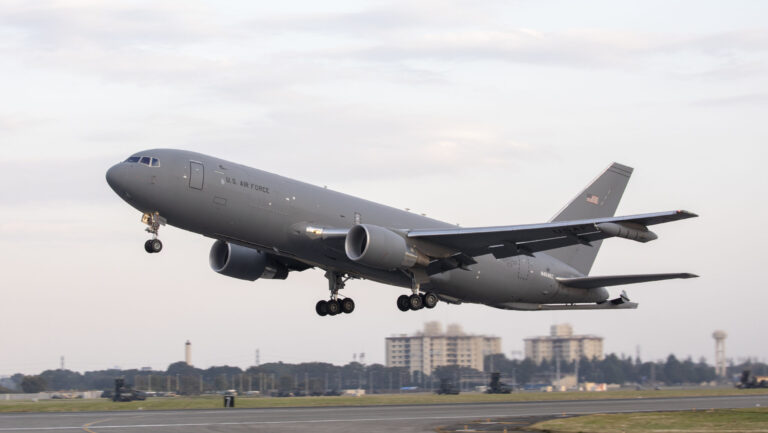
Meanwhile, the United States has approved a potential $4.5 billion military sale to Qatar. The proposed agreement includes four KC-46A aerial refueling aircraft and related equipment.
The package would include engines, radar-warning receivers, and infrared countermeasure systems designed to improve the aircraft’s survivability and operational effectiveness in contested environments.
Major U.S. defense companies involved
The potential deal would involve several major American defense contractors, including Boeing, Pratt & Whitney, RTX, and Northrop Grumman.
The KC-46A aircraft would enhance Qatar’s aerial refueling capacity, support long-range operations, and improve interoperability with U.S. forces and other regional partners.
Sale remains subject to congressional review
The transaction has not yet been finalized. It must undergo review by the U.S. Congress and could be modified during subsequent negotiations between Washington and Doha.
The potential sale comes amid continuing tensions in the Middle East and broader U.S. efforts to strengthen military cooperation with regional partners.