Innovative Initiative Aims to Enhance Collaboration and Capability Development
Shipbuilder HII has established a new office dedicated to integrating technologies across its various business units, known as Dark Sea Labs (DSL). This initiative seeks to emulate successful cross-cutting efforts observed at the Pentagon, according to Executive Vice President of Strategy and Development Eric Chewning in an exclusive interview with Breaking Defense.
“The idea is to do what no single HII division can do on its own,” Chewning explained, emphasizing the proactive exploration of opportunities where research and development from one business unit could benefit another, provided the right collaborative framework is established.
Driving Technological Integration
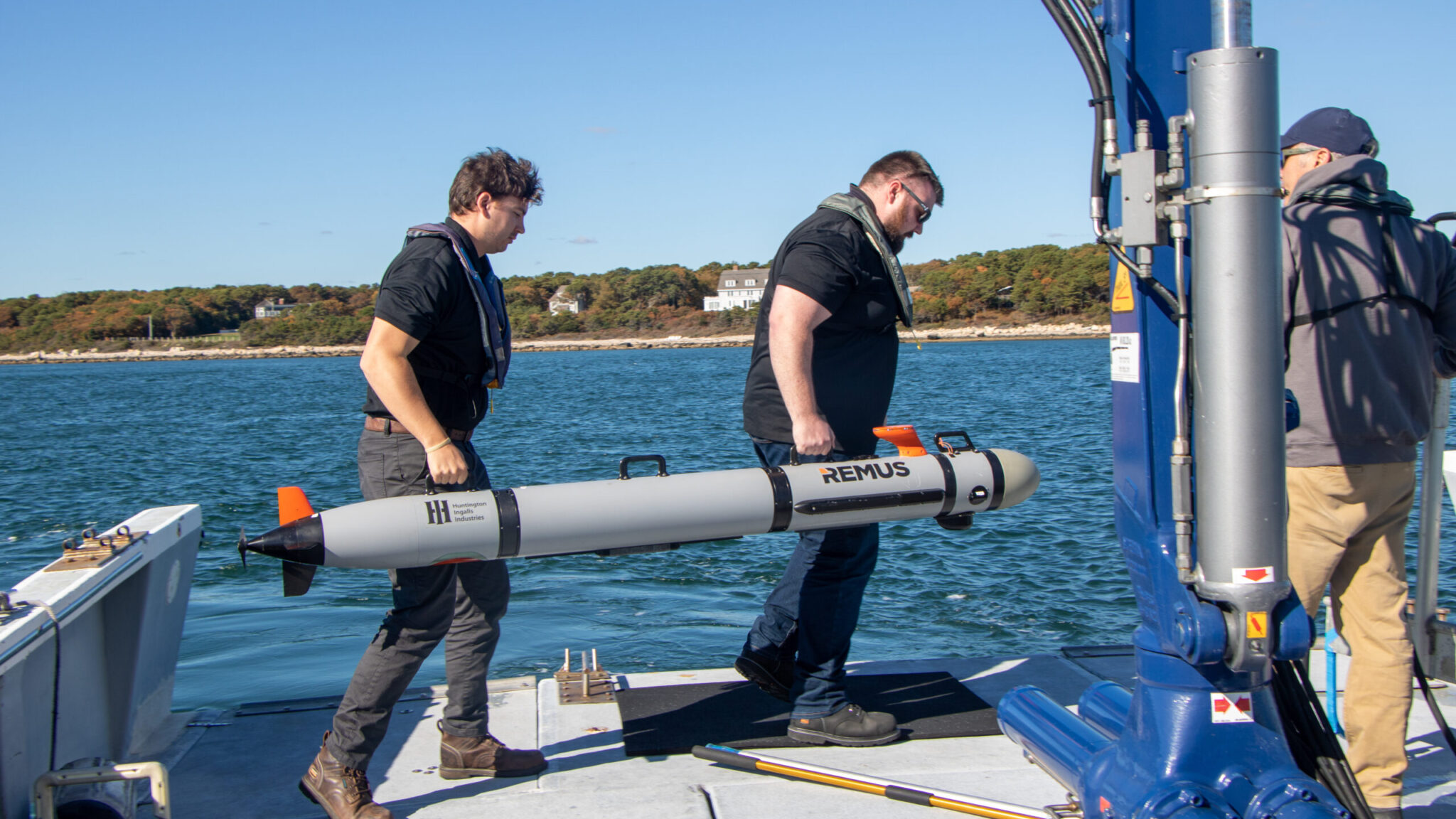
In practical terms, DSL has already played a role in several significant projects, including the integration of the Navy’s Conventional Prompt Strike weapon aboard Zumwalt-class destroyers. Additionally, the lab is leveraging artificial intelligence to enhance operational efficiency in HII’s shipyards and is involved in initiatives related to the launch and recovery of unmanned undersea vehicles (UUVs) from traditional submarines.
Much of this work aligns with HII’s Mission Technologies division, which focuses on advanced technologies such as unmanned systems, C5ISR, and artificial intelligence. Notably, Mission Technologies is spearheading the development of UUVs that HII envisions operating from Navy submarines in the future.
Expanding Defense Engagements
In parallel with these technological advancements, HII is aiming to expand its footprint within the Pentagon. Chewning highlighted a recent other transaction agreement (OTA) received from the US Army to develop a high-energy laser, which represents HII’s initial foray into the directed energy arena. This weapon system is designed to provide Army bases and vehicles with defense capabilities against small- to medium-sized drones.
“The Army is leading investment in the counter-UAS mission, and there’s an opportunity for us to excel in this program for the Army,” Chewning stated. “As the technology is validated and proven, the goal is to demonstrate its effectiveness to other services, particularly the Navy, leveraging our established relationships to adapt these capabilities to address their challenges in the counter-UAS domain.”
Challenges and Strategic Approaches
Directed energy technology has long posed challenges for the Defense Department, with military leaders signaling interest in laser weapon systems for years. Despite various R&D efforts, the Navy currently lacks a formal program to integrate such systems aboard its ships.
Chewning, who previously held senior roles at the Pentagon during the Trump administration, noted that demonstrating the viability of a technology via OTAs will be HII’s strategy for transitioning these innovations into established programs of record. This approach has shown success in the past with the Navy’s Lionfish program.
Ultimately, DSL represents HII’s commitment to harnessing capabilities across different divisions—whether Ingalls, Newport News, or Mission Technologies—to collaboratively address complex customer challenges that individual divisions cannot solve alone.