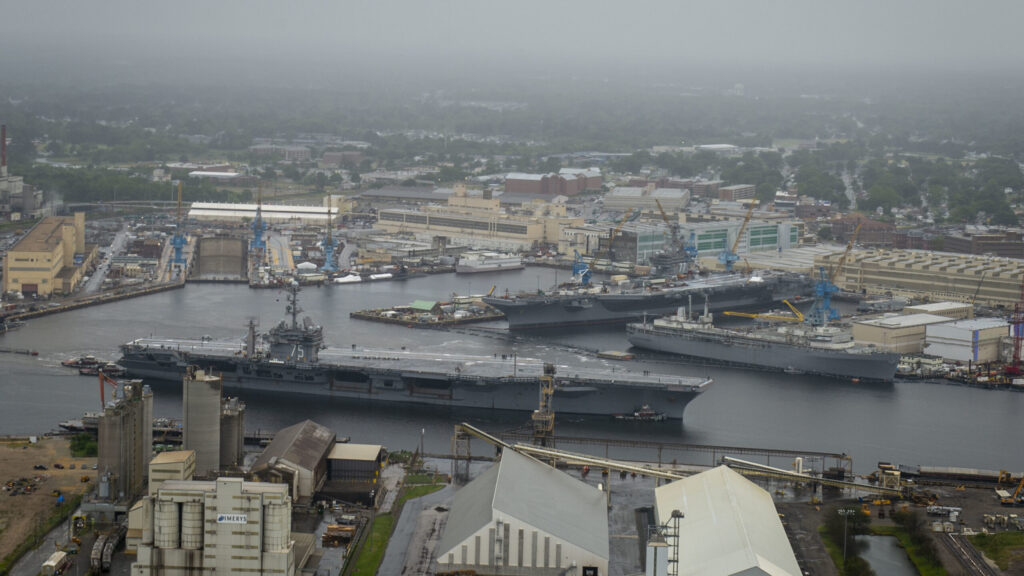
Pilot Program Aims to Improve Workflow and Bridge Gap Between Operational and Maintenance Sides of the Navy
The Navy is placing its hopes on a one-star admiral to alleviate maintenance backlog issues at Norfolk Naval Shipyard (NNSY) in Virginia and create a model for improving workflow at the other three public shipyards nationwide.
Bringing an Operational Perspective
Rear Adm. Kavon Hakimzadeh, the new chief at NNSY as of August 8, will report to US Fleet Forces, a four-star operational command. Hakimzadeh’s appointment is unique because public shipyards are historically overseen by Navy captains with engineering backgrounds. Hakimzadeh, a naval aviator and former commander of the Eisenhower carrier strike group, brings an operational perspective to the role.
Hakimzadeh told Breaking Defense that one of the rationales behind his appointment is to bring an operational perspective to the shipyard, driven by the need to maximize the number of available ships by 2027, the year the Pentagon anticipates China wants to be ready to invade Taiwan. Navy leadership „wanted somebody who could bring that message to the team here, that sense of urgency.”
Bridging the Operational and Maintenance Gap
Another reason for Hakimzadeh’s appointment is to create a „bridge” between the operational and maintenance sides of the Navy, which he characterized as historically being „segregated.”
„You can’t just roll into a [maintenance] availability. You have to do a lot of prep work. You have to understand the functionality of the operating systems onboard the platform,” Hakimzadeh added. „And we were losing that time because there wasn’t a whole lot of bridging between the operational side and the maintenance side of the US Navy.”
Addressing Fleet and Shipyard Issues
Hakimzadeh aims to address issues on both the fleet and shipyard sides. He plans to emphasize the problem of crews postponing maintenance tasks at sea, which puts extra pressure on the shipyard. On the other hand, he wants to discourage shipyard engineers from unnecessarily pursuing „perfection,” such as spending excessive time fixing minor leaks that don’t significantly affect ship functionality.
„This thing is dripping four times a minute, and it needs to only drip two times a minute, go back and rework it,” he said. „That could be weeks. That could add weeks to an availability. So, the idea is to bring an operator perspective.”
One-Year Pilot Program
The admiral’s stationing at the shipyard is part of a one-year pilot program initiated by Vice Chief of Naval Operations Adm. Jim Kilby, Naval Sea Systems Command, Fleet Forces, and the commander of Submarine Forces. A decision will likely be made after the first year whether the new setup is worth implementing at the other public shipyards.
Changes to Chain of Command
Another part of the pilot program involves a change to the chain of command within the shipyard. Instead of having up to two dozen shipyard officials reporting directly to the Navy captain in command, Norfolk will have a small group of captains take charge of different sectors of shipyard operations, with each reporting to Hakimzadeh. This aims to reduce the „span of control” for each officer.
As the shipyard’s commander, the admiral will report operationally to Fleet Forces, as opposed to his predecessor who reported to Naval Sea Systems Command.
Melding Operational and Engineering Focus
„It’s that melding of the operational focus and the engineering focus,” Hakimzadeh said. „There’s no longer a hand off of the operational side flipping open the fence to the maintenance side and saying, ‘Yep, you need to get that back to me in 15 months. Ready, set, go.’ It’s now all owned by the same organization.”