India has announced its intention to develop a comprehensive, multi-layered integrated air and missile defense shield, a project analysts believe will require new system development and a focus on indigenous production.
Mission Sudarshan Chakra: A Security Blanket
Prime Minister Narendra Modi unveiled Mission Sudarshan Chakra on August 15, outlining plans to provide complete security cover to strategic and civilian locations across India by 2035. The system will also integrate cyber defense systems and counter-strike weapons, and will be continuously expanded and modernized to address future threats and technological advancements.
Echoes of Global Defense Programs
The plan bears resemblance to the White House’s planned Golden Dome initiative, Turkey’s Steel Dome concept, and the European SkyShield, all inspired by Israel’s integrated missile defense networks. However, analysts warn that meeting Modi’s ambitious goals for a country as vast and densely populated as India will be a significant challenge.
Overall Program Title for Diverse Systems
Arzan Tarapore, a research scholar at Stanford University, describes Sudarshan Chakra as an overarching program encompassing various air defense systems, including those already in service and others in development.
Addressing Drone and Missile Threats
The recent India-Pakistan conflict, characterized by long-range drone and missile strikes, likely influenced the design of Sudarshan Chakra, which aims to counter these specific threats.
Need for Increased Launchers and Missile Stockpiles
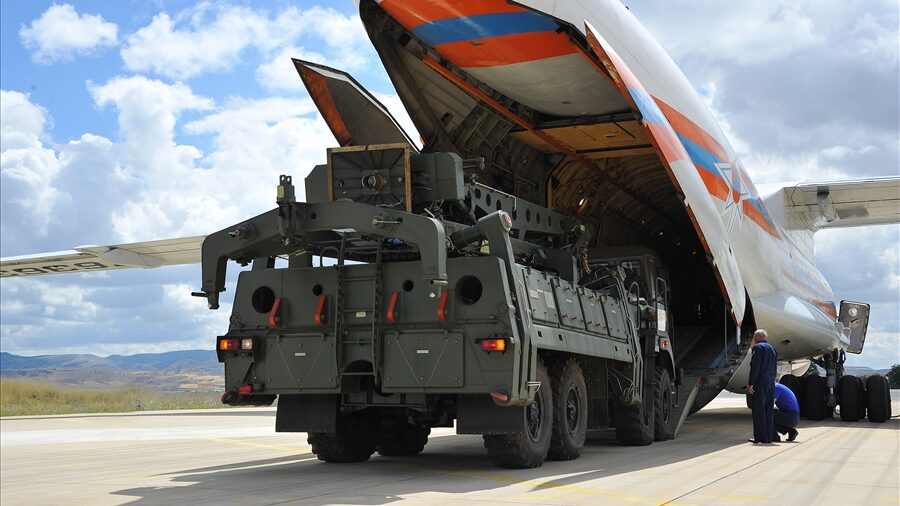
Despite the successful performance of India’s air defenses during the conflict, including the claimed downing of six Pakistani aircraft by Russian-built S-400 missiles, Tarapore emphasizes the need for a significantly larger number of launchers and missile stockpiles to prepare for larger-scale conflicts.
Emphasis on Indigenous Production
While foreign system imports are expected, India is likely to prioritize indigenous production wherever possible, according to Angad Singh, an independent air power analyst based in India. (However, India’s strengthening ties with Russia could provide Moscow with a much-needed weapons export market.)
Leveraging Joint Development Projects
Projects like the Barak 8 surface-to-air missile, developed in collaboration with Israel, may be considered as partially domestic contributions to the program.
Project Kusha: A Ground-Based Interceptor System
Key among purely domestic initiatives is Project Kusha, a ground-based air and missile defense system developed by India’s Defence Research and Development Organisation (DRDO). Project Kusha will produce interceptors with ranges from 150 km to 400 km, supplementing the Barak 8 and S-400 systems currently in use.
Other DRDO Initiatives
The DRDO has also test-launched the Integrated Air Defence Weapon System (IADWS), a short-range air defense system equipped with missiles and a high-powered laser to counter various threats, including drones. Additionally, the DRDO is developing a new Ballistic Missile Defense (BMD) system to augment the existing Prithvi and Ashiwin family of BMD and anti-satellite missile systems.
Systems Integration: A Potential Hurdle
Tarapore questions whether Mission Sudarshan Chakra is simply an umbrella term for air defense systems or if India intends to integrate all components into a comprehensive system of systems. He highlights systems integration as a major potential obstacle, emphasizing the need for seamless communication and functionality between all components.
Delivery Timelines and Funding Concerns
Singh identifies meeting delivery timelines and securing sufficient funding as potential challenges for the program. However, the vague nature of the program’s targets and milestones suggests a flexible, adaptive approach.