The US Navy plans a competitive solicitation to design, build, and integrate its Future X-Band Radar (FXR) for enhanced missile defense capabilities.
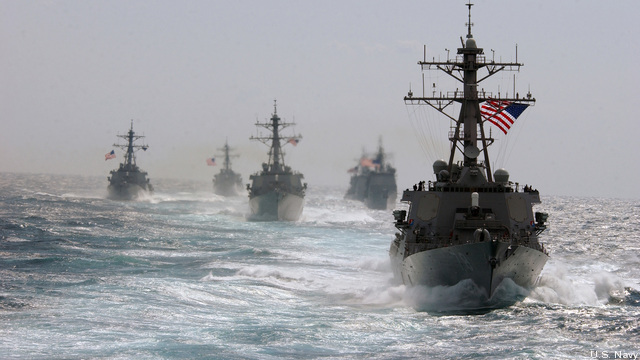
The Navy announced its intent to issue a competitive solicitation for the design, construction, and integration of its Future X-Band Radar (FXR), a critical component for detecting and tracking incoming missile threats to the surface fleet.
FY26-33: Designing and Delivering Advanced Radar Systems
The solicitation, covering work from fiscal years 2026 through 2033, seeks contractors to „design the Future X-Band Radar (FXR), and to build, integrate, and test FXR Engineering Development Models (EDMs) and deliver multiple low-rate initial production (LRIP) units,” according to a Navy notice. A timeline for the formal request for proposals was not provided.
X-Band Advantage: Precision Tracking of Small Objects
X-band radars utilize a distinct frequency, providing increased sensitivity for tracking small objects. This technology is crucial for detecting and engaging advanced missile threats.
Replacing the SPQ-9B: A Multi-Billion Dollar Opportunity
The future X-band radar is intended to replace the existing AN/SPQ-9B Anti-Ship Missile Defense radar, which has been in service since the 1990s and is deployed on various amphibious ships, destroyers, cruisers, and carriers. Contracts for this replacement could amount to billions of dollars. The SPQ-9B complements the capabilities of Raytheon’s SPY-6(V) family of S-band radars.
SPQ-9B Capabilities: Horizon Scanning and Threat Detection
The AN/SPQ-9B provides simultaneous and automatic detection and tracking of air and surface targets, including low-flying anti-ship cruise missiles, surface threats, and low/slow-flying aircraft, UAVs, and helicopters.
Global Competition: Potential Contractors
The competition to equip the Navy’s fleet could attract contractors from around the world. Raytheon is already contracted to provide the SPY-6(V) family of radars. Other potential competitors include Italy-based Leonardo, France-based Thales, and Sweden-based Saab, all of which have radar systems used by armed forces globally.