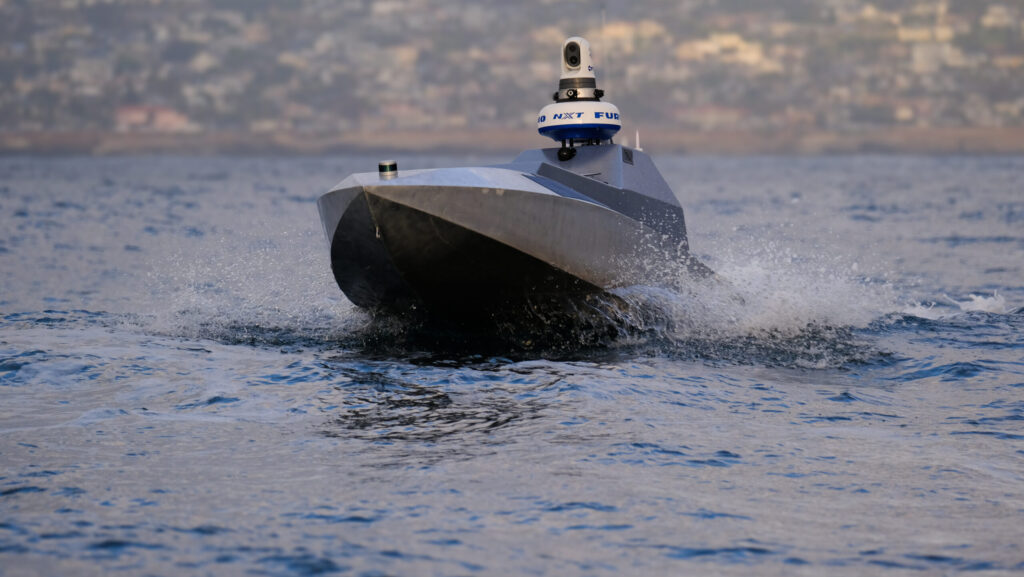
The American maritime drone manufacturer Seasats recently solidified its presence on the international stage, announcing a strategic expansion into Australia and New Zealand. This move is made possible through a reseller agreement concluded with Elysium EPL, an Australian professional services firm. The partnership underscores a global trend of increasing interest in autonomous maritime systems.
A Strategic Partnership in the South Pacific
The collaboration between Seasats and Elysium EPL promises to accelerate the adoption of autonomous technologies in the region. Mike Flanigan, Seasats CEO, stated in a joint company release: “This collaboration combines our operational experience with Elysium EPL’s regional expertise, enabling faster delivery and support for customers seeking persistent, autonomous maritime capabilities.”
Under the terms of the agreement, Elysium EPL will take responsibility for sales, integration, and frontline support for the American company’s autonomous surface vessels, known as Quickfish and Lightfish. Elysium EPL, based in Canberra and Sydney, is a renowned consulting firm with a focus on “military, law, national security and intelligence, industry and broader government,” according to the company’s website.
The Road to Certification and Market Entry
While the official announcement was made recently, the agreement was signed earlier this month during the Indo-Pacific 2025 International Maritime Exposition in Sydney. Michael Mitchell, director at Elysium EPL, expressed his enthusiasm: “Formalizing this partnership is an exciting step forward. Seasats has been at the forefront of autonomous surface technology, and together we can expand access to these capabilities across Australia and New Zealand.”
A crucial aspect of this expansion is certification. The companies highlighted that Elysium recently cooperated with Seasats to get the Lightfish certified by the Australian Maritime Safety Authority (AMSA). AMSA is the country’s maritime regulatory authority, responsible for overseeing commercial vessels and adherence to maritime treaties. “The Australian Maritime Safety Authority (AMSA) has taken a leading, risk-based approach to regulating autonomous vessels, balancing innovation and safety, to enable commercial USV operations at scale,” the companies’ joint statement noted.
Geopolitical Implications: AUKUS and Beyond
This strategic expansion comes at a time when companies from the United States, Australia, and the United Kingdom continue to position themselves as key players within the AUKUS trilateral security pact, which heavily focuses on the development of advanced technologies, including unmanned systems.
Indeed, Seasats has also made significant inroads with the US Navy. As previously reported, the company’s 12-foot-long fiberglass drone, designed for data collection purposes, previously participated in Navy exercises such as Baltic Operations 2025. These efforts align with the broader trend where many of the United States’ partners and allies are investing more heavily in unmanned systems, signaling a paradigm shift in maritime defense and surveillance capabilities.