The year 2025 solidified its place as a transformative period for Europe’s defense and security, marking the third successive year defined by Russia’s protracted war in Ukraine. Despite high-stakes attempts at brokering a peace deal and unprecedented pressure on transatlantic allies, a resolution to the grinding conflict remained elusive, reshaping military spending, strategic alliances, and national defense priorities across the continent. This turbulent environment also shone a spotlight on ambitious defense projects, both successful and embattled, and tested the resilience of international partnerships.
The Shadow of War and Diplomatic Discord
The ongoing conflict cast a long shadow, leading to visible strain in international relations. U.S. President Donald Trump’s efforts to broker a peace deal with Moscow culminated in a tense White House encounter in February with Ukrainian President Volodymyr Zelenskyy. The meeting reportedly reached a low point as Trump publicly accused his guest of „gambling with World War III,” underscoring the deep divisions surrounding a potential resolution.
European defense leaders, alongside U.S. lawmakers, vehemently rejected a 28-point peace proposal that emerged from Washington-Moscow negotiations in November. The plan was widely perceived as overtly favorable to Russia, drawing sharp criticism for sidelining Ukraine and key European nations. General Onno Eichelsheim, the Netherlands’ top general, encapsulated the sentiment, asserting that „Russia can stop this immediately. They are the aggressor. So stop it. Withdraw. And, you have your peace,” in a direct message to Moscow.
Throughout the year, frequent Russian drone incursions into European airspace further exacerbated tensions, prompting the EU to accelerate plans for a multi-layered „drone wall,” a complex air defense network designed to secure its skies.
NATO’s Quantum Leap: A New Defense Paradigm
In a significant strategic shift, President Trump intensified pressure on NATO members to bolster their defense spending. This push ultimately yielded a historic commitment from nearly all transatlantic allies – with the notable exception of Spain – to pledge 5 percent of their Gross Domestic Product (GDP) to defense. This ambitious target allocates 3.5 percent to „core” defense items and an additional 1.5 percent to broader security investments, such as critical infrastructure. NATO Secretary General Mark Rutte hailed the decision as „a quantum leap that is ambitious, historic and fundamental to securing our future” during the signing ceremony at The Hague in June. However, Spain’s refusal drew strong condemnation from Trump in October, who even suggested its potential expulsion from the alliance for its „miserly” contributions.
Complementing this, the European Union itself made a substantial move with an $843 billion rearmament package, signaling a concerted effort to enhance continental security independently. National defense budgets, particularly across the Baltic and Nordic regions, saw significant spikes throughout the year, providing a fresh infusion of capital for defense industries.
Aerospace Ambitions and Internal Strife
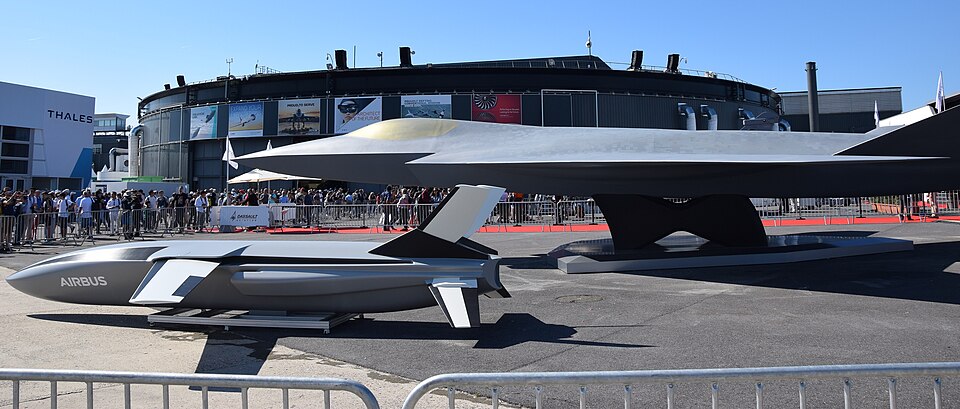
Europe’s cutting-edge aviation projects faced their own set of challenges and headlines in 2025. The Future Combat Air System (FCAS), a collaborative effort involving France, Germany, and Spain to develop a next-generation fighter, was once again embroiled in internal strife. A prominent power struggle between French industrial giant Dassault and Airbus came to the fore, particularly over Dassault CEO Eric Trappier’s demand for greater control over the design of the New Generation Fighter (NGF) – the sixth-generation jet intended to succeed the Eurofighter Typhoon and Rafale. The public disagreement over technology development was clearly visible at the Paris Air Show in June, where Jean-Brice Dumont, head of air power at Airbus Defense and Space, noted „difficulties in the execution” of phase 1B.
Meanwhile, persistent rumors of a „kill switch” embedded within the world’s most recognizable stealth fighter, the Lockheed Martin F-35, forced the Pentagon to issue explicit reassurances to its foreign partners in March. Concerns arose in Europe that a U.S. government, particularly after a decision to pause military aid to Ukraine, might wield such a feature to limit software updates or logistics support to foreign F-35 operators, potentially weakening NATO forces. Despite the turbulence generated by the U.S. administration’s hardline stance towards Europe, the F-35’s market presence remained largely unshaken, with Denmark notably expanding its order by an additional 16 aircraft, even as Spain ruled out an order and Switzerland opted for a smaller acquisition than initially anticipated.
Britain’s Armored Albatross: The Ajax Debacle
Across the Channel, the United Kingdom’s long-plagued Ajax armored fighting vehicle program faced renewed scrutiny and controversy. In November, just weeks after the UK government declared its initial operating capability, reports emerged that approximately 30 soldiers had fallen ill after operating the vehicles, with symptoms linked to excessive noise and vibration. This alarming development sparked outrage, particularly as the initial operating capability had been approved by Minister for Defense Readiness and Industry Luke Pollard, following assurances from senior Ministry of Defence officials, including the head of the British Army, General Roly Walker, that Ajax was „demonstrably safe to operate.”
Tan Dhesi, chair of the UK defense committee, sharply criticized the unfolding situation, labeling it „an absolute shambles” to lawmakers. He expressed his dismay at the monumental taxpayer investment in the program and the injuries sustained by Ajax crews. The vehicle is a planned cornerstone of the British Army’s armored and deep reconnaissance strike brigades, but the latest debacle casts a significant shadow over its future viability.
As 2025 draws to a close, Europe’s defense landscape is one of rapid recalibration and persistent challenges. The lingering war in Ukraine continues to exert immense pressure, driving unprecedented financial commitments and shaping international alliances. While technological ambitions soar with next-generation projects and a continent-wide push for advanced air defense, internal squabbles and costly program failures serve as potent reminders of the complexities inherent in building a robust, unified European security posture in an increasingly unpredictable world.