As 2025 unfolded, Israel found itself deeply enmeshed in a multi-front conflict, looking to a new U.S. administration for strategic support. The preceding year had been consumed by intense engagements in both Gaza and Lebanon, yielding complex results and drawing international scrutiny. Yet, this challenging environment also transformed the conflict zones into a proving ground for advanced Israeli military technologies, pushing artificial intelligence and autonomous systems to the forefront. Simultaneously, Israel’s robust defense industry actively sought new global customers for its battle-proven innovations.
Navigating Embargoes: The Quest for Defense Autonomy
One significant repercussion of the international condemnation directed at Israel’s tactics in Gaza was the public commitment by several foreign nations to halt defense equipment shipments. While this did not impede existing Israeli deals to supply other countries—such as the Arrow 3 missile defense system for Germany—it inevitably raised questions about the potential for future embargoes and the implications for Israel’s defense industrial base.
Observers noted that while it would be strategically advantageous for Jerusalem to increase domestic production of defense components and platforms, there are inherent limits to what the local industry can achieve independently. Israel already boasts an impressive degree of self-reliance, designing and manufacturing a vast array of its own systems. Even when acquiring major foreign platforms, such as the Sa’ar 6 corvettes or F-35 fighter jets, Israel routinely integrates its own advanced systems, often modifying the foreign-made platforms. This unique capacity means Israel’s reliance on external arms suppliers is primarily confined to a few critical elements, such as certain munitions types or specialized aircraft, highlighting an unparalleled level of defense independence for a nation of its size.
Lasers Unleashed: Iron Beam’s Operational Debut
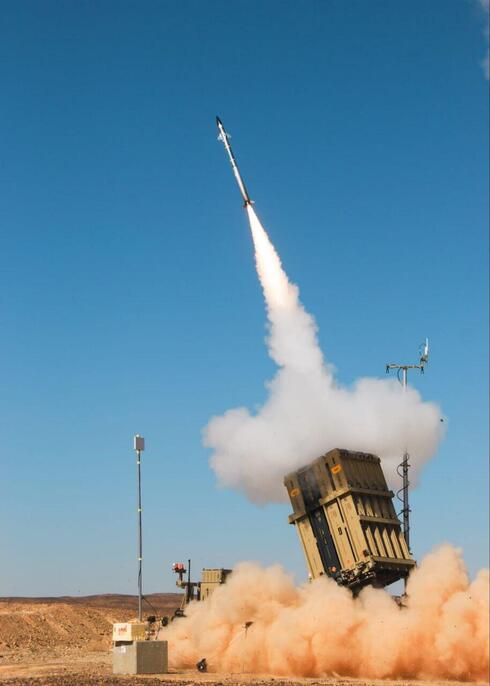
Among the most anticipated technological advancements pushed forward into operational deployment in 2025 was Israel’s promised laser air defense system. Developed by Rafael Advanced Defense Systems, the „Iron Beam” is designed as a complementary addition to the renowned Iron Dome, specifically targeting short-range threats to reduce interception costs.
Years in the making, these cutting-edge lasers are part of a broader vision for Israel’s layered air defense. While Rafael has focused on a ground-based interceptor, Elbit Systems is simultaneously developing an aerial version. The primary challenges for these directed energy weapons remain their effective range and the „time on target” required to neutralize incoming missiles, drones, or other aerial threats. However, as with any emerging technology, continuous refinement is expected to bring these laser systems to full maturity over time, revolutionizing short-range air defense.
Deepening Ties and Long Reach: Strategic Acquisitions Bolster US-Israel Alliance
U.S.-Israel relations garnered considerable attention in 2025, with Jerusalem expressing optimism that the new Trump administration would offer a more supportive stance following the previous administration. The year brought mixed results: while the U.S. government provided substantial backing, it also cautioned Israel against prolonging the conflict in Gaza and escalating tensions with Syria.
However, beneath the political discourse, military ties remained exceptionally close. This was evident not only in continued cooperation with U.S. Central Command but also in Israel’s decision to acquire more advanced U.S. platforms. The purchase of additional KC-46A refuelers underscored this strategic alignment, signaling Israel’s intent to enhance its long-distance operational capabilities—capabilities widely interpreted as a deterrent against, and potential means to strike, targets in Iran.
Record-Breaking Exports Amidst Conflict: Israel’s Defense Industry Thrives
A significant question loomed over Israel’s defense industry throughout the year: could it sustain its robust export contracts while simultaneously supplying the Israeli military’s demanding needs across multiple active fronts? In June, the Ministry of Defense provided a resounding answer, announcing that Israeli firms had netted a record $14.7 billion in export deals for the preceding year, 2024.
This marked the third consecutive year that Israeli defense exports reached an all-time high, a remarkable achievement given the concurrent high operational tempo of the nation’s own forces. The ministry also revealed that European countries accounted for a substantial 54 percent of these lucrative deals, affirming the global demand for Israeli defense technology and the industry’s extraordinary capacity for production and innovation even under wartime conditions.
Unprecedented Strikes: Israel’s Air Campaign Against Iran
Arguably one of the most defining moments in the Middle East during 2025 was the 12-day conflict that erupted in June between Israel and Iran. This engagement represented an unprecedented challenge for Israel, particularly in the complexity of its long-range air operations. The campaign was primarily conducted from the air, initially focused on neutralizing Iranian air defenses, then systematically targeting key sites linked to Iran’s nuclear program. The offensive commenced with strategic strikes against high-ranking Iranian military leaders, including prominent members of the Islamic Revolutionary Guard Corps.
In many respects, the aerial campaign bore similarities to historical precedents, such as the 1991 Gulf War, where a U.S.-led coalition spent weeks dismantling Iraqi defenses before a ground invasion. However, Israel’s operation also echoed its own historical successes, particularly the 1967 war, which began with decisive preemptive air strikes. Following a prolonged and often controversial campaign in Gaza, which raised questions about the performance of Israel’s high-tech military against a militant group, the air campaign against Iran served as a powerful reaffirmation of Israel’s first-rate capabilities. Crucially, close cooperation with the U.S. and Central Command emerged as a pivotal element in Israel’s strategic success during this high-stakes confrontation.