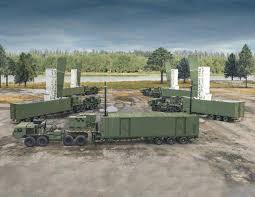
The United States Army is on the verge of launching a transformative initiative, requesting proposals for prototypes for its new Common Autonomous Multi-Domain Launcher (CAML) program. The ambitious goal is to award an Other Transaction Agreement (OTA) by the end of this year, signaling a significant shift in the approach to military system development, according to the service’s chief technology officer.
Shifting Gears: A Modular „Lego” Approach to Warfighting
The Request for Prototype Proposals (RFPP) is expected to be released by the end of this month or early next. While the Army originally hoped to have issued two CAML contracts by now, the timeline was strategically pushed back. The reason? A deliberate effort to bring in more nontraditional, commercial vendors and to ensure a more agile and flexible launcher setup.
„How do you bring together folks like a weapon system integrator, a munitions palette, and an autonomous platform provider, so that we aren’t trying to ask one company who probably isn’t good at those things individually to try to do the things they’re not good at,” explained Alex Miller, the Army’s CTO. The vision is clear: „We are really serious about bringing the team together so that it looks and feels like Legos, where the best athlete is doing the thing they’re really good at.”
Cultivating a „Teams of Teams” Ecosystem
As part of this endeavor, the Army is now seeking three or four vendors instead of the original two. Under the plan, one vendor would likely oversee a medium-sized launcher, and another a larger one. This approach aims to create a „teams of teams” model, similar to the one already employed by the service with its Next Generational Command and Control (Next Gen C2) program, where multiple vendors collaborate without a single lead.
However, the exact mechanics of how such an arrangement will work for the CAML program, particularly for the two launcher sizes, are still being ironed out. Despite these evolving details, the Army remains on schedule to have vendors showcase prototypes around the mid- to late-summer timeframe, with OTA agreements expected in the latter part of the year.
Mission-Driven Flexibility: Breaking Free from Vendor Lock
Beyond expanding the vendor pool, the Army sought to rework the CAML program because the previous path „locked” the service into specific fire control systems, „rather than providing an actual autonomous launcher that we could reconfigure on the fly,” Miller detailed.
„The goal is having an autonomous platform that we could rapidly roll on and roll off aircraft if we need to, but also have swappable, palletized munitions. So rather than just saying, ‘Hey, you know, the company that owns this fire control, they get to pick whatever weapon goes on there.’ That is not the objective. The objective is whatever the mission demands,” Miller asserted. „If it’s a HIMARS, we put a HIMARS on it. If it’s something like a Blackbeard, we put a Blackbeard on it.”
Refining the Vision, Not Restarting from Scratch
While the Army is re-engineering the CAML program’s implementation, the service is not entirely starting from scratch. There has been „a lot of good science and research and development,” Miller explained. The focus now is on changing the approach to truly concentrate on „what’s that autonomous mobility platform? What is the munitions palette, and what are those interfaces for power and data? And then, ‘Who are the weapon systems integrators that can put their palletized munition on top of that autonomous vehicle?'” This ambitious vision promises to redefine agility and adaptability in the US military arsenal.