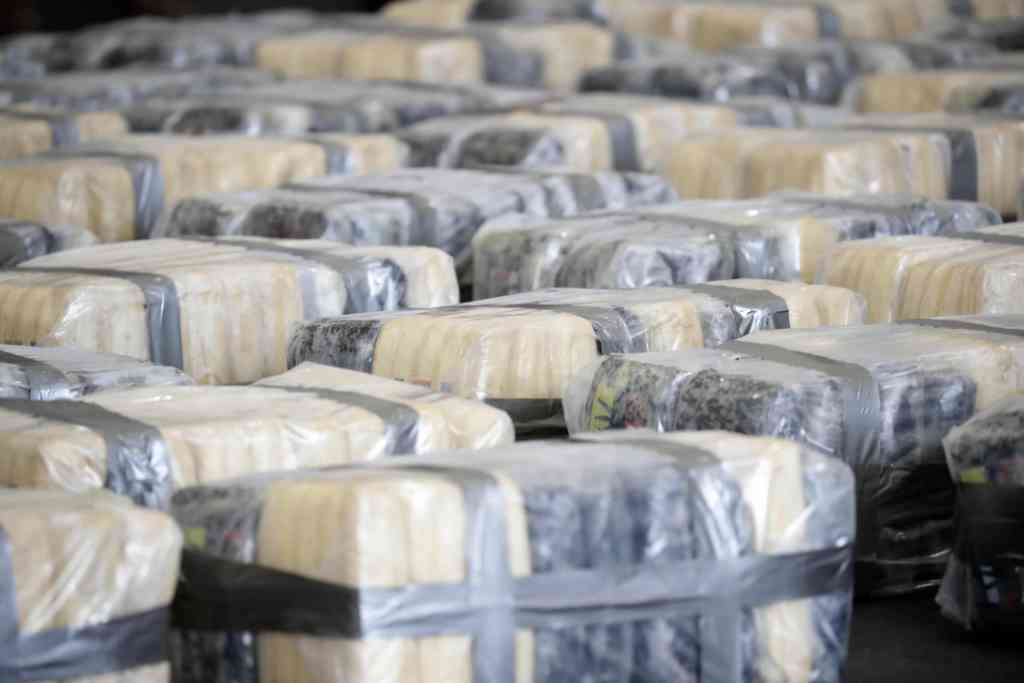
An Unprecedented Strategy: Devaluing at the Source Amidst an aggressive global campaign against drug trafficking, led by the Trump administration through lethal measures targeting smugglers, the Colombian military is exploring a radically different, perhaps more subtle, approach: „killing the high.” Colombia’s Minister of Defense, Pedro Sánchez, recently unveiled a revolutionary initiative aimed at altering the composition of cocaine at its very source, through a „chemical molecular form” introduced into the fuel used during production. The goal is to diminish cocaine’s potency, thereby weakening global demand. Sánchez even quipped that he would offer $1 million to the inventor of this solution.
Chemistry at the Heart of Trafficking: Exploiting a Vulnerability Cocaine production is a complex process, but it involves a key vulnerable point. After harvesting, coca leaves are soaked in gasoline or a similar fuel, which acts as a solvent for the coca alkaloid. The plant matter is then discarded, leaving a liquid containing the extracted substance. This undergoes a chemical separation, solidifying into a crude paste, which is then refined into cocaine powder for export. The Colombian government, through Minister Sánchez, is actively collaborating with universities, companies, and experts worldwide to find a viable way to modify the national gasoline supply, making the produced cocaine less potent. This initiative is reminiscent of a decade-long secret CIA operation to similarly sabotage Afghanistan’s opium production. Tests for various options are already underway, according to official statements.
The Strategic Dilemma: Coca Plant Resilience While finding a chemical solution and implementing it nationwide poses a major challenge, former general Sánchez highlights another difficulty: preventing workarounds by cartels. „Maybe they produce a stronger coca,” he warned, acknowledging that the essential problem is ensuring the coca plant will no longer function effectively in the drug production process.
Transatlantic Tensions: Trump’s Aggressive Policy Exerts Pressure This scientific effort comes at a tense geopolitical moment for Colombia. President Trump has embarked on a lethal campaign against drug trafficking into the US, including killing Colombian citizens suspected of smuggling, sparking outcry in Bogota. Although the two countries have a long history of collaboration, including in the 1990s in the fight against drugs when the US supported the operation that eliminated Pablo Escobar, and Colombia was named a non-NATO ally in 2022, current relations are under strain. Recent statistics show an uptick in Colombian cocaine supply to the US, with the country identified by the DEA in 2024 as the primary source of seized cocaine. Following a May 2025 report showing a continued increase in coca cultivation, Trump added Colombia to a list of major drug transit or illicit drug producing countries in September 2025.
Escalation of Diplomatic and Military Conflict The Trump administration has used these figures to justify a tougher foreign policy, including strikes on vessels in the Western Hemisphere and a new National Security Strategy aiming for a revival of the Monroe Doctrine. There have also been public clashes between Colombian President Gustavo Petro and Trump. After Petro accused the US of killing a Colombian fisherman in a strike on a vessel, Trump called Petro „an illegal drug leader” and threatened to immediately stop all US payments and subsidies to Colombia. Following an early January US military operation aimed at capturing Venezuelan President Nicolas Maduro, Trump even threatened military action against Petro’s government. The Colombian Embassy in Washington responded with a statement reaffirming Bogota’s commitment to open dialogue and constructive engagement with its ally.
Commitment to Cooperation, Beyond Disagreements In an interview in November (prior to the Venezuela operation), Minister Sánchez maintained that, at that time, military relations with the US remained unchanged and he even wished to increase cooperation, particularly in protecting military installations and police facilities from the increased threat of drones used by cartels. More recently, in a January 16 Instagram post, Sánchez described the relationship between the two countries as „strategic, strong, and long-standing.” He reiterated Colombia’s commitment to „continue to strengthen cooperation on security, defense, and the fight against transnational crime,” emphasizing that „protecting democracy and hemispheric stability is a shared interest” of both nations. Thus, despite tensions and divergent approaches, Colombia appears determined to pursue both its scientific path against drugs and its diplomatic commitment to its strategic partners.