In the vast, desolate expanse of the Mojave Desert, at the National Training Center (NTC), an area roughly the size of Rhode Island, US Army brigades are confronting a stark new reality: their pronounced vulnerability to advanced electronic warfare (EW) and AI-generated disinformation. Here, a full-time Opposing Force (OPFOR), the 11th Armored Cavalry Regiment, subjects visiting units to grueling trials, deploying simulated bullets alongside real-world radio jamming. The outcome often reveals profound communication paralysis and a disturbing lack of adaptability within military ranks.
The Digital Achilles’ Heel: Over-reliance on Technology
The core issue, frequently highlighted by current and former OPFOR officers, is an acute over-reliance on high-tech capabilities. Visiting units often lack the technical versatility and, critically, the mental adaptability to sustain effective combat operations once their sophisticated networks inevitably go down. „We are definitely seeing, many times over, an over-reliance on technology,” stated Captain Jake Thomas, who leads the information warfare section of the OPFOR staff.
However, there is a silver lining. Even with an impressive array of EW gear, ranging from backpack jammers to replicas of high-powered Russian systems, OPFOR forces cannot completely shut down the visiting units’ communications. A recently rolled-out tactical satellite (TACSAT) upgrade for battalion HQs and higher echelons proves particularly resistant to jamming. Furthermore, lower-echelon units with less sophisticated tech can switch to backup systems – or even backup-of-the-backup systems – in line with Army doctrine, which mandates four layers of redundancy (known as PACE: Primary, Alternative, Contingency, and Emergency).
From Screen to Reality: The PACE Plan’s Practical Challenges
The real challenge emerges when these backup systems are activated. Stripped of the „bells and whistles” troops are accustomed to, such as digital maps with near real-time updates of friendly and enemy positions, soldiers are forced to rely on staticky radio calls or low-bandwidth text chat. Without their high-tech tools, commanders struggle to maintain situational awareness on a rapidly changing battlefield, decision cycles slow dramatically, and subunits execute uncoordinated maneuvers, making them easy targets for the OPFOR.
Captain Jonathan Maher, former deputy commander for Centaur Squadron, which controls most of OPFOR’s EW assets, explained: „While their PACE plan… enables them to work around some of the jamming… those communications between the higher and lower echelons take longer… It ultimately creates a slower reaction that gives us a tactical advantage.” Captain Ethan Christensen, former Commander of Centaur, succinctly added: „If we’re effective, generally success for us is them just committing combat power in a piecemeal fashion.”
The Psycho-Digital War: AI-Powered Disinformation on the Battlefield
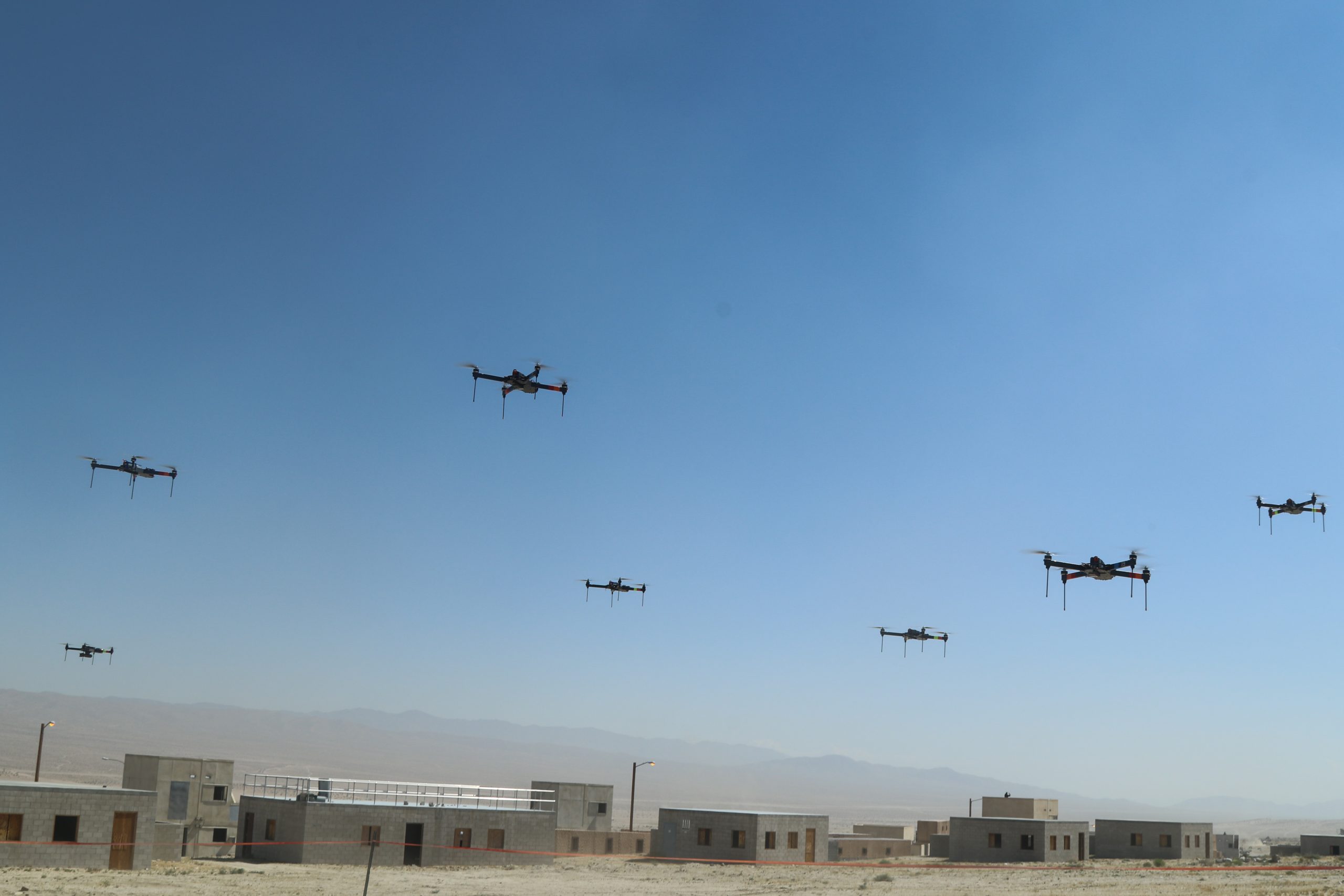
The OPFOR employs numerous methods to disrupt units’ communications and, by extension, their psychological state. A favored tactic involves identifying and tuning into the radio frequencies used by visiting units’ drones. Inexperienced drone operators often leave vital information visible on their displays, including their own GPS coordinates, enabling the OPFOR to launch a (simulated) precision strike. At a more sophisticated and unsettling level, the OPFOR now leverages generative AI to flood the training area with disinformation, including deepfake voices – trained from online videos of the commanders’ speeches and public ceremonies – issuing fake orders.
„We’ve tested it successfully here,” confirmed Colonel Kevin Black, who commands the 11th Armored Cavalry Regiment, the OPFOR’s formal designation. „Anything from AI-generated memes to AI-generated operational orders, AI-generated voice manipulation and spoofing.”
The Digital Divide and the „Enemy’s” Lessons: The Imperative of Initiative
Part of the problem stems from a cultural divide: combat arms officers – tank commanders or infantry leaders – are often insufficiently familiar with the complexities and, particularly, the vulnerabilities of the communication systems they rely upon. Conversely, signals soldiers, while intimately understanding their systems, may not grasp how these fit into the broader battle plan.
„There is certainly that divide,” admitted Captain Thomas, who began his career as an infantryman. „The role I am filling within the Regiment currently is essentially bridging that gap. [It’s] definitely a steep learning curve that can boggle my mind even now.” The OPFOR’s constant practice, with eight to ten annual simulated battles, is key to their success. Although they possess more jammers and drones than a typical brigade, they have fewer armored fighting vehicles and other conventional assets.
However, the crucial lesson for the broader Army, as Colonel Black emphasized, isn’t solely about equipment, but about mindset and training. „We’re not relying on [exquisite digital systems],” Black explained. „We’re pushing [information] on multiple levels all the time, whether it’s through our primary or alternate, the contingency or the emergency network, and it doesn’t slow us down if, hey, all of a sudden [one’s] not working.” The key, he asserts, is trusting subordinates to exercise initiative and act on the spot, without waiting for higher-level approvals or detailed digital instructions. This demands that combat arms officers be keenly aware of their communication status and take charge of when to switch to backups, rather than delegating that critical decision to technical specialists.
„The number one thing is those junior leaders you’ve entrusted and empowered up front are probably the best I’ve ever seen at jumping through our PACE plan,” Black proudly declared. „That troop commander is the one making those decisions, down front… If we get jammed, if we lose our technical capabilities, our leaders can still execute.”