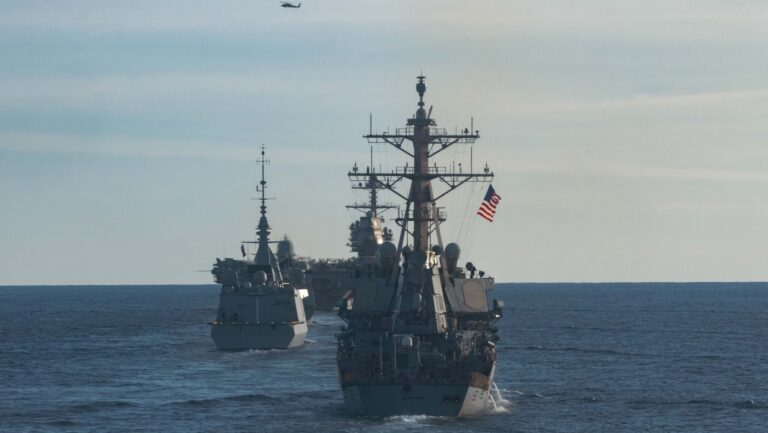
Admiral Daryl Caudle, the 34th Chief of Naval Operations, grandly unveiled his forthcoming U.S. Navy Fighting Instructions in January 2026, proclaiming them „my strategy for the Navy going forward.” The document, described as a „strategic vision” and a „transformational framework,” has, however, sparked a wave of questions and criticisms regarding its ability to provide clear and honest strategic direction.
Strategic Ambiguity: A Historic Title Under Scrutiny The title „Fighting Instructions” carries profound historical meaning, traditionally reserved for operational orders that governed how fleets would fight in combat. Combining this title with claims of „strategy,” „plan,” and „vision” creates an ambiguity that blurs the traditionally distinct functions of these forms of guidance. While this blending doesn’t invalidate the document, it immediately raises a fundamental question: what is Fighting Instructions actually intended to do?
At its core, the document presents itself as an institutional framework built on four inseparable foundations: Sailors First, Foundry, Fleet, and Fight. This conceptual model aims to ensure institutional coherence and future adaptation, inspiring the force and addressing modernization challenges.
The Admiral’s Test: Three Crucial Metrics and a Harsh Verdict Caudle himself established three metrics by which his guidance should be judged: identifying which investments matter most and what asymmetric capabilities are needed; ensuring the Navy can fight and win across the spectrum of conflict against any adversary; and, most crucially, „snapping the chalk line” – precisely defining how much force is truly enough to make the „Hedge Strategy” a reality rather than an aspiration.
Navy Investments: Direction Without Explicit Prioritization Regarding the first metric, the document’s performance is mixed. „Fighting Instructions” clearly identifies vital investment domains, such as C-C5ISRT (Command, Control, Communications, Computers, Cyber, Intelligence, Surveillance, Reconnaissance, and Targeting), robotic and autonomous systems, artificial intelligence, advanced manufacturing, directed energy, contested logistics, munitions depth, industrial base recapitalization, and resilient shore infrastructure. It acknowledges the importance of a „high-low” force mix and sustained modernization. However, the document fails to impose a hierarchy among these categories, specify which investments are decisive, or articulate the tradeoffs required to fund them. Thus, it offers direction but lacks firm prioritization, falling short of decision-forcing guidance.
A Theory of Adaptability, Lacking a Theory of Victory The second metric – the ability to fight and win against near-peer adversaries – is even more consequential. The document addresses this through structural coherence, integrating the four foundations into a conceptual warfighting system and introducing the Hedge Strategy to balance operational risk with fiscal and industrial constraints. These elements create a framework for resilience and institutional agility. Yet, the document fails to define victory in geographic, temporal, or political terms, and does not prioritize competing regional demands. It does not present a net assessment comparing US Navy strengths and weaknesses against adversaries, nor does it specify the level of risk acceptable in one theater to secure an advantage in another. In essence, it offers a theory of adaptability under uncertainty but lacks a fully articulated theory of victory against a named peer adversary operating at near parity.
The Unsnapped Chalk Line: A True Budget Problem, Not Tactical The third metric – „snapping the chalk line” – is the most consequential for force design. This point should define the threshold of the main battle force versus what is covered by Tailored Forces and Tailored Offsets. An error here could lead to wasting scarce resources on expensive traditional platforms or dangerously thinning the main force, leaving tailored formations to compensate for structural deficiencies they were never designed to carry.
Unfortunately, „Fighting Instructions” fails to snap this chalk line. It does not specify the minimum acceptable main battle force in platform numbers, capability thresholds, or readiness levels. Nor does it define the quantity or type of Tailored Offsets needed to mitigate risk where the main battle force is thin. This omission is not accidental. The Hedge Strategy is not primarily a warfighting innovation but an affordability strategy – a „Plan B” compelled by the nation’s reluctance to fund the Navy at the level its own planning documents deem necessary (381 crewed ships needed versus the current approximately 295). The strategic document conspicuously avoids stating this plainly, creating a false impression about the alignment between the Navy’s requirements and the resources provided.
A Call for Honesty: Strategic Candor, Not „Transformation Language” Sailors, planners, Congress, and the American public deserve a document that honestly names this gap, explains its consequences, and assigns responsibility for the choices that created it. „Fighting Instructions” fails in all these respects, offering „transformation language where accountability language is required.”
Strategy, in the strict sense, requires prioritization, tradeoffs, and the conscious acceptance of risk. A strategic document intended to guide force development should enable leaders to understand which programs must accelerate, which should slow or terminate, which industrial investments must be protected, and where operational risk can be accepted. By omitting explicit prioritization, critical decisions migrate to classified budget documents, making programming the real arena where priorities are set.
„Fighting Instructions” set its own test and did not pass it. This defines a failed document – not a malicious or unintelligent one, but one that promised more than it delivered on its own terms. The US Navy’s Sailors deserve fighting instructions that are honest and accountable, not documents that „soothe and lull” regarding financial and strategic realities.